


Multisystem Involvement in Post-Acute Sequelae of Coronavirus Disease 19
- PMID: 34952975
- PMCID: PMC9011495
- DOI: 10.1002/ana.26286
Multisystem Involvement in Post-Acute Sequelae of Coronavirus Disease 19
Abstract
Objective: The purpose of this study was to describe cerebrovascular, neuropathic, and autonomic features of post-acute sequelae of coronavirus disease 2019 ((COVID-19) PASC).
Methods: This retrospective study evaluated consecutive patients with chronic fatigue, brain fog, and orthostatic intolerance consistent with PASC. Controls included patients with postural tachycardia syndrome (POTS) and healthy participants. Analyzed data included surveys and autonomic (Valsalva maneuver, deep breathing, sudomotor, and tilt tests), cerebrovascular (cerebral blood flow velocity [CBFv] monitoring in middle cerebral artery), respiratory (capnography monitoring), and neuropathic (skin biopsies for assessment of small fiber neuropathy) testing and inflammatory/autoimmune markers.
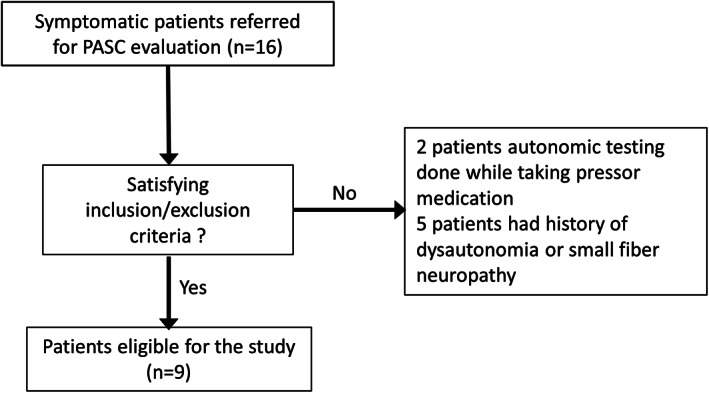
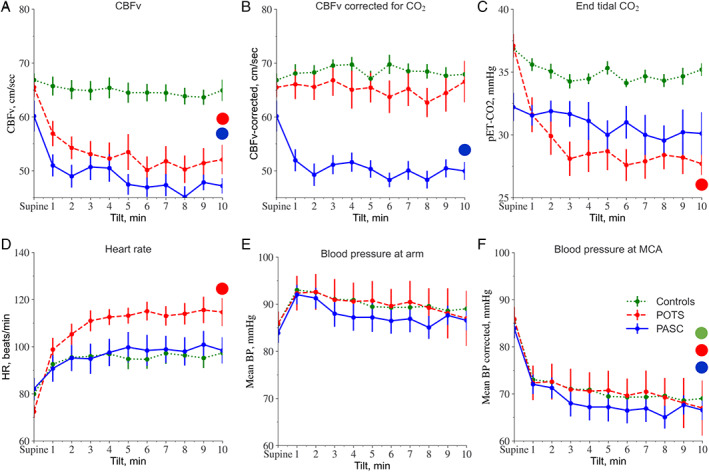
Results: Nine patients with PASC were evaluated 0.8 ± 0.3 years after a mild COVID-19 infection, and were treated as home observations. Autonomic, pain, brain fog, fatigue, and dyspnea surveys were abnormal in PASC and POTS (n = 10), compared with controls (n = 15). Tilt table test reproduced the majority of PASC symptoms. Orthostatic CBFv declined in PASC (-20.0 ± 13.4%) and POTS (-20.3 ± 15.1%), compared with controls (-3.0 ± 7.5%, p = 0.001) and was independent of end-tidal carbon dioxide in PASC, but caused by hyperventilation in POTS. Reduced orthostatic CBFv in PASC included both subjects without (n = 6) and with (n = 3) orthostatic tachycardia. Dysautonomia was frequent (100% in both PASC and POTS) but was milder in PASC (p = 0.002). PASC and POTS cohorts diverged in frequency of small fiber neuropathy (89% vs 60%) but not in inflammatory markers (67% vs 70%). Supine and orthostatic hypocapnia was observed in PASC.
Interpretation: PASC following mild COVID-19 infection is associated with multisystem involvement including: (1) cerebrovascular dysregulation with persistent cerebral arteriolar vasoconstriction; (2) small fiber neuropathy and related dysautonomia; (3) respiratory dysregulation; and (4) chronic inflammation. ANN NEUROL 2022;91:367-379.
© 2021 American Neurological Association.
Conflict of interest statement
The authors declared no conflict of interest.
Figures
References
MeSH terms
Substances
LinkOut - more resources
Full Text Sources
Medical
