


A randomized controlled clinical trial of cardiac telerehabilitation with a prolonged mobile care monitoring strategy after an acute coronary syndrome
- PMID: 34952989
- PMCID: PMC8799046
- DOI: 10.1002/clc.23757
A randomized controlled clinical trial of cardiac telerehabilitation with a prolonged mobile care monitoring strategy after an acute coronary syndrome
Abstract
Background: Center-based cardiac rehabilitation (CBCR) improves health outcomes but has some limitations. We designed and validated a telerehabilitation system to overcome these barriers.
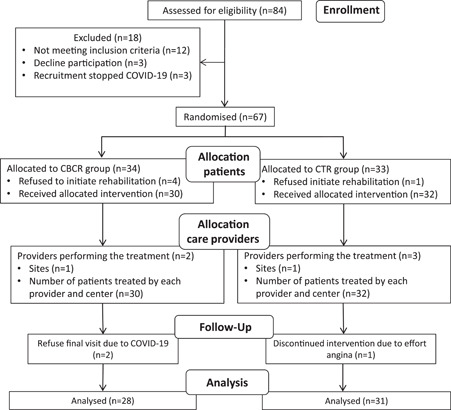
Methods: We included 67 low-risk acute coronary syndrome patients in a randomized controlled trial allocated 1:1 to a 10-month cardiac telerehabilitation (CTR) program or an 8-week CBCR program. Patients underwent ergospirometry, blood tests, anthropometric measurements, IPAQ, PREDIMED, HADS, and EQ-5D questionnaires at baseline and 10 months. Data collectors were blinded to the treatment groups.
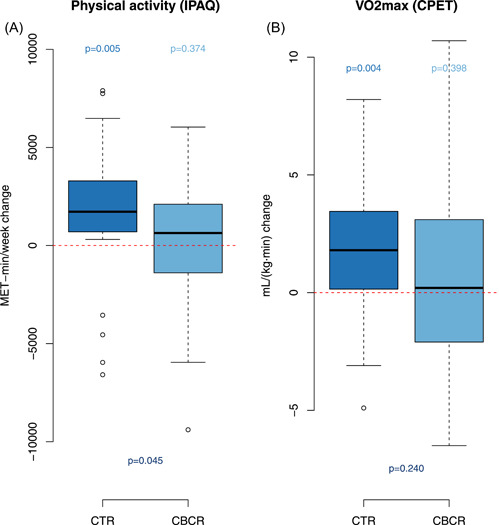
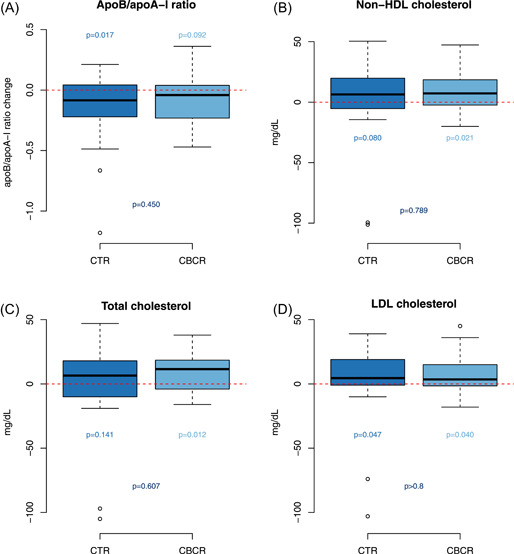
Results: The intention-to-treat analysis included 31 patients in the CTR group and 28 patients in the CBCR group. The primary outcome showed increased physical activity according to the IPAQ survey in the CTR group compared to the CBCR group (median increase 1726 METS-min/week vs. 636, p = .045). Mean VO2max increased 1.62 ml/(kg min) (95% confidence interval [CI]: 0.56-2.69, p < .004) from baseline in the CTR group, and 0.60 mL/(kg min) (p = .40) in the CBCR group. Mean apoB/apoA-I ratio decreased 0.13 (95% CI: -0.03 to 0.24, p = .017) in the CTR group, with no significant change in the CBCR group (p = .092). The median non-HDL cholesterol increased by 7.3 mg/dl (IQR: -2.4 to 18.6, p = .021) in the CBCR group, but the increase was not significant in the CTR group (p = .080). Adherence to a Mediterranean diet, psychological distress, and quality of life showed greater improvement in the CTR group than in the CBCR group. Return-to-work time was reduced with the telerehabilitation strategy.
Conclusion: This system allows minimal in-hospital training and prolonged follow-up. This strategy showed better results than CBCR.
Keywords: cardiac rehabilitation; coronary heart disease; secondary prevention; telemedicine; telerehabilitation.
© 2021 The Authors. Clinical Cardiology published by Wiley Periodicals LLC.
Conflict of interest statement
The authors declare that there are no conflict of interests.
Figures
References
-
- Collet JP, Thiele H, Barbato E, et al. ESC Scientific Document Group . ESC Guidelines for the management of acute coronary syndromes in patients presenting without persistent ST‐segment elevation. The Task Force for the management of acute coronary syndromes in patients presenting without persistent ST‐segment elevation of the European Society of Cardiology (ESC). Eur Heart J. 2021;42:1289‐1367. - PubMed
-
- Ibanez B, James S, Agewall S, et al. 2017 ESC Guidelines for the management of acute myocardial infarction in patients presenting with ST‐segment elevation: the Task Force for the management of acute myocardial infarction in patients presenting with ST‐segment elevation of the European Society of Cardiology (ESC). Eur Heart J. 2018;39:119‐177. - PubMed
-
- Knuuti J, Wijns W, Saraste A, et al. ESC Guidelines for the diagnosis and management of chronic coronary syndromes: the Task Force for the diagnosis and management of chronic coronary syndromes of the European Society of Cardiology (ESC). Eur Heart J. 2020;41:407‐477. - PubMed
-
- Ambrosetti M, Abreu A, Cornelissen V, et al. Secondary prevention through comprehensive cardiovascular rehabilitation: from knowledge to implementation. 2020 update. A position paper from the Secondary Prevention and Rehabilitation Section of the European Association of Preventive Cardiology. Eur J Prev Cardiol. 2021;28:460‐495. - PubMed
-
- Kotseva K, De Backer G, De Bacquer D, et al. Lifestyle and impact on cardiovascular risk factor control in coronary patients across 27 countries: results from the European Society of Cardiology ESC‐EORP EUROASPIRE V registry. Eur J Prev Cardiol. 2019;26:824‐835. - PubMed
Publication types
MeSH terms
Grants and funding
LinkOut - more resources
Full Text Sources
Medical
Miscellaneous
