


Validation of the artificial intelligence-based trauma outcomes predictor (TOP) in patients 65 years and older
- PMID: 34955288
- PMCID: PMC9131296
- DOI: 10.1016/j.surg.2021.11.016
Validation of the artificial intelligence-based trauma outcomes predictor (TOP) in patients 65 years and older
Abstract
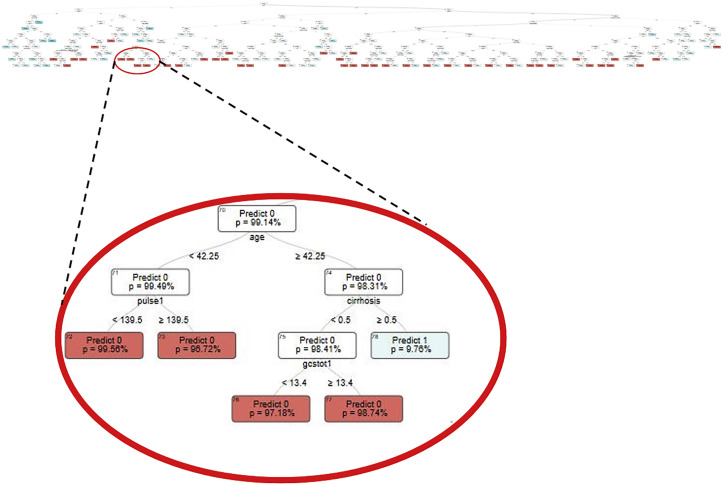
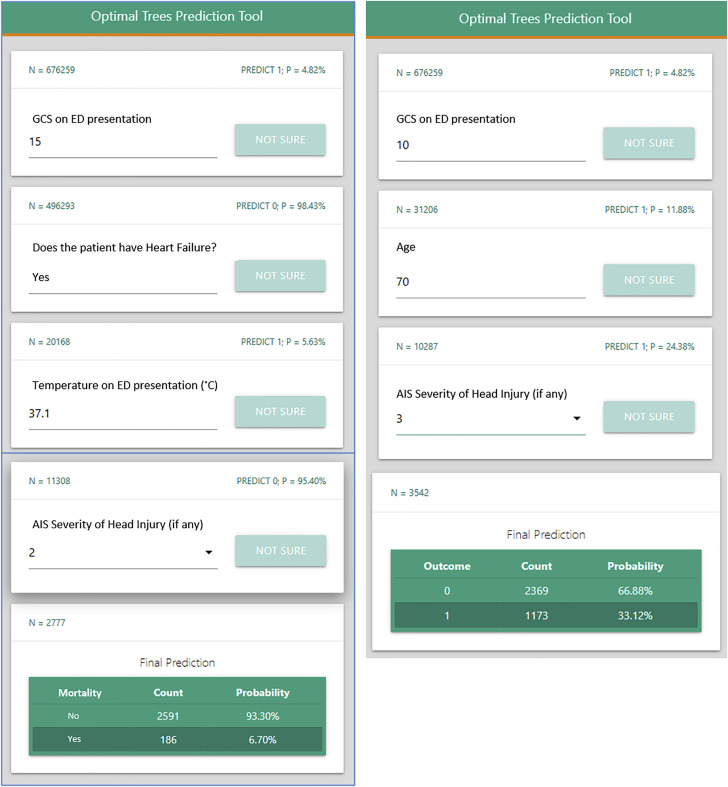
Background: The Trauma Outcomes Predictor tool was recently derived using a machine learning methodology called optimal classification trees and validated for prediction of outcomes in trauma patients. The Trauma Outcomes Predictor is available as an interactive smartphone application. In this study, we sought to assess the performance of the Trauma Outcomes Predictor in the elderly trauma patient.
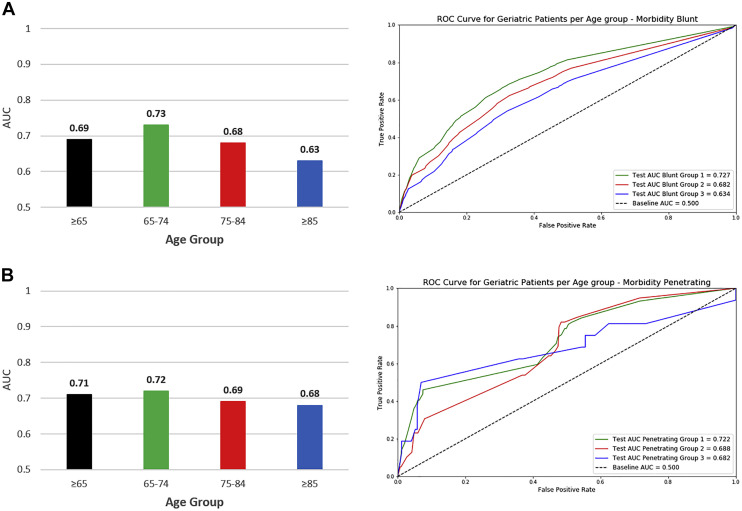
Methods: All patients aged 65 years and older in the American College of Surgeons-Trauma Quality Improvement Program 2017 database were included. The performance of the Trauma Outcomes Predictor in predicting in-hospital mortality and combined and specific morbidity based on incidence of 9 specific in-hospital complications was assessed using the c-statistic methodology, with planned subanalyses for patients 65 to 74, 75 to 84, and 85+ years.
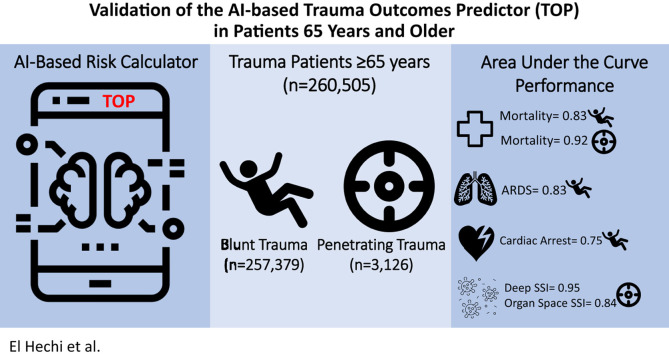
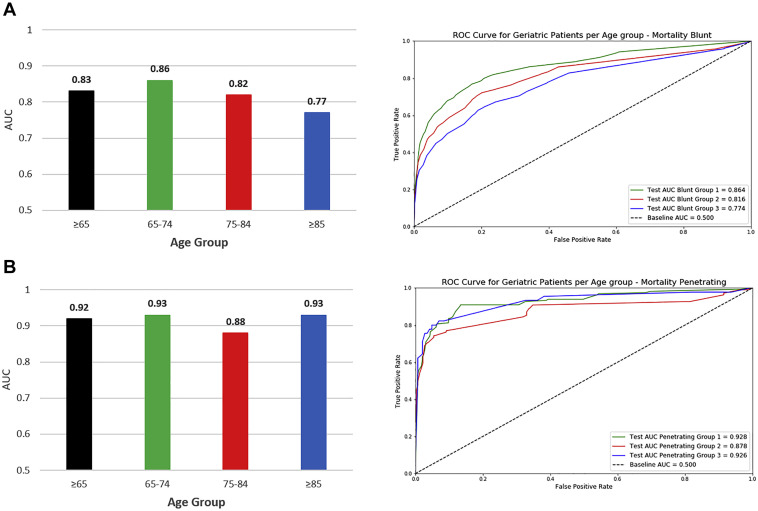
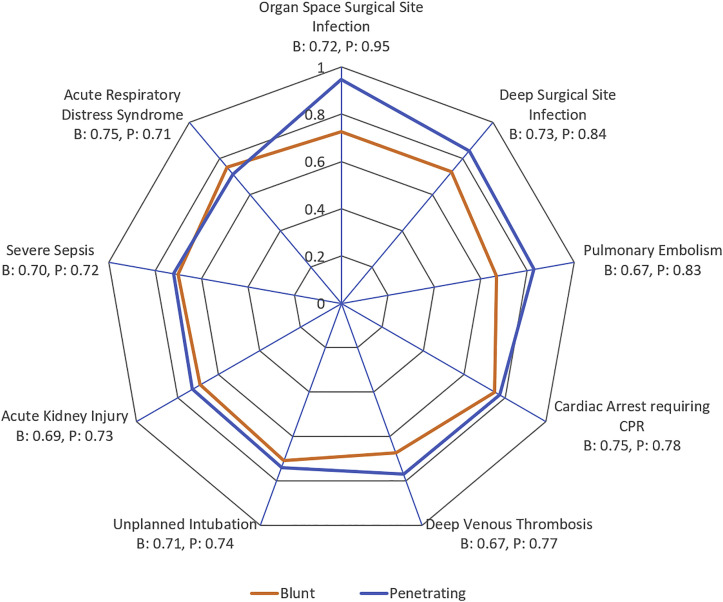
Results: A total of 260,505 patients were included. Median age was 77 (71-84) years, 57% were women, and 98.8% had a blunt mechanism of injury. The Trauma Outcomes Predictor accurately predicted mortality in all patients, with excellent performance for penetrating trauma (c-statistic: 0.92) and good performance for blunt trauma (c-statistic: 0.83). Its best performance was in patients 65 to 74 years (c-statistic: blunt 0.86, penetrating 0.93). Among blunt trauma patients, the Trauma Outcomes Predictor had the best discrimination for predicting acute respiratory distress syndrome (c-statistic 0.75) and cardiac arrest requiring cardiopulmonary resuscitation (c-statistic 0.75). Among penetrating trauma patients, the Trauma Outcomes Predictor had the best discrimination for deep and organ space surgical site infections (c-statistics 0.95 and 0.84, respectively).
Conclusion: The Trauma Outcomes Predictor is a novel, interpretable, and highly accurate predictor of in-hospital mortality in the elderly trauma patient up to age 85 years. The Trauma Outcomes Predictor could prove useful for bedside counseling of elderly patients and their families and for benchmarking the quality of geriatric trauma care.
Copyright © 2021 Elsevier Inc. All rights reserved.
Figures
References
-
- United States Census Bureau Older people projected to outnumber children for first time in U.S. history. https://www.census.gov/newsroom/press-releases/2018/cb18-41-population-p...
-
- Bhattacharya B., Maung A., Schuster K., Davis K.A. The older they are the harder they fall: injury patterns and outcomes by age after ground level falls. Injury. 2016;47:1955–1959. - PubMed
-
- Taylor M.D., Tracy J.K., Meyer W., Pasquale M., Napolitano L.M. Trauma in the elderly: intensive care unit resource use and outcome. J Trauma Acute Care Surg. 2002;53:407–414. - PubMed
-
- Madni T.D., Ekeh A.P., Brakenridge S.C., et al. A comparison of prognosis calculators for geriatric trauma: a Prognostic Assessment of Life and Limitations After Trauma in the Elderly Consortium study. J Trauma Acute Care Surg. 2017;83:90–96. - PubMed
Publication types
MeSH terms
LinkOut - more resources
Full Text Sources
