


Circadian Influences on Chemotherapy Efficacy in a Mouse Model of Brain Metastases of Breast Cancer
- PMID: 34956876
- PMCID: PMC8695439
- DOI: 10.3389/fonc.2021.752331
Circadian Influences on Chemotherapy Efficacy in a Mouse Model of Brain Metastases of Breast Cancer
Abstract
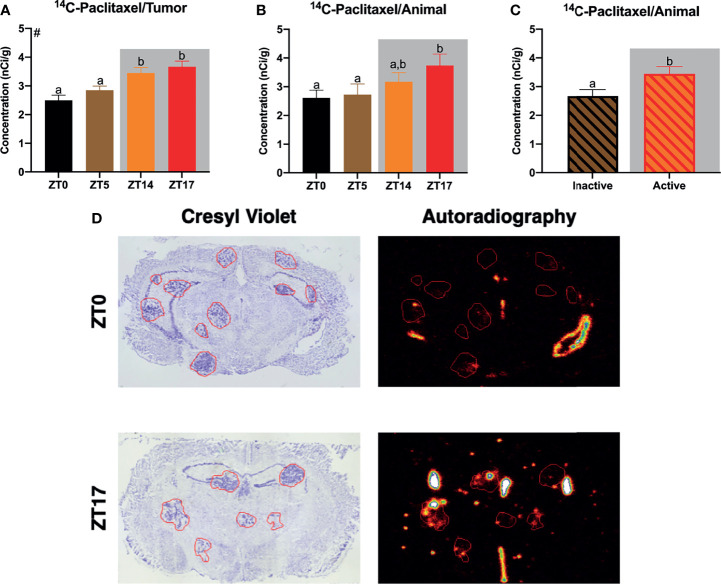
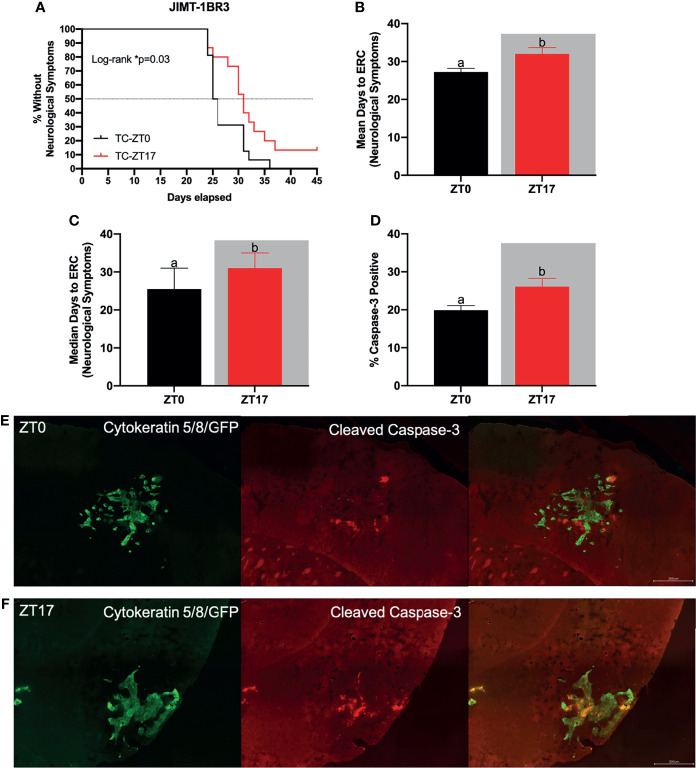
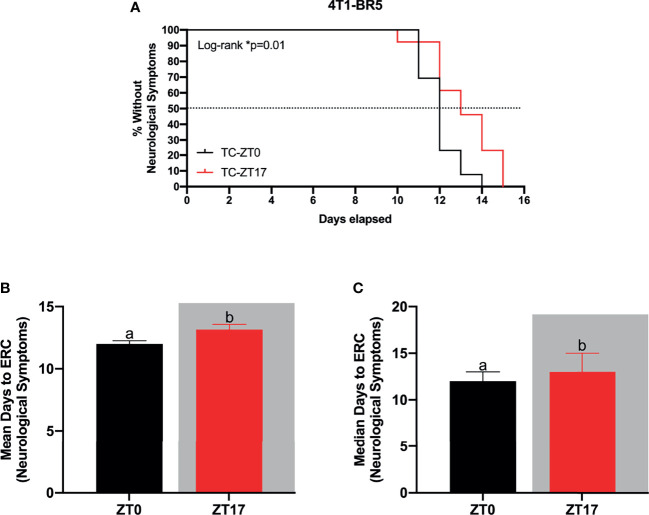
Chemotherapy is more effective in the treatment of peripheral tumors than brain metastases, likely reflecting the reduced ability of chemotherapy to cross the blood-brain barrier (BBB) and blood-tumor barrier at efficacious concentrations. Recent studies demonstrate circadian regulation of the BBB. Thus, we predicted that optimally timed chemotherapy would increase anti-tumor efficacy in a model of brain metastases of breast cancer (BMBC). First, we characterized novel daily alterations in BBB permeability to a commonly used chemotherapeutic, 14C-paclitaxel, within BMBC following injections given at four time points across the day. Peak and trough 14C-paclitaxel concentrations within BMBC occurred during the mid-dark phase and at the beginning of the light phase, respectively. Notably, chemotherapy injections during the dark phase increased cell death within BMBC and delayed onset of neurological symptoms relative to injections during the light phase. These data provide strong evidence for the beneficial effects of chrono-chemotherapy for the treatment of BMBC.
Keywords: blood-brain barrier; brain metastases; breast cancer; chronotherapeutic; circadian rhythm.
Copyright © 2021 Walker, Sprowls, Bumgarner, Liu, Meléndez-Fernández, Walton, Lockman, DeVries and Nelson.
Conflict of interest statement
The authors declare that the research was conducted in the absence of any commercial or financial relationships that could be construed as a potential conflict of interest.
Figures
References
-
- Mukherji A, Kobiita A, Damara M, Misra N, Meziane H, Champy MF, et al. Shifting Eating to the Circadian Rest Phase Misaligns the Peripheral Clocks With the Master SCN Clock and Leads to a Metabolic Syndrome. Proc Natl Acad Sci USA (2015) 112:E6691–8. doi: 10.1073/pnas.1519807112 - DOI - PMC - PubMed
Grants and funding
LinkOut - more resources
Full Text Sources
