. 2021 Nov 27;13(12):4278.
doi: 10.3390/nu13124278.

Differential Influence of Soluble Dietary Fibres on Intestinal and Hepatic Carbohydrate Response

Affiliations

Differential Influence of Soluble Dietary Fibres on Intestinal and Hepatic Carbohydrate Response

Matthew G Pontifex et al. Nutrients. .

Abstract

Refined foods are commonly depleted in certain bioactive components that are abundant in 'natural' (plant) foods. Identification and addition of these 'missing' bioactives in the diet is, therefore, necessary to counteract the deleterious impact of convenience food. In this study, multiomics approaches were employed to assess the addition of the popular supplementary soluble dietary fibers inulin and psyllium, both in isolation and in combination with a refined animal feed. A 16S rRNA sequencing and 1H NMR metabolomic investigation revealed that, whilst inulin mediated an increase in Bifidobacteria, psyllium elicited a broader microbial shift, with Parasutterella and Akkermansia being increased and Enterorhabdus and Odoribacter decreased. Interestingly, the combination diet benefited from both inulin and psyllium related microbial changes. Psyllium mediated microbial changes correlated with a reduction of glucose (R -0.67, -0.73, respectively, p < 0.05) and type 2 diabetes associated metabolites: 3-methyl-2-oxovaleric acid (R -0.72, -0.78, respectively, p < 0.05), and citrulline (R -0.77, -0.71, respectively, p < 0.05). This was in line with intestinal and hepatic carbohydrate response (e.g., Slc2a2, Slc2a5, Khk and Fbp1) and hepatic lipogenesis (e.g., Srebf1 and Fasn), which were significantly reduced under psyllium addition. Although established in the liver, the intestinal response associated with psyllium was absent in the combination diet, placing greater significance upon the established microbial, and subsequent metabolomic, shift. Our results therefore highlight the heterogeneity that exists between distinct dietary fibers in the context of carbohydrate uptake and metabolism, and supports psyllium containing combination diets, for their ability to negate the impact of a refined diet.

Keywords: carbohydrate metabolism; inulin; metabolome; microbiome; psyllium.


Conflict of interest statement

M.R. and M.P. are both employees of Research Diets, Inc. Research Diets, Inc provided the diets and some additional funding to perform the animal study. The sponsors had no role in the execution, interpretation, or writing of the study. The other authors declare no conflict of interest.

Figures
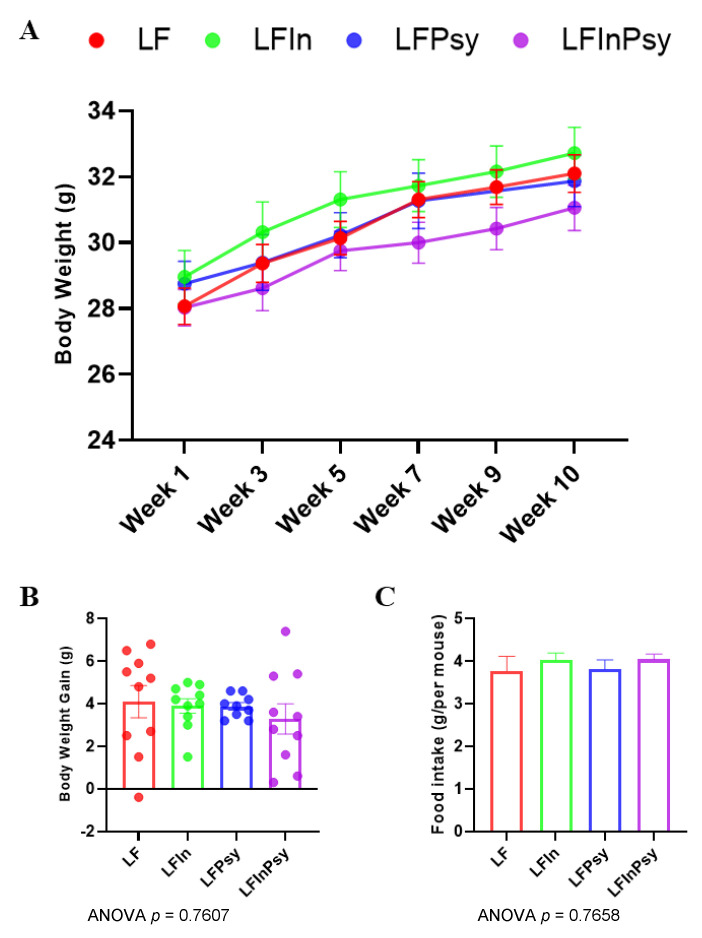
Figure 1
Figure 1
Soluble DF addition has no impact on body weight gain: (A) body weight trajectory across the 10-week study, (B) body weight gain, (C) and food intake remained constant across dietary interventions. Data are presented as mean ± S.E.M.
Figure 2
Figure 2
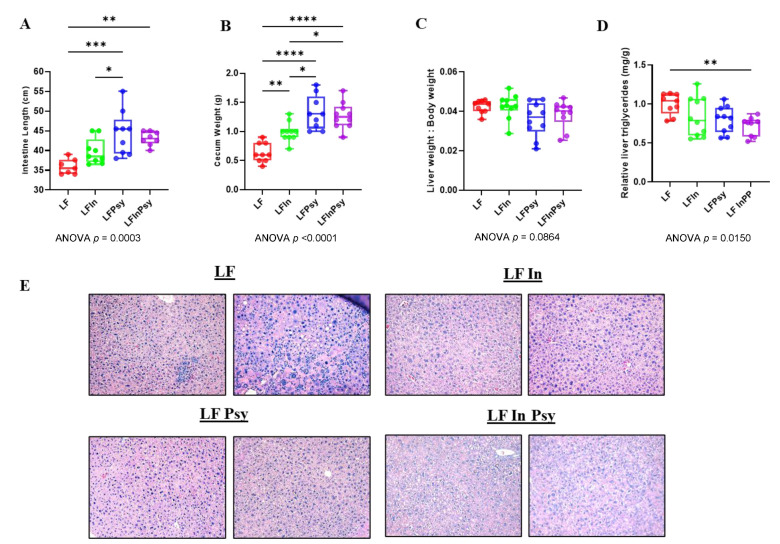
Addition of soluble DF to a refined LF animal diet alters gut–liver morphology (A) Intestinal length and (B) cecum weight were significantly increased in response to soluble DF addition, with the effect enhanced by psyllium containing diets. (C) Liver weight to body weight ratio was not significantly changed. (D) Hepatic TAGs were reduced by the combination diet, (E) consistent with the visually healthier liver tissue observed through H&E staining. Data are presented as mean ± S.E.M * p < 0.05, ** p < 0.01, *** p < 0.001, **** p < 0.0001.
Figure 3
Figure 3
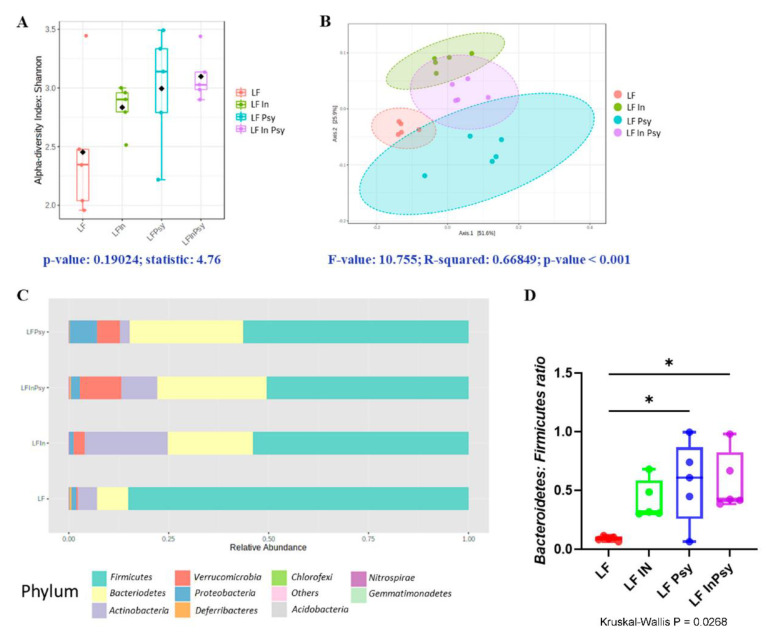
(A) α-diversity assessed by Shannon index was subtly but not significantly increased through DF addition, meanwhile (B) β-diversity, assessed using weighted unifrac analysis showed robust separation of DFs from the LF diet. (C) Graphical representation of phylum composition across each diet. (D) Bacteriodetes: Firmicutes ratio increased in response to psyllium containing diets (p values and FDR of significant changes are given in Table 1.). Data are presented as mean ± S.E.M * p < 0.05.
Figure 4
Figure 4
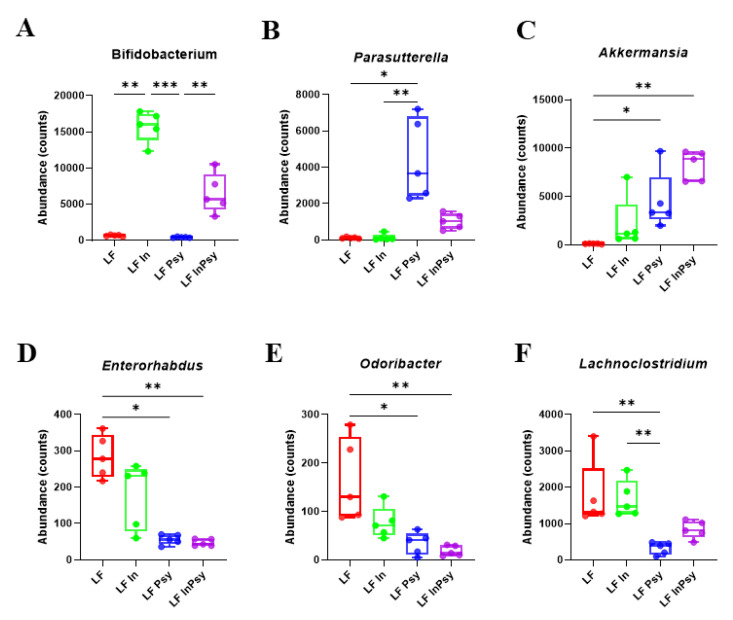
(AF) Kruskal-Wallis univariate analysis revealed subsequent changes at the genus level with (A) Bifidobacterium increasing in response to inulin and (B) Parasuterella and (C) Akkermansia increasing in response to psyllium. Conversely (D) Enterohabdus, (E) Odoribacter and Lachnoclostridium reduced in response to psyllium addition. Data are presented as mean ± S.E.M * p < 0.05, ** p < 0.01, *** p < 0.001.
Figure 5
Figure 5
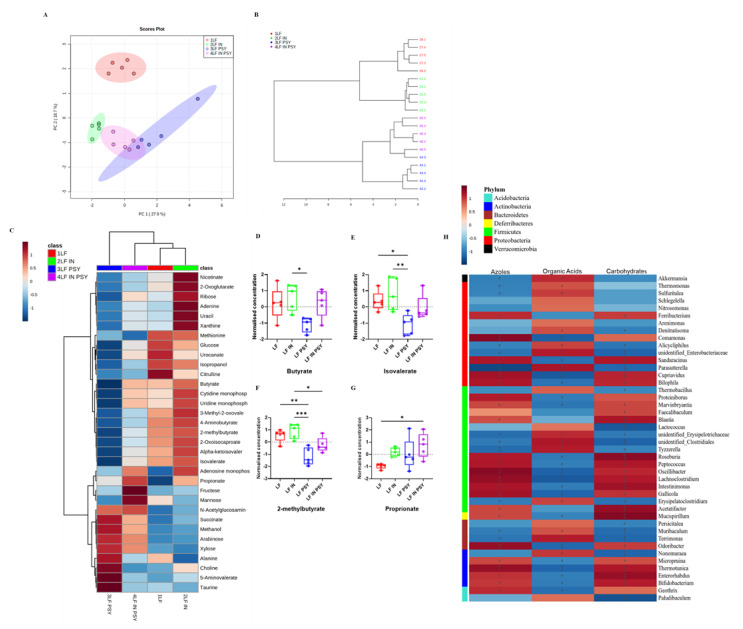
Metabolomic influence of DF and correlation with microbiota. (A) PCA plot shows a robust separation of the varying dietary groups, (B) consistent with the dendrogram, and (C) heatmap (significant metabolites), in which all four dietary groups formed four distinct clusters. (DG) Concentration of significantly altered SCFA’s Butyrate, Isovalerate, 2-methylbutyrate, and propionate. (H) Interactions between the metabolome and microbiome of LF and LF psyllium groups were made using Spearman correlation analysis, which highlighted key changes (with asterisk) in Azoles, organic acids, and carbohydrates. Data are presented as mean ± S.E.M * p < 0.05, ** p < 0.01, *** p < 0.001.
Figure 6
Figure 6
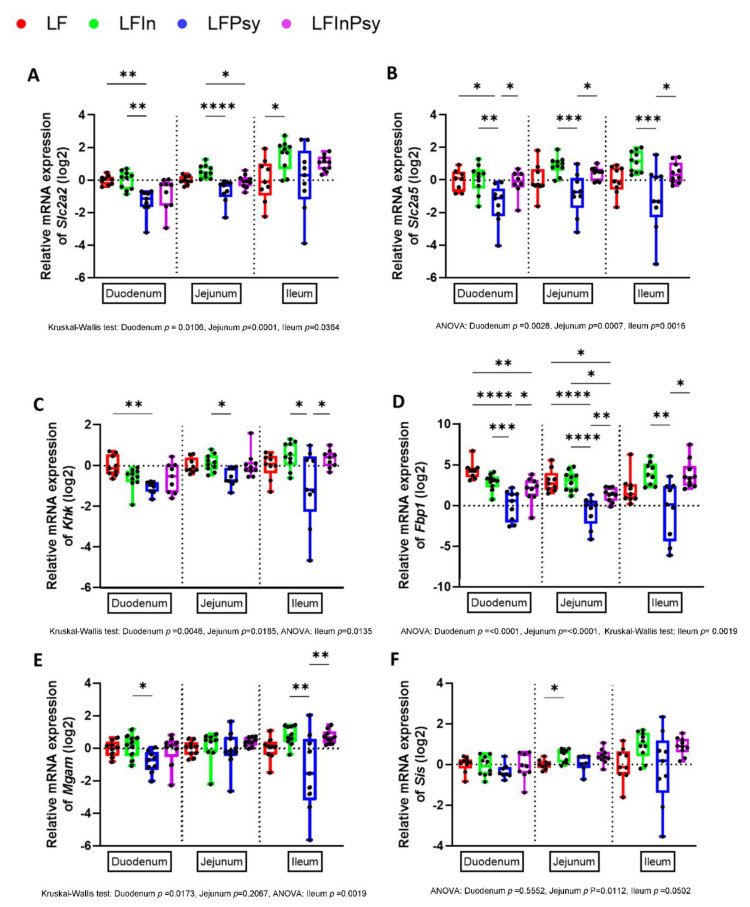
LF psyllium diet attenuates intestinal carbohydrate transport and metabolising potential: (A) Intestinal expression of carbohydrate transporter Slc2a2 (B) and Slc2a5 was reduced by psyllium intervention. (C) Carbohydrate metabolising enzymes Khk, (D) Fbp1 (E) Mgam, and (F) Sis were similarly diminished by the actions of the LF psyllium intervention. Data are presented as mean ± S.E.M * p < 0.05, ** p < 0.01, *** p < 0.001, **** p < 0.0001.
Figure 7
Figure 7
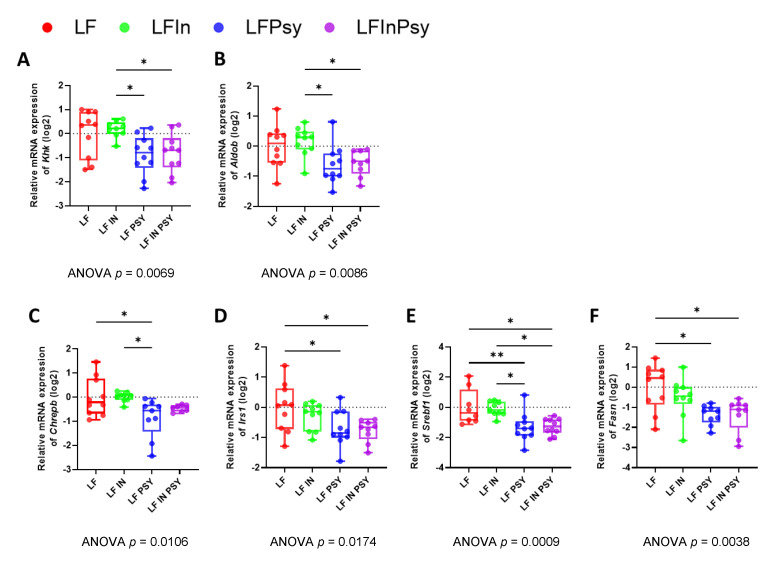
LF psyllium containing diets prevent fructose reaching the liver leading to subsequent reduction in lipogenesis: (A,B) Expression of fructose metabolising enzymes Khk and Aldob were reduced in the livers of psyllium supplemented animals. (C) Downregulation of Chrebp was indicative of reduced carbohydrate reaching the liver, (DF) and in line with the reduction of lipogenesis promoting genes Irs1, Srebf1 and Fasn. Data are presented as mean ± S.E.M * p < 0.05, ** p < 0.01.

References

    1. Harris R.M., Rose A.M.C., Soares-Wynter S., Unwin N. Ultra-processed food consumption in Barbados: Evidence from a nationally representative, cross-sectional study. J. Nutr. Sci. 2021;10:e29. doi: 10.1017/jns.2021.21. - DOI - PMC - PubMed
    1. Stephen A.M., Champ M.M., Cloran S.J., Fleith M., van Lieshout L., Mejborn H., Burley V.J. Dietary fibre in Europe: Current state of knowledge on definitions, sources, recommendations, intakes and relationships to health. Nutr. Res. Rev. 2017;30:149–190. doi: 10.1017/S095442241700004X. - DOI - PubMed
    1. McRae M.P. Dietary Fiber Intake and Type 2 Diabetes Mellitus: An Umbrella Review of Meta-analyses. J. Chiropr. Med. 2018;17:44–53. doi: 10.1016/j.jcm.2017.11.002. - DOI - PMC - PubMed
    1. Gill S.K., Rossi M., Bajka B., Whelan K. Dietary fibre in gastrointestinal health and disease. Nat. Rev. Gastroenterol. Hepatol. 2021;18:101–116. doi: 10.1038/s41575-020-00375-4. - DOI - PubMed
    1. Jenkins D.J., Wolever T.M., Jenkins A.L., Taylor R.H. Dietary fibre, carbohydrate metabolism and diabetes. Mol. Aspects Med. 1987;9:97–112. doi: 10.1016/0098-2997(87)90019-7. - DOI - PubMed