


'Old Is Gold': How Traditional Indian Dietary Practices Can Support Pediatric Diabetes Management
- PMID: 34959978
- PMCID: PMC8707693
- DOI: 10.3390/nu13124427
'Old Is Gold': How Traditional Indian Dietary Practices Can Support Pediatric Diabetes Management
Abstract
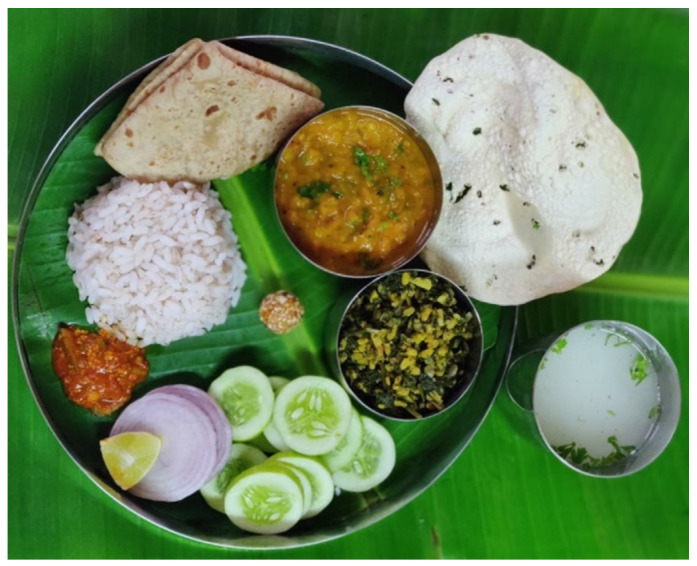
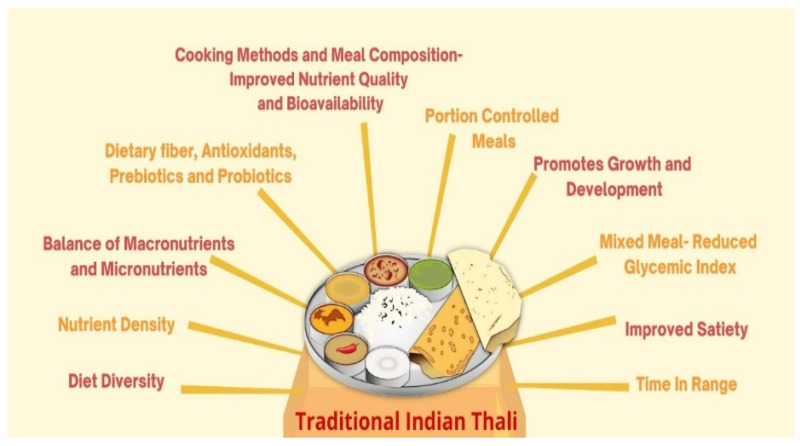
Nutrition is crucial for maintaining normal growth, development, and glycemic control in young people with diabetes (PwD). Undue restrictions cause nutrient deficiencies as well as poor adherence to meal plans. Widespread availability of low-cost, ultra-processed, and hyperpalatable food is further damaging. Most families struggle to find ways to provide nutritious, yet attractive, food with a low glycemic index (GI). India is one of the oldest continuous civilizations with a rich and diverse cultural and culinary heritage. Traditional dietary practices, including the centuries-old 'Thali' (meaning plate) concept, emphasize combinations (grains, lentils, vegetables, dairy, spices, prebiotics and probiotics, and fats) of local, seasonal, and predominantly plant-based ingredients. These practices ensure that all of the necessary food groups are provided and fit well with current evidence-based recommendations, including the International Society for Pediatric and Adolescent Diabetes (ISPAD) 2018 Guidelines. Techniques for the preparation, cooking, and preservation of food further impact the GI and nutrient availability. These practices benefit nutrient density, diet diversity, and palatability and thus improve adherence to meal plans and glycemic control. This narrative review describes the ancient wisdom, food composition, and culinary practices from across India which are still valuable today. These may be of benefit worldwide to improve glycemic control as well as quality of life, especially in PwD.
Keywords: India; Indian Thali concept; ancient food wisdom; diabetes education; diabetes management; glycemic control; medical nutrition therapy; traditional Indian practices.
Conflict of interest statement
The authors declare no conflict of interest.
Figures
References
-
- Nambiar V. Indian Food Anthropology and the Eat Right Movement. 1st ed. Selective & Scientific Books; New Delhi, India: 2021.
-
- Sarkar P., DH L.K., Dhumal C., Panigrahi S.S., Choudhary R. Traditional and ayurvedic foods of Indian origin. J. Ethn. Foods. 2015;2:97–109. doi: 10.1016/j.jef.2015.08.003. - DOI
-
- World Health Organization . Constitution of the World Health Organization. World Health Organization; Geneva, Switzerland: 1948. Preamble to the Constitution of the World Health Organization as adopted by the International Health Conference, New York, NY, USA, 19–22 June 1946.
Publication types
MeSH terms
LinkOut - more resources
Full Text Sources
Medical
