


Combatting Sedentary Behaviors by Delivering Remote Physical Exercise in Children and Adolescents with Obesity in the COVID-19 Era: A Narrative Review
- PMID: 34960011
- PMCID: PMC8706684
- DOI: 10.3390/nu13124459
Combatting Sedentary Behaviors by Delivering Remote Physical Exercise in Children and Adolescents with Obesity in the COVID-19 Era: A Narrative Review
Abstract
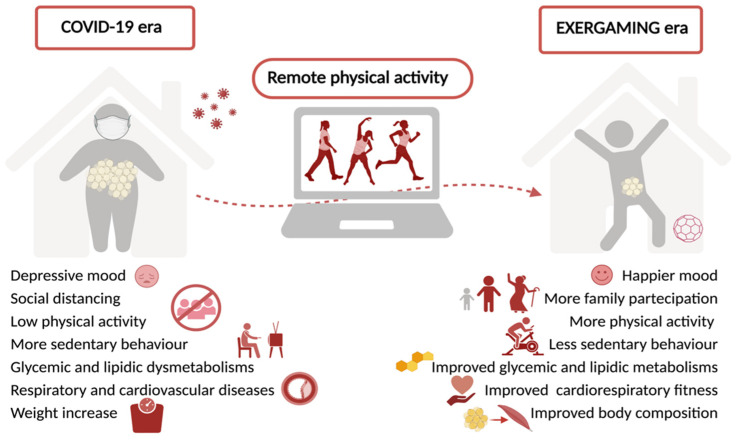
The coexistence of childhood obesity (or its risk) and COVID-19 pandemic put children and adolescents in greater risk to develop respiratory and cardiovascular diseases. In fact, the restrictions introduced to limit the spread of the virus had detrimental effects on various lifestyle components, especially in young population. This resulted in augmented levels of physical inactivity and sedentary behaviors and a reduced time spent in play outdoors or sport practices. Contrariwise, the increased use of technology led clinicians, teachers, and trainers to maintain relations with obese children/adolescents so as to reduce sedentary behaviors and the associated health risks. This narrative review aims to describe the role of Telehealth and Tele-exercise as useful tools in the management of pediatric obesity during COVID-19 pandemic. Telehealth and Tele-exercise were effective in promoting self-monitoring and behavioral changes, including adherence to exercise training programs in children and adolescents. Moreover, tele-exercise platforms such as applications or exergames allowed flexible scheduling, limiting the infection risks.
Keywords: COVID-19; children obesity; exercise; online training program; pediatrics; sedentary; telehealth.
Conflict of interest statement
The authors declare no conflict of interest.
Figures
References
-
- Cachón-Zagalaz J., Sánchez-Zafra M., Sanabrias-Moreno D., González-Valero G., Lara-Sánchez A.J., Zagalaz-Sánchez M.L. Systematic review of the literature about the effects of the COVID-19 pandemic on the lives of school children. Front. Psychol. 2020;11:569348. doi: 10.3389/fpsyg.2020.569348. - DOI - PMC - PubMed
