


Strategies of Elicitation to Enhance Bioactive Compound Content in Edible Plant Sprouts: A Bibliometric Study
- PMID: 34961237
- PMCID: PMC8709354
- DOI: 10.3390/plants10122759
Strategies of Elicitation to Enhance Bioactive Compound Content in Edible Plant Sprouts: A Bibliometric Study
Abstract
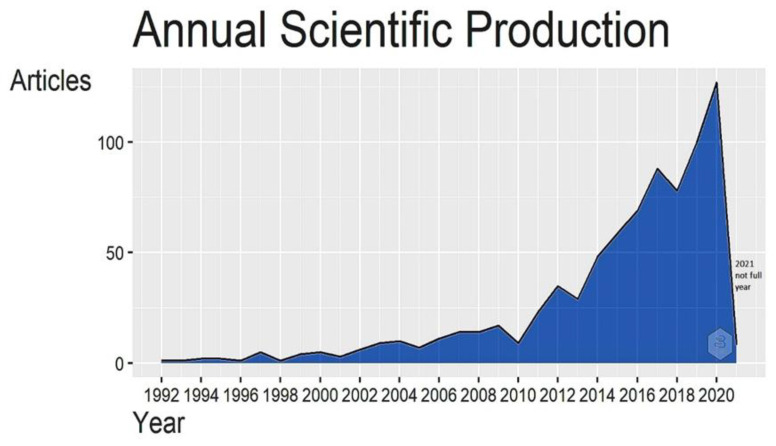
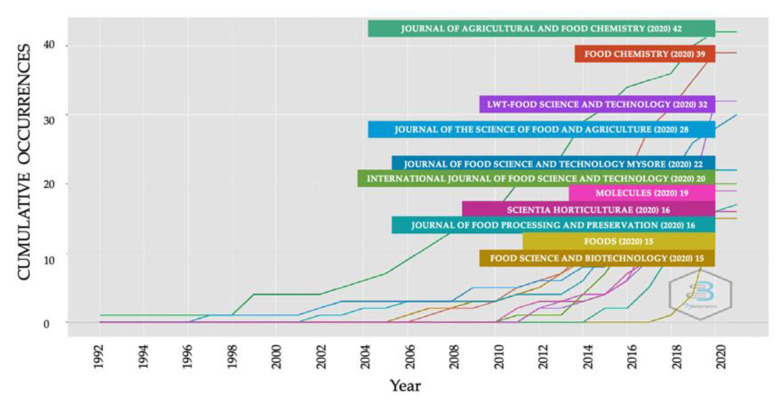
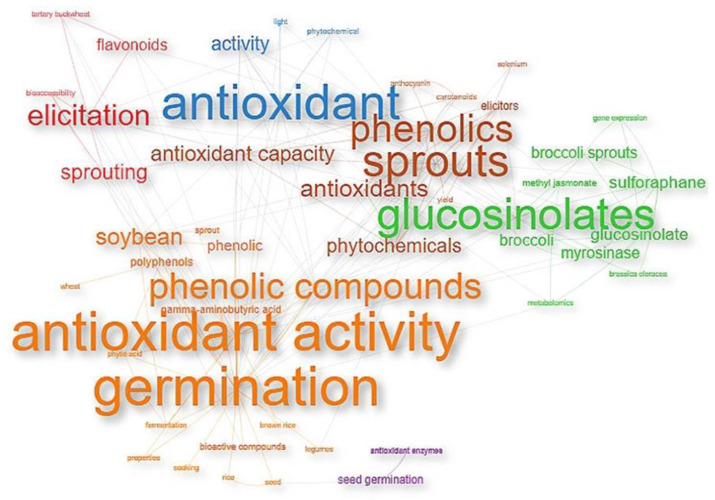
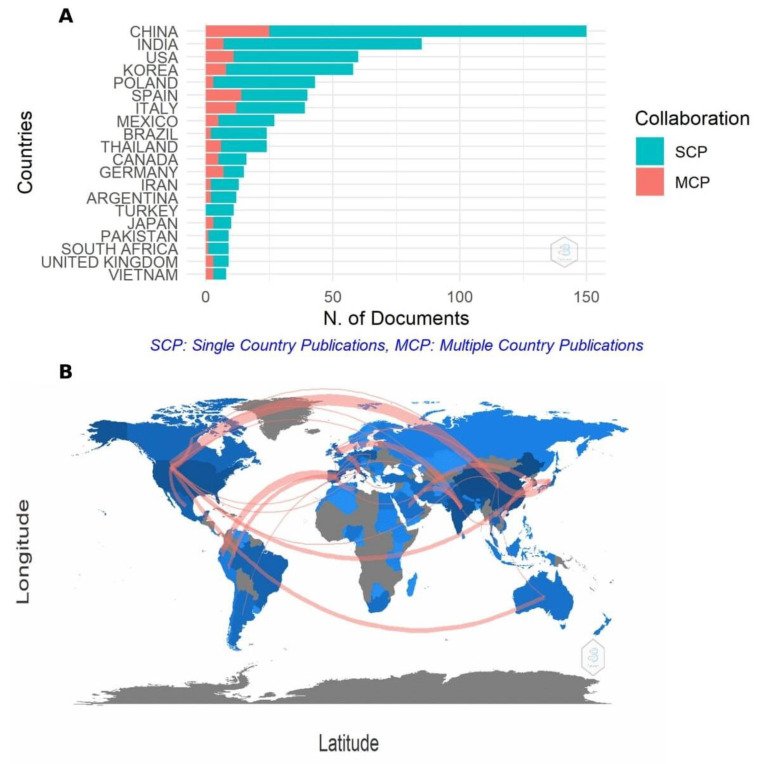
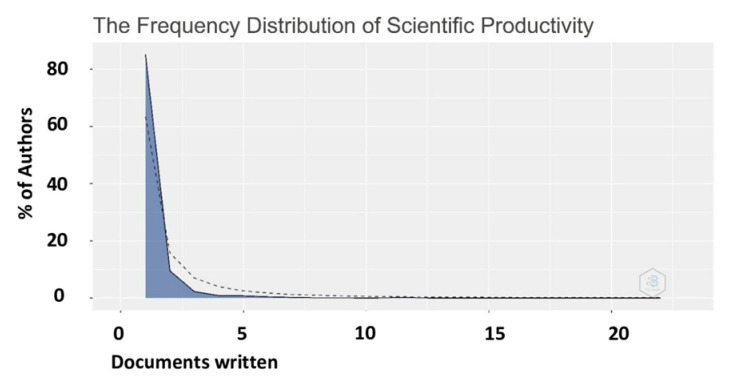
Vegetable sprouts are a food source that presents high content of bioactive compounds which can also be enhanced through elicitation mechanisms. To better understand the scientific production and research trends on this topic, a bibliometric analysis by means of the Web of Science database was carried out. The results showed significant growth in research on the elicitation of edible plants sprouts. The three most productive journals were the Journal of Agricultural and Food Chemistry, followed by Food Chemistry and LWT-Food Science and Technology. The co-occurrence of keyword analysis of the different authors showed that the main research topics in this domain were 'germination', 'antioxidant activity', 'sprouts', 'glucosinolates' and 'phenolics'. The countries with the highest number of scientific publications were China, followed by India and USA. The productivity patterns of the authors conformed to Lotka's law. This study provides an overview of research on elicitation to enrich bioactive compounds in sprouts, and the need to review and update the trends on this subject.
Keywords: antioxidants; bibliometric analysis; elicitation; germinated; phytochemicals.
Conflict of interest statement
The authors declare no conflict of interest.
Figures
References
-
- Thakur M., Bhattacharya S., Khosla P.K., Puri S. Improving production of plant secondary metabolites through biotic and abiotic elicitation. J. Appl. Res. Med. Aromat. Plants. 2019;12:1–12. doi: 10.1016/j.jarmap.2018.11.004. - DOI
-
- Alvarado A.M., Aguirre-Becerra H., Vázquez-Hernández M.C., Magaña-Lopez E., Parola-Contreras I., Caicedo-Lopez L.H., Contreras-Medina L.M., Garcia-Trejo J.F., Guevara-Gonzalez R.G., Feregrino-Perez A.A. Natural Bio-Active Compounds. Springer; Berlin/Heidelberg, Germany: 2019. Influence of elicitors and eustressors on the production of plant secondary metabolites; pp. 333–388.
-
- Ramirez-Estrada K., Vidal-Limon H., Hidalgo D., Moyano E., Golenioswki M., Cusidó R.M., Palazon J. Elicitation, an effective strategy for the biotechnological production of bioactive high-added value compounds in plant cell factories. Molecules. 2016;21:182. doi: 10.3390/molecules21020182. - DOI - PMC - PubMed
-
- Halder M., Roychowdhury D., Jha S. A critical review on biotechnological interventions for production and yield enhancement of secondary metabolites in hairy root cultures. Hairy Roots. 2018:21–44.
Publication types
Grants and funding
LinkOut - more resources
Full Text Sources
