


Remote provision of breastfeeding support and education: Systematic review and meta-analysis
- PMID: 34964542
- PMCID: PMC8932718
- DOI: 10.1111/mcn.13296
Remote provision of breastfeeding support and education: Systematic review and meta-analysis
Abstract
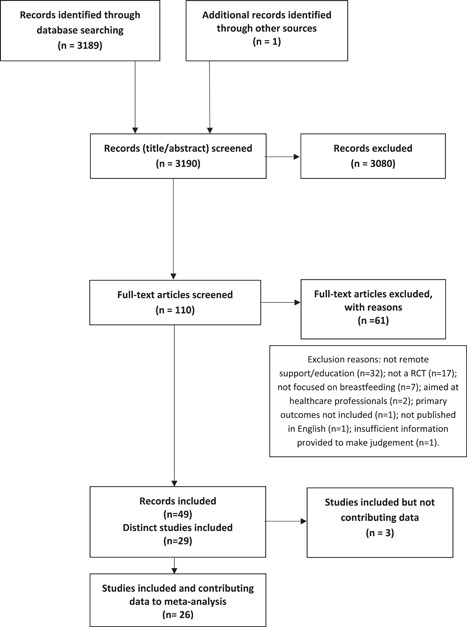
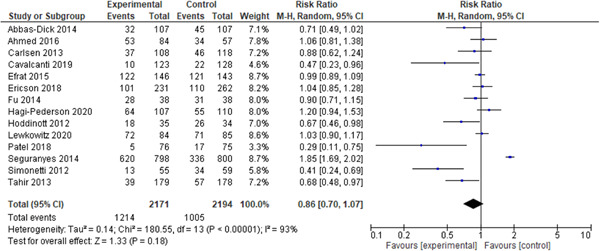
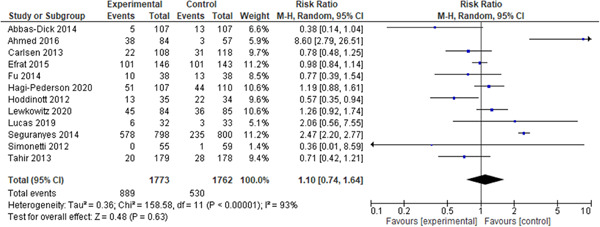
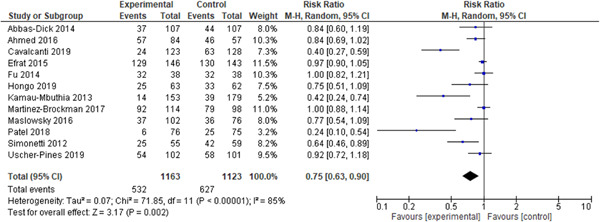
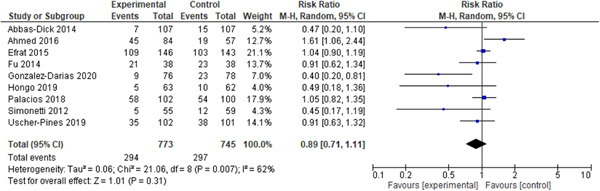
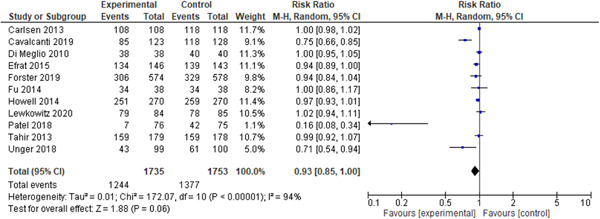
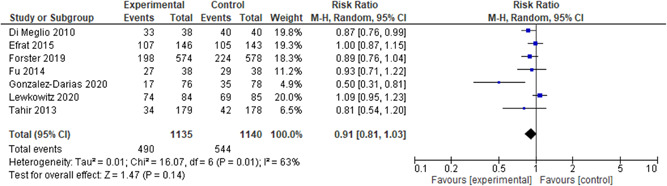
The Covid-19 pandemic has led to a substantial increase in remotely provided maternity care services, including breastfeeding support. It is, therefore, important to understand whether breastfeeding support provided remotely is an effective method of support. To determine if breastfeeding support provided remotely is an effective method of support. A systematic review and meta-analysis were conducted. Twenty-nine studies were included in the review and 26 contributed data to the meta-analysis. Remotely provided breastfeeding support significantly reduced the risk of women stopping exclusive breastfeeding at 3 months by 25% (risk ratio [RR]: 0.75, 95% confidence interval [CI]: 0.63, 0.90). There was no significant difference in the number of women stopping any breastfeeding at 4-8 weeks (RR: 1.10, 95% CI: 0.74, 1.64), 3 months (RR: 0.89, 95% CI: 0.71, 1.11), or 6 months (RR: 0.91, 95% CI: 0.81, 1.03) or the number of women stopping exclusive breastfeeding at 4-8 weeks (RR: 0.86, 95% CI: 0.70, 1.07) or 6 months (RR: 0.93, 95% CI: 0.85, 1.0). There was substantial heterogeneity of interventions in terms of mode of delivery, intensity, and providers. This demonstrates that remote interventions can be effective for improving exclusive breastfeeding at 3 months but the certainty of the evidence is low. Improvements in exclusive breastfeeding at 4-8 weeks and 6 months were only found when studies at high risk of bias were excluded. They are also less likely to be effective for improving any breastfeeding. Remote provision of breastfeeding support and education could be provided when it is not possible to provide face-to-face care.
Keywords: breast feeding; counselling; lactation; meta-analysis; online social support; systematic review; telemedicine.
© 2021 The Authors. Maternal & Child Nutrition published by John Wiley & Sons Ltd.
Conflict of interest statement
The authors declare that there are no conflict of interests.
Figures
References
-
- Abbass‐Dick, J. , & Dennis, C. L. (2018). Maternal and paternal experiences and satisfaction with a co‐parenting breastfeeding support intervention in Canada. Midwifery, 56, 135–141. - PubMed
-
- Abbass‐Dick, J. , Stern, S. B. , Nelson, L. E. , Watson, W. , & Dennis, C. L. (2015). Coparenting breastfeeding support and exclusive breastfeeding: A randomized controlled trial. Pediatrics, 135(1), 102–110. - PubMed
-
- Ahmed, A. H. , Roumani, A. M. , Szucs, K. , Zhang, L. , & King, D. (2016). The effect of interactive web‐based monitoring on breastfeeding exclusivity, intensity, and duration in healthy, term infants after hospital discharge. Journal of ObstetricGynecologic & Neonatal Nursing, 45(2), 143–154. - PMC - PubMed
-
- Alianmoghaddam, N. , Phibbs, S. , & Benn, C. (2018). Reasons for stopping exclusive breastfeeding between three and six months: A qualitative study. Journal of Pediatric Nursing, 39, 37–43. - PubMed
-
- Araque García, J. , García Perea, E. , Pedraz Marcos, A. , & Alba Diego, R. M. (2018). Efectividad de una consulta online de Enfermería en el seguimiento e instauración de la lactancia materna. Nure Investigación, 15(96), 1–9.
Publication types
MeSH terms
LinkOut - more resources
Full Text Sources
Medical
