


Isokinetic and functional shoulder outcomes after arthroscopic capsulolabral stabilization
- PMID: 34964916
- PMCID: PMC9596548
- DOI: 10.1007/s00402-021-04290-4
Isokinetic and functional shoulder outcomes after arthroscopic capsulolabral stabilization
Erratum in
-
Correction to: Isokinetic and functional shoulder outcomes after arthroscopic capsulolabral stabilization.Arch Orthop Trauma Surg. 2022 Dec;142(12):3937-3939. doi: 10.1007/s00402-022-04352-1. Arch Orthop Trauma Surg. 2022. PMID: 35103821 Free PMC article. No abstract available.
-
Correction to: Isokinetic and functional shoulder outcomes after arthroscopic capsulolabral stabilization.Arch Orthop Trauma Surg. 2023 Nov;143(11):6973. doi: 10.1007/s00402-023-05043-1. Arch Orthop Trauma Surg. 2023. PMID: 37695387 Free PMC article. No abstract available.
Abstract
Introduction: Shoulder stability is secured by dynamic and static stabilizers. Rotator cuff is responsible for dynamic stabilization. In cases of shoulder instability their activity is disturbed. Capsulolabral repair restores mainly static stabilization. This surgery treatment technique of shoulder instability was first described by Bankart in 1923. His idea, with further modifications, is commonly used up to this day. Evaluation of muscle shoulder recovery after stabilization should be one of the important criteria to allow patient to return to sport and work. However, not much isokinetic assessment after capsulolabral repair was described. The aim of this study were the following: the comparative assessment of the shoulder rotatory strength in patients following arthroscopic capsulolabral repair of unilateral anterior traumatic instability and clinical assessment with comparison of pre and post-operative results.
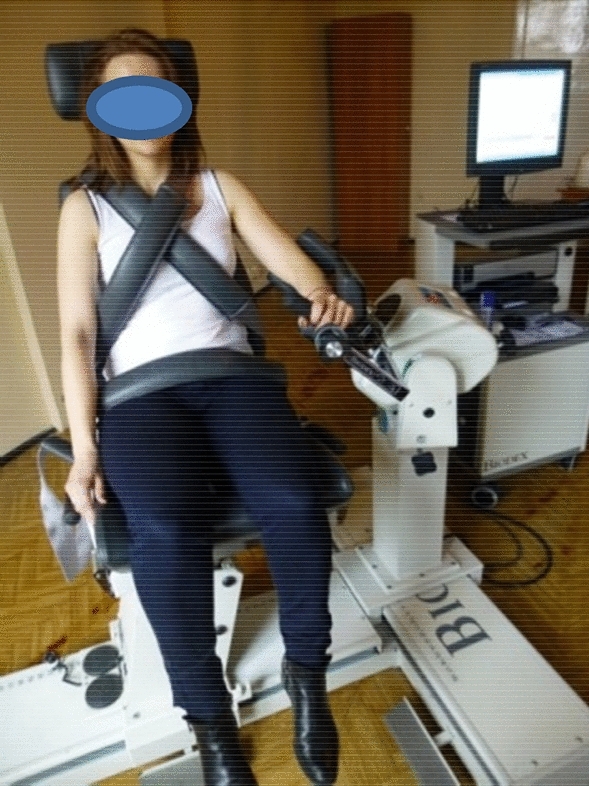
Material and methods: Forty-five patients, 14 women and 31 men, with an average follow-up of 4.4 years were tested bilaterally for internal and external rotation strength at four angular velocities. ASES and UCLA tests were collected before and after surgery.
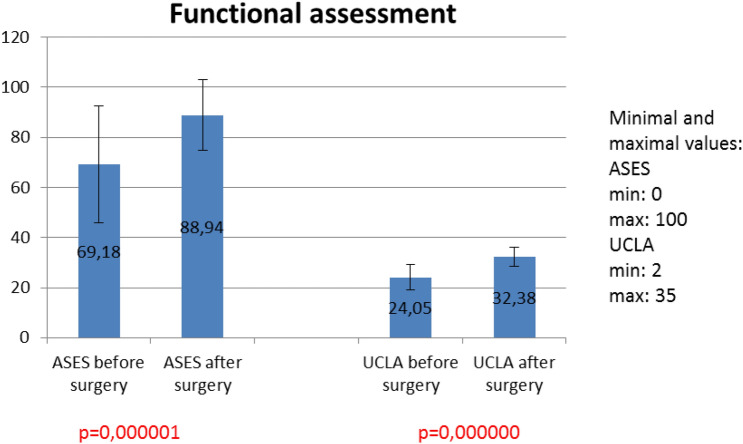
Results: The values of peak moment and muscle power parameters were slightly lower for an operated shoulder in comparison to a healthy shoulder for the external rotation. Total work parameter in external rotation was significantly lower for the operated shoulder in comparison to the non-operated side. The internal/external muscle group balance was lower for the operated shoulder in comparison to reference values in the women group. Furthermore, both ASES and UCLA scores were significantly higher after operation.
Conclusions: After arthroscopic capsulolabral shoulder stabilization, slight differences in isokinetic evaluation, especially in external shoulder rotation, occur. It affects rotators muscle balance. In functional evaluation significant improvement in shoulder function occurs.
Keywords: Capsulolabral repair; Isokinetic evaluation; Shoulder biomechanics; Shoulder instability.
© 2021. The Author(s).
Conflict of interest statement
All authors declare that they have no conflict of interest.
Figures
References
-
- Ateschrang K, Fiedler S, Schröter S, Stöckle U, Freude T. Duration of inability for work and return to physical work after arthroscopic and open labrum refixation. Z Orthop Unfall. 2014;152(3):252–259. - PubMed
MeSH terms
LinkOut - more resources
Full Text Sources
Medical
