Review
. 2021 Dec 29;9(1):63.
doi: 10.1186/s40635-021-00427-2.

Towards an ecological definition of sepsis: a viewpoint

Affiliations
Review

Towards an ecological definition of sepsis: a viewpoint

Michael Bauer et al. Intensive Care Med Exp. .

Abstract

In critically ill patients with sepsis, there is a grave lack of effective treatment options to address the illness-defining inappropriate host response. Currently, treatment is limited to source control and supportive care, albeit with imminent approval of immune modulating drugs for COVID-19-associated lung failure the potential of host-directed strategies appears on the horizon. We suggest expanding the concept of sepsis by incorporating infectious stress within the general stress response of the cell to define sepsis as an illness state characterized by allostatic overload and failing adaptive responses along with biotic (pathogen) and abiotic (e.g., malnutrition) environmental stress factors. This would allow conceptualizing the failing organismic responses to pathogens in sepsis with an ancient response pattern depending on the energy state of cells and organs towards other environmental stressors in general. Hence, the present review aims to decipher the heuristic value of a biological definition of sepsis as a failing stress response. These considerations may motivate a better understanding of the processes underlying "host defense failure" on the organismic, organ, cell and molecular levels.

Keywords: Allostatic overload; Energy metabolism; Host stress response; Resistance; Sepsis; Tolerance.


Conflict of interest statement

MS-H is an associate editor in Intensive Care Medicine. The authors declare that they have no competing interests.

Figures

Fig. 1
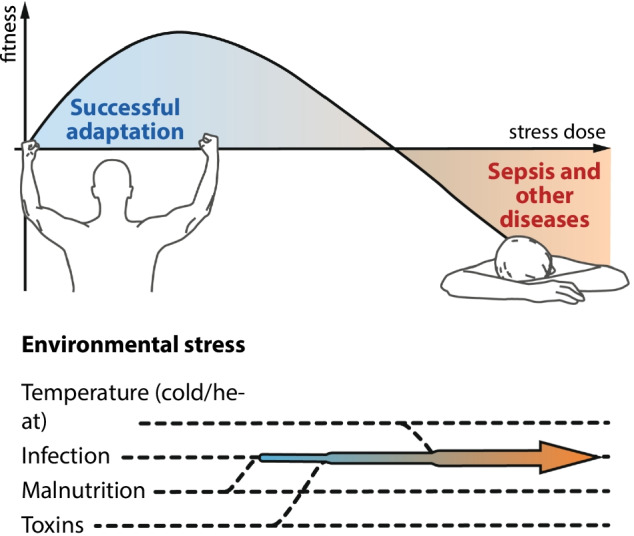
Fig. 1
Adaptive and maladaptive responses to environmental stress
Fig. 2
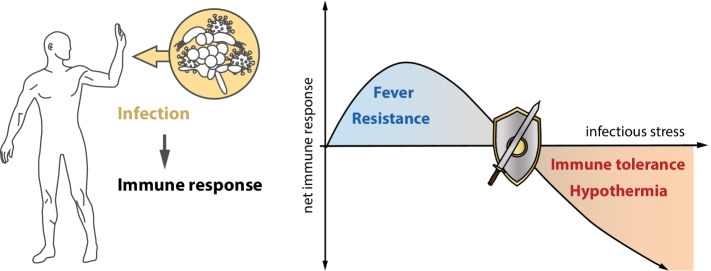
Fig. 2
Complementary patterns of immune responses and thermoregulation to infection. Key role of pathogen-induced infectious stress dose
Fig. 3
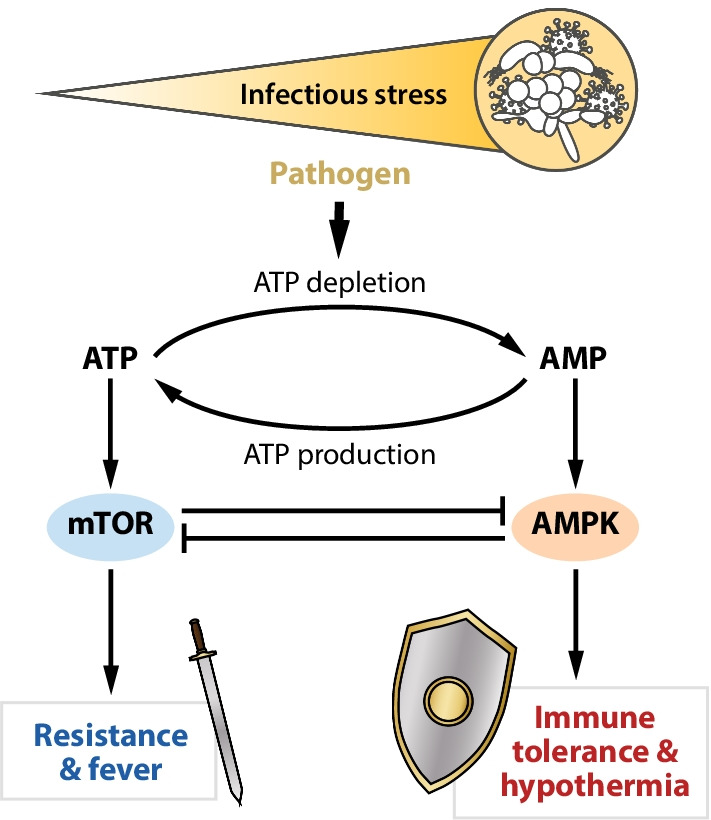
Fig. 3
Dose-dependent effects of pathogens on energy metabolism provoke complementary immune- and thermoregulatory responses to infection
Fig. 4
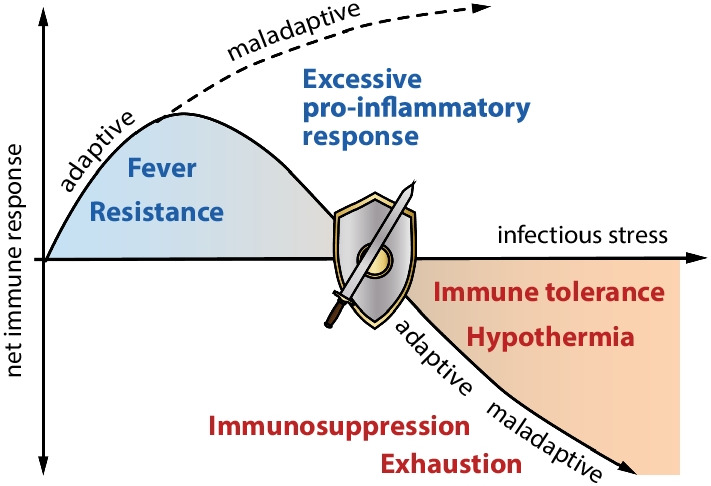
Fig. 4
Failing complementary immune responses and thermoregulation in sepsis
Fig. 5
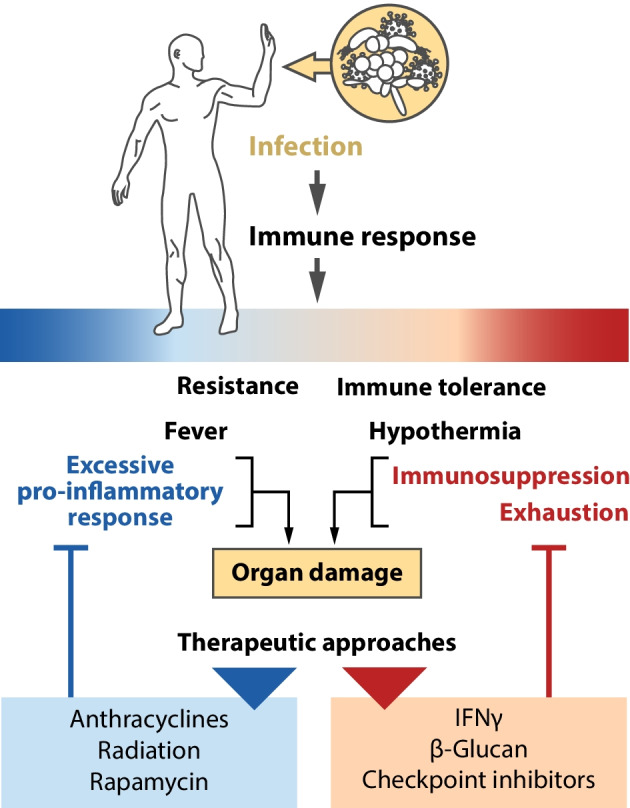
Fig. 5
Evolving therapeutic concepts to affect failing resistance and tolerance responses to infectious stress in sepsis

References

    1. Singer M, et al. The third international consensus definitions for sepsis and septic shock (Sepsis-3) JAMA. 2016;315:801–810. doi: 10.1001/jama.2016.0287. - DOI - PMC - PubMed
    1. Shankar-Hari M, et al. Developing a new definition and assessing new clinical criteria for septic shock: for the third international consensus definitions for sepsis and septic shock (Sepsis-3) JAMA. 2016;315:775–787. doi: 10.1001/jama.2016.0289. - DOI - PMC - PubMed
    1. Shankar-Hari M, Rubenfeld GD. Understanding long-term outcomes following sepsis: implications and challenges. Curr Infect Dis Rep. 2016;18:37. doi: 10.1007/s11908-016-0544-7. - DOI - PMC - PubMed
    1. Figueiredo N, et al. Anthracyclines induce DNA damage response-mediated protection against severe sepsis. Immunity. 2013;39:874–884. doi: 10.1016/j.immuni.2013.08.039. - DOI - PMC - PubMed
    1. Starr ME, et al. Short-term dietary restriction rescues mice from lethal abdominal sepsis and endotoxemia and reduces the inflammatory/coagulant potential of adipose tissue. Crit Care Med. 2016;44:e509–519. doi: 10.1097/CCM.0000000000001475. - DOI - PMC - PubMed

LinkOut - more resources