


Statistical Inferences Using Effect Sizes in Human Endothelial Function Research
- PMID: 34966462
- PMCID: PMC8654719
- DOI: 10.1007/s44200-021-00006-6
Statistical Inferences Using Effect Sizes in Human Endothelial Function Research
Abstract
Introduction: Magnitudes of change in endothelial function research can be articulated using effect size statistics. Effect sizes are commonly used in reference to Cohen's seminal guidelines of small (d = 0.2), medium (d = 0.5), and large (d = 0.8). Quantitative analyses of effect size distributions across various research disciplines have revealed values differing from Cohen's original recommendations. Here we examine effect size distributions in human endothelial function research, and the magnitude of small, medium, and large effects for macro and microvascular endothelial function.
Methods: Effect sizes reported as standardized mean differences were extracted from meta research available for endothelial function. A frequency distribution was constructed to sort effect sizes. The 25th, 50th, and 75th percentiles were used to derive small, medium, and large effects. Group sample sizes and publication year from primary studies were also extracted to observe any potential trends, related to these factors, in effect size reporting in endothelial function research.
Results: Seven hundred fifty-two effect sizes were extracted from eligible meta-analyses. We determined small (d = 0.28), medium (d = 0.69), and large (d = 1.21) effects for endothelial function that corresponded to the 25th, 50th, and 75th percentile of the data distribution.
Conclusion: Our data indicate that direct application of Cohen's guidelines would underestimate the magnitude of effects in human endothelial function research. This investigation facilitates future a priori power analyses, provides a practical guiding benchmark for the contextualization of an effect when no other information is available, and further encourages the reporting of effect sizes in endothelial function research.
Keywords: Effect sizes; Endothelial function; Statistical power; Statistics.
© The Author(s) 2021.
Conflict of interest statement
Conflict of interestNo conflicts of interest, financial or otherwise, are declared by the authors.
Figures
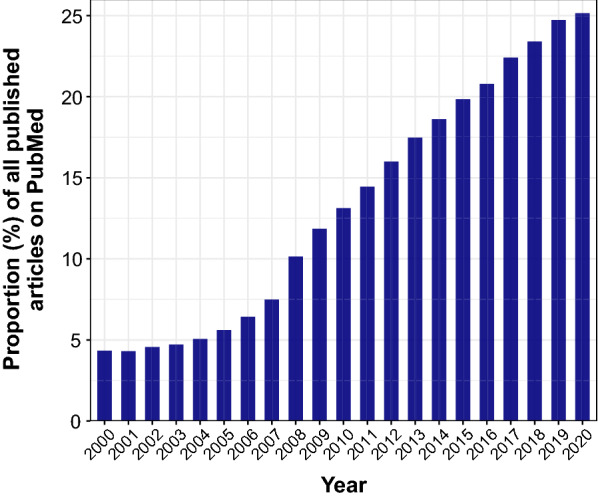


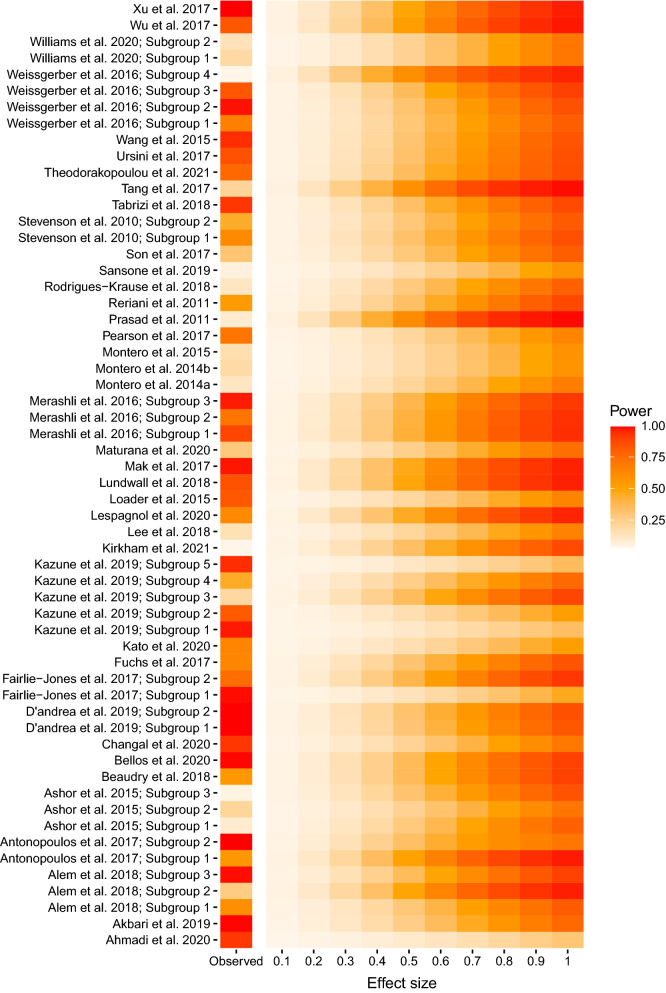
References
-
- Aczel B, Palfi B, Szollosi A, Kovacs M, Szaszi B, Szecsi P, et al. Quantifying support for the null hypothesis in psychology: an empirical investigation. Adv Methods Pract Psychol Sci. 2018;1:357–366. doi: 10.1177/2515245918773742. - DOI
LinkOut - more resources
Full Text Sources