


A Rapid Artificial Intelligence-Based Computer-Aided Diagnosis System for COVID-19 Classification from CT Images
- PMID: 34966463
- PMCID: PMC8712188
- DOI: 10.1155/2021/2560388
A Rapid Artificial Intelligence-Based Computer-Aided Diagnosis System for COVID-19 Classification from CT Images
Retraction in
-
Retracted: A Rapid Artificial Intelligence-Based Computer-Aided Diagnosis System for COVID-19 Classification from CT Images.Behav Neurol. 2023 Aug 9;2023:9876194. doi: 10.1155/2023/9876194. eCollection 2023. Behav Neurol. 2023. PMID: 37593136 Free PMC article.
Abstract
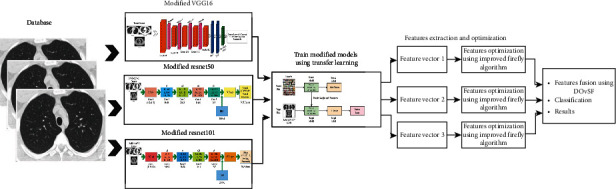
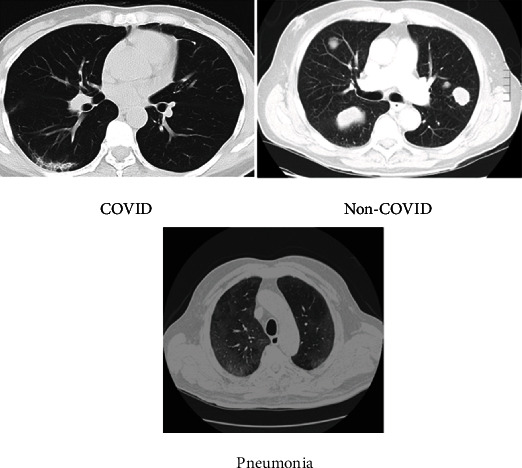
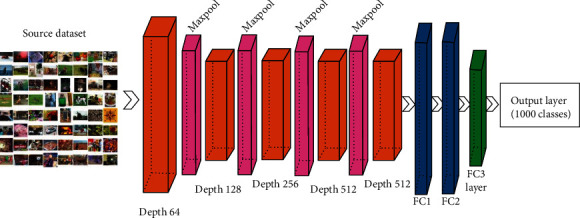
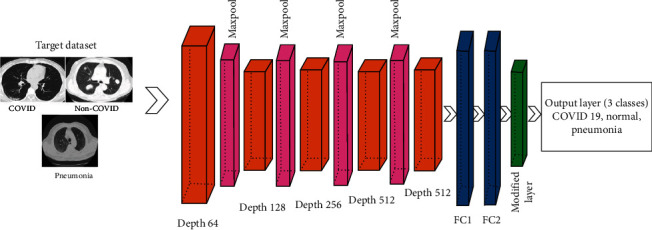
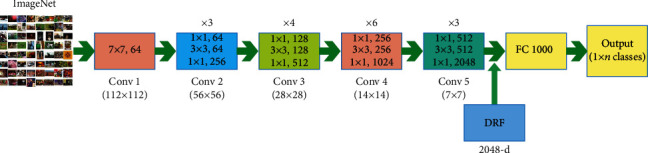
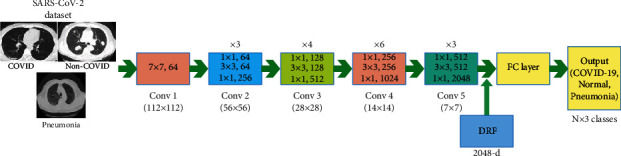
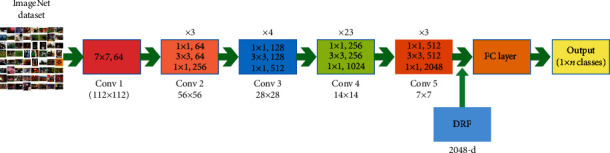
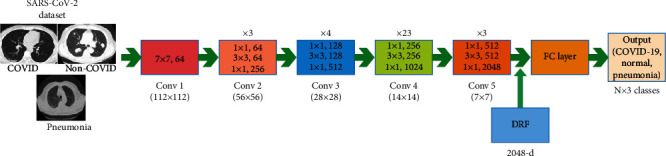
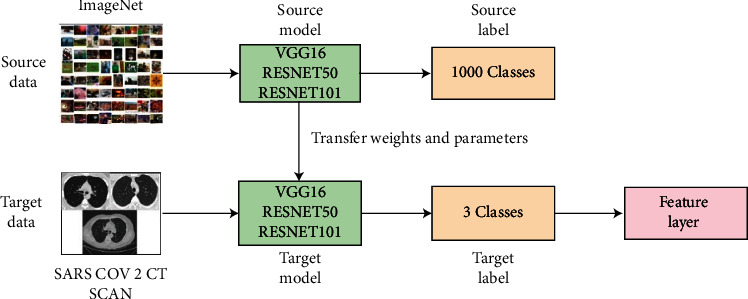
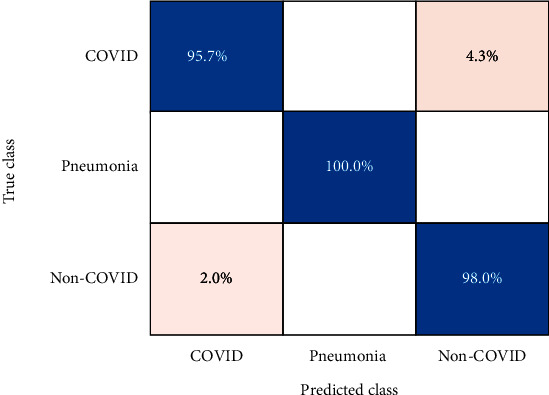
The excessive number of COVID-19 cases reported worldwide so far, supplemented by a high rate of false alarms in its diagnosis using the conventional polymerase chain reaction method, has led to an increased number of high-resolution computed tomography (CT) examinations conducted. The manual inspection of the latter, besides being slow, is susceptible to human errors, especially because of an uncanny resemblance between the CT scans of COVID-19 and those of pneumonia, and therefore demands a proportional increase in the number of expert radiologists. Artificial intelligence-based computer-aided diagnosis of COVID-19 using the CT scans has been recently coined, which has proven its effectiveness in terms of accuracy and computation time. In this work, a similar framework for classification of COVID-19 using CT scans is proposed. The proposed method includes four core steps: (i) preparing a database of three different classes such as COVID-19, pneumonia, and normal; (ii) modifying three pretrained deep learning models such as VGG16, ResNet50, and ResNet101 for the classification of COVID-19-positive scans; (iii) proposing an activation function and improving the firefly algorithm for feature selection; and (iv) fusing optimal selected features using descending order serial approach and classifying using multiclass supervised learning algorithms. We demonstrate that once this method is performed on a publicly available dataset, this system attains an improved accuracy of 97.9% and the computational time is almost 34 (sec).
Copyright © 2021 Hassaan Haider Syed et al.
Conflict of interest statement
All authors declare that they have no conflict of interest in this work.
Figures
References
-
- Özkaya U., Öztürk Ş., Barstugan M. Big Data Analytics and Artificial Intelligence Against COVID-19: Innovation Vision and Approach . Springer; 2020. Coronavirus (covid-19) classification using deep features fusion and ranking technique.
-
- Floriano I., Silvinato A., Bernardo W. M., Reis J. C., Soledade G. Accuracy of the polymerase chain reaction (PCR) test in the diagnosis of acute respiratory syndrome due to coronavirus: a systematic review and meta-analysis. Revista da Associação Médica Brasileira . 2020;66(7):880–888. doi: 10.1590/1806-9282.66.7.880. - DOI - PubMed
-
- Panwar H., Gupta P., Siddiqui M. K., Morales-Menendez R., Bhardwaj P., Singh V. A deep learning and grad-CAM based color visualization approach for fast detection of COVID-19 cases using chest X-ray and CT-scan images. Chaos, Solitons & Fractals . 2020;140, article 110190 doi: 10.1016/j.chaos.2020.110190. - DOI - PMC - PubMed
-
- Alghamdi A. S., Polat K., Alghoson A., Alshdadi A. A., Abd el-Latif A. A. Gaussian process regression (GPR) based non-invasive continuous blood pressure prediction method from cuff oscillometric signals. Applied Acoustics . 2020;164, article 107256 doi: 10.1016/j.apacoust.2020.107256. - DOI
Publication types
MeSH terms
LinkOut - more resources
Full Text Sources
Medical
