


Trends in Breast Cancer Incidence in Iraq During the Period 2000-2019
- PMID: 34967568
- PMCID: PMC9080353
- DOI: 10.31557/APJCP.2021.22.12.3889
Trends in Breast Cancer Incidence in Iraq During the Period 2000-2019
Abstract
Background: Breast cancer is the most common cancer among women around the world.
Objective: This study aims to explore the time trends in the incidence of breast cancer in Iraq in twenty years period (2000 to 2019) to assist health officials and decision-makers in planning and organizing programs to controlling breast cancer growth and enhance women's health.
Methods: Breast cancer data from 2000 to 2019 were obtained from the Iraqi Cancer Registry's yearly book series (Ministry of Health). The United Nations Population Division provides annual population estimates by 5-year age groups and gender. Joinpoint regression analysis was used to calculate and assess age-specific and age-standardized incidence rates.
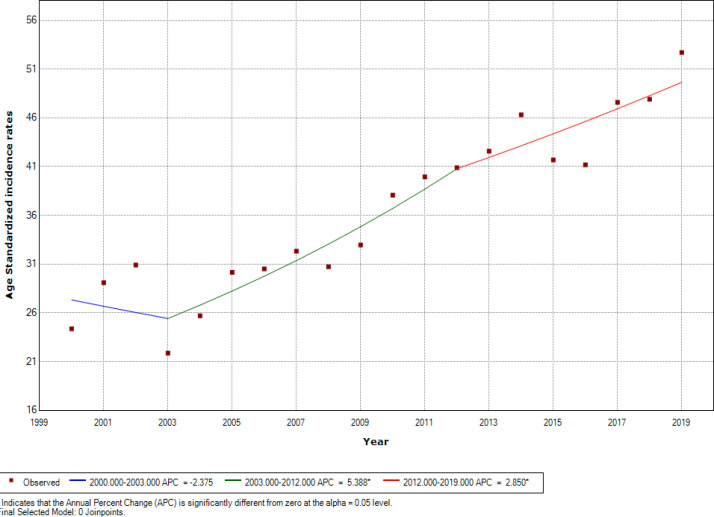
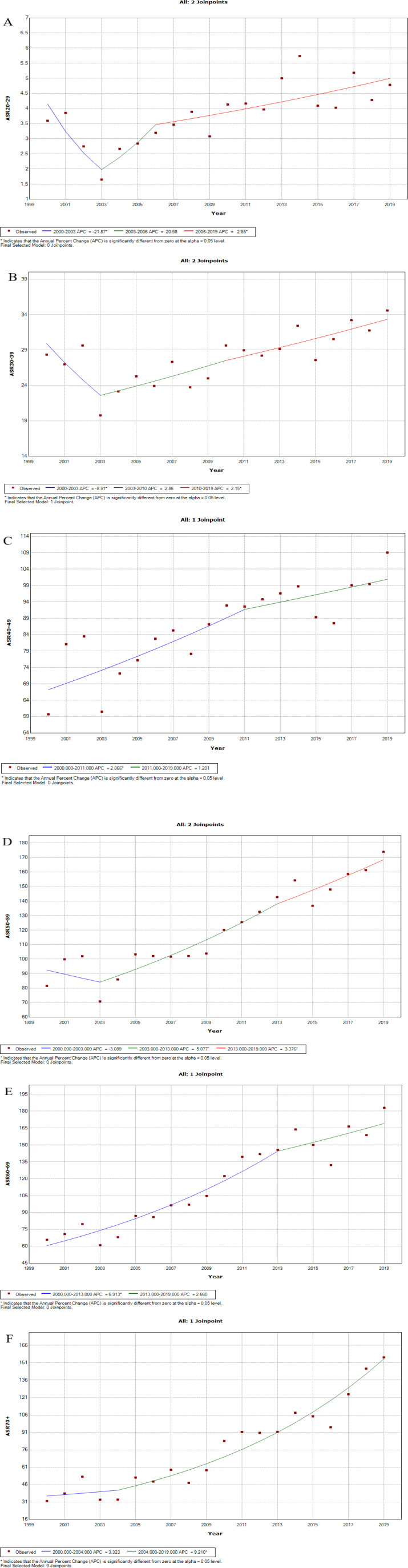
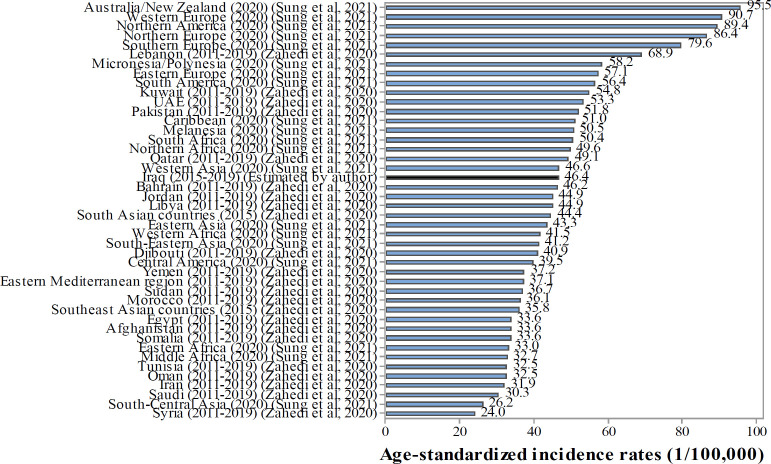
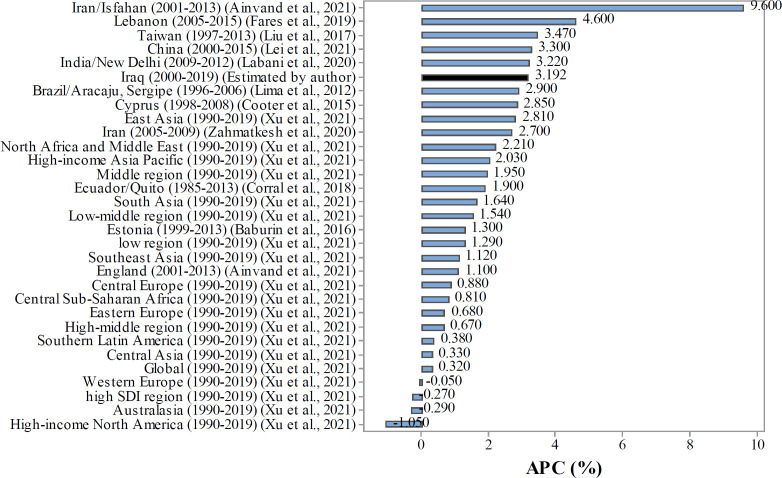
Results: A total of 72,022 breast cancer cases were identified among women in Iraq between 2000 and 2019. The average age-standardized incidence rate (ASIRs) was 37.883/100,000. Breast cancer ASIR Iraq exhibited a significantly rising trend during the study period, with an average annual percentage change (AAPC) of +3.192%. Furthermore, a significant increase in breast cancer incidence for the age group 40-49 (AAPC = +2.162%), 50-59 (AAPC=+3.210%), 60-69 (AAPC=+5.551%), and age 70 and over (AAPC=+7.943%) were observed. When compared to other countries in the world, Iraq had a moderate rate of breast cancer ASIR.
Conclusions: In summary, our finding revealed an increase in the incidence rates of breast cancer among Iraqi women from 2000 to 2019. Further research is needed to explore risk factors including levels of overweight, dietary changes, physical inactivity, obesity, smoking, high marriage age, and low birth rates to prevent and control breast cancer.
Keywords: Incidence; Poisson regression; breast cancer; time trends.
Figures
References
-
- Al-Alwan NA, Mualla FH. Promoting clinical breast examination as a screening tool for breast cancer in Iraq. Iraqi Nat J Nurs Special. 2014:27.
-
- Al-Alwan NA, Tawfeeq FN, Mallah NA. Demographic and clinical profiles of female patients diagnosed with breast cancer in Iraq. J Contemp Med Sci. 2019;5:14–9.
-
- Al-Hashimi MM, Wang XJ. Breast cancer in Iraq, incidence trends from 2000-2009. Asian Pac J Cancer Prev. 2014;15:281–6. - PubMed
-
- Baburin A, Aareleid T, Rahu M, Reedik L, Innos K. Recent changes in breast cancer incidence and mortality in Estonia: transition to the west. Acta Oncol. 2016;55:728–33. - PubMed
MeSH terms
LinkOut - more resources
Full Text Sources
Medical
