Amino Acids May Have Protective Effects on Salivary Glands of 5-FU-administered Mice
- PMID: 34972715
- PMCID: PMC8765155
- DOI: 10.21873/invivo.12691
Amino Acids May Have Protective Effects on Salivary Glands of 5-FU-administered Mice
Abstract
Background/aim: This study aimed to identify the most useful components of Elental® in the treatment of 5-fluorouracil (FU)-induced mucositis and salivary gland atrophy in mice.
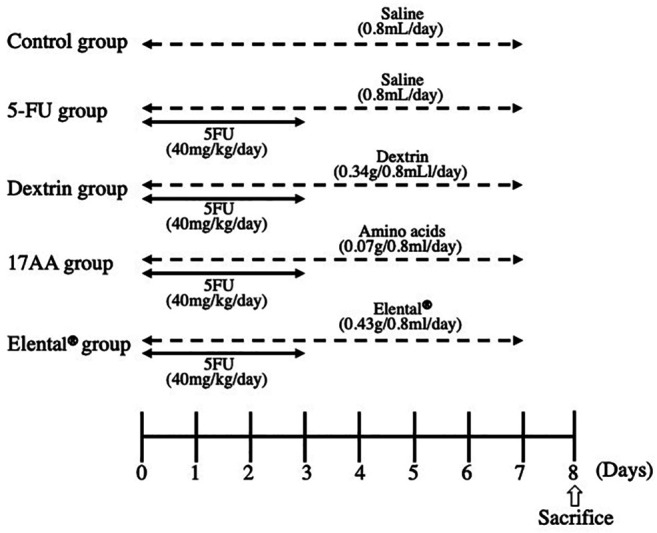
Materials and methods: Mice (except the control group) were intraperitoneally injected with 5-FU. The mice received saline (control group and 5-FU group), dextrin (Dextrin group), amino acids (17AA group), or Elental® (Elental® group).
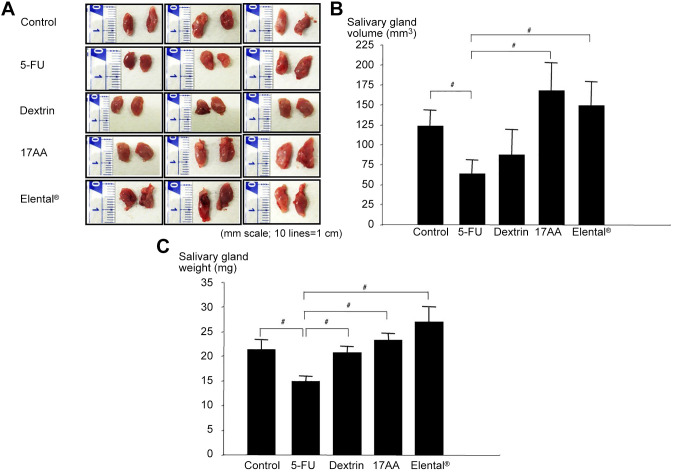
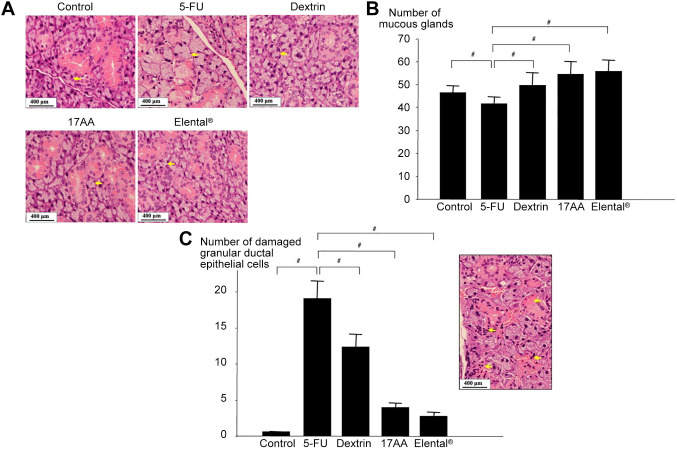
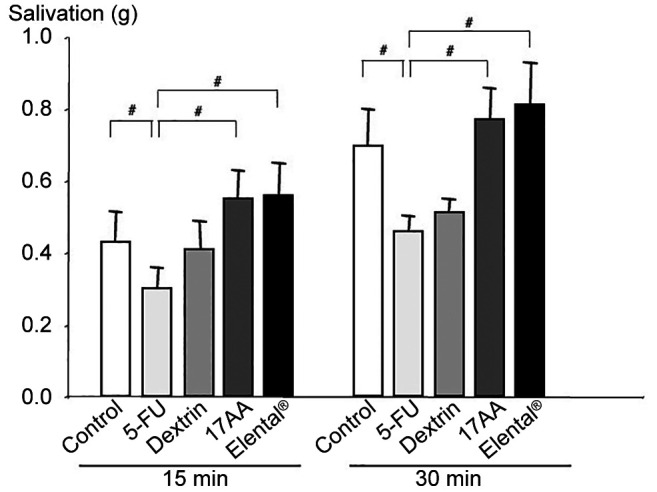
Results: The volume and weight of salivary glands was higher in 17AA and Elental® groups compared to 5-FU group. The number of mucous glands was higher, whereas the number of damaged granular ductal epithelial cells was lower in the salivary glands of all groups except the 5-FU group. Salivation was also decreased in the 5-FU group compared to the other groups.
Conclusion: Amino acids could be the most effective components of Elental® for protecting mouse salivary glands from 5-FU-induced atrophic changes, and might be useful in the treatment of oral mucositis in cancer patients.
Keywords: 5-flurouracil; Salivary gland; amino acid; elemental diet; oral mucositis.
Copyright © 2022 International Institute of Anticancer Research (Dr. George J. Delinasios), All rights reserved.
Conflict of interest statement
The Authors declare no conflicts of interest in relation to this study. The Authors are fully responsible for the content of this paper.
Figures
References
-
- Özel O, Ayçiçek A, Kenar F, Aktepe F, Sargin R, Yilmaz MD, Dereköy FS. Histopathologic changes in the rabbit submandibular gland after 5-fluorouracil chemotherapy. Turk J Med Sci. 2010;40(2):213–220. doi: 10.3906/sag-0807-10. - DOI
MeSH terms
Substances
LinkOut - more resources
Full Text Sources