


Development of a hoRizontal data intEgration classifier for NOn-invasive early diAgnosis of breasT cancEr: the RENOVATE study protocol
- PMID: 34972769
- PMCID: PMC8720992
- DOI: 10.1136/bmjopen-2021-054256
Development of a hoRizontal data intEgration classifier for NOn-invasive early diAgnosis of breasT cancEr: the RENOVATE study protocol
Abstract
Introduction: Standard procedures aimed at the early diagnosis of breast cancer (BC) present suboptimal accuracy and imply the execution of invasive and sometimes unnecessary tissue biopsies. The assessment of circulating biomarkers for diagnostic purposes, together with radiomics, is of great potential in BC management.
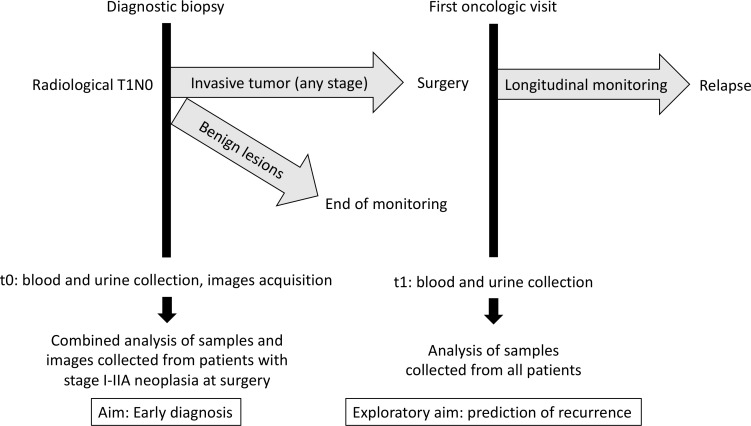
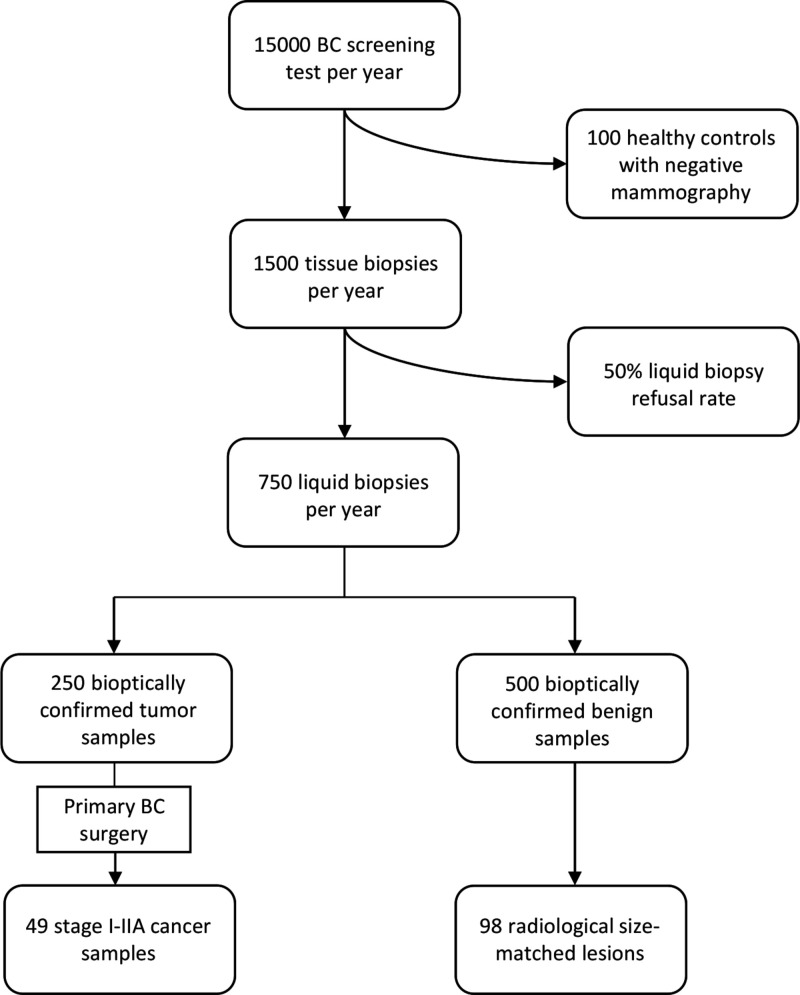
Methods and analysis: This is a prospective translational study investigating the accuracy of the combined assessment of multiple circulating analytes together with radiomic variables for early BC diagnosis. Up to 750 patients will be recruited at their presentation at the Diagnostic Senology Unit of Ospedale Policlinico San Martino (Genoa, IT) for the execution of a diagnostic biopsy after the detection of a suspect breast lesion (t0). Each recruited patient will be asked to donate peripheral blood and urine before undergoing breast biopsy. Blood and urine samples will also be collected from a cohort of 100 patients with negative mammography. For cases with histological diagnosis of invasive BC, a second sample of blood and urine will be collected after breast surgery. Circulating tumour DNA, cell-free methylated DNA and circulating proteins will be assessed in samples collected at t0 from patients with stage I-IIA BC at surgery together with those collected from patients with histologically confirmed benign lesions of similar size and from healthy controls with negative mammography. These analyses will be combined with radiomic variables extracted with freeware algorithms applied to cases and matched controls for which digital mammography is available. The overall goal of the present study is to develop a horizontal data integration classifier for the early diagnosis of BC.
Ethics and dissemination: This research protocol has been approved by Regione Liguria Ethics Committee (reference number: 2019/75, study ID: 4452). Patients will be required to provide written informed consent. Results will be published in international peer-reviewed scientific journals.
Trial registration number: NCT04781062.
Keywords: adult oncology; breast imaging; breast tumours; cancer genetics; health informatics.
© Author(s) (or their employer(s)) 2021. Re-use permitted under CC BY-NC. No commercial re-use. See rights and permissions. Published by BMJ.
Conflict of interest statement
Competing interests: None declared.
Figures
References
Publication types
MeSH terms
Associated data
LinkOut - more resources
Full Text Sources
Medical
