


A scoping review of the changing landscape of geriatric medicine in undergraduate medical education: curricula, topics and teaching methods
- PMID: 34973151
- PMCID: PMC8720165
- DOI: 10.1007/s41999-021-00595-0
A scoping review of the changing landscape of geriatric medicine in undergraduate medical education: curricula, topics and teaching methods
Abstract
Purpose: The world's population is ageing. Therefore, every doctor should receive geriatric medicine training during their undergraduate education. This review aims to summarise recent developments in geriatric medicine that will potentially inform developments and updating of undergraduate medical curricula for geriatric content.
Methods: We systematically searched the electronic databases Ovid Medline, Ovid Embase and Pubmed, from 1st January 2009 to 18th May 2021. We included studies related to (1) undergraduate medical students and (2) geriatric medicine or ageing or older adults and (3) curriculum or curriculum topics or learning objectives or competencies or teaching methods or students' attitudes and (4) published in a scientific journal. No language restrictions were applied.
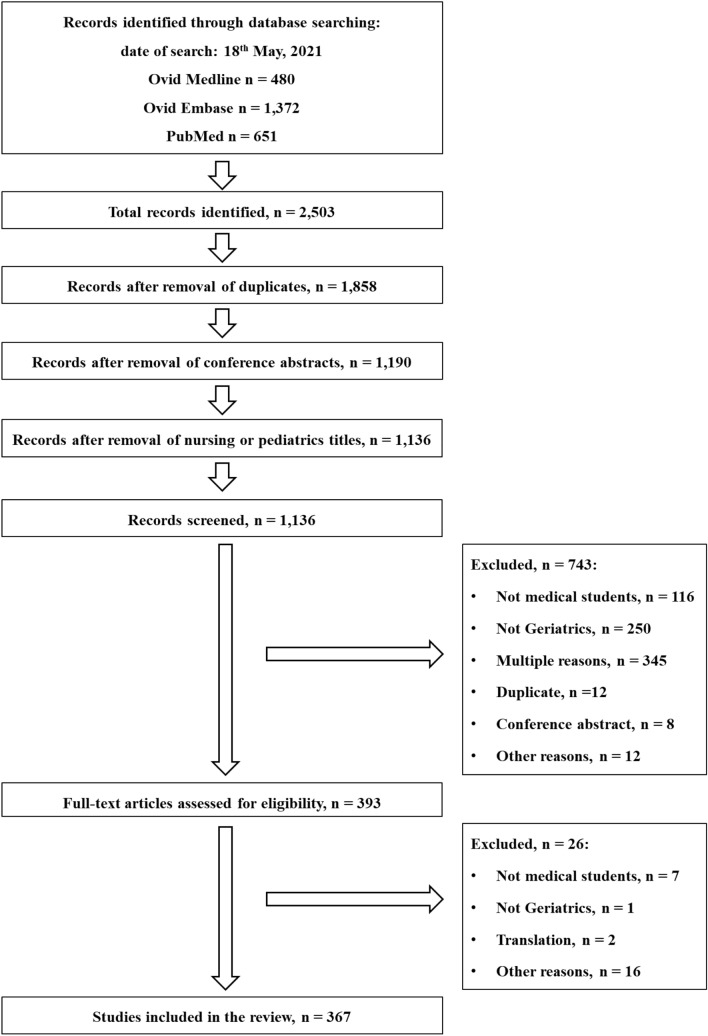
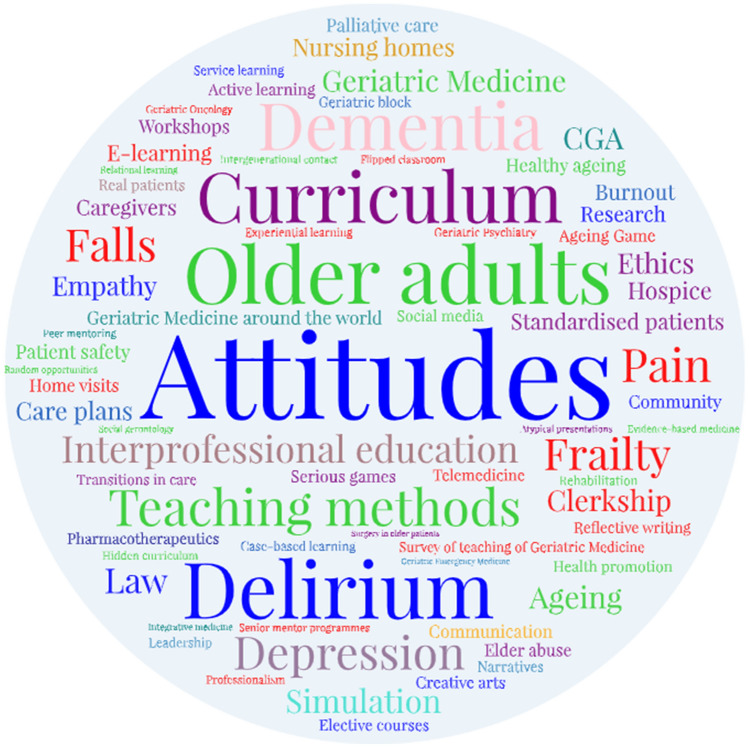
Results: We identified 2503 records and assessed the full texts of 393 records for eligibility with 367 records included in the thematic analysis. Six major themes emerged: curriculum, topics, teaching methods, teaching settings, medical students' skills and medical students' attitudes. New curricula focussed on minimum Geriatrics Competencies, Geriatric Psychiatry and Comprehensive Geriatric Assessment; vertical integration of Geriatric Medicine into the curriculum has been advocated. Emerging or evolving topics included delirium, pharmacotherapeutics, healthy ageing and health promotion, and Telemedicine. Teaching methods emphasised interprofessional education, senior mentor programmes and intergenerational contact, student journaling and reflective writing, simulation, clinical placements and e-learning. Nursing homes featured among new teaching settings. Communication skills, empathy and professionalism were highlighted as essential skills for interacting with older adults.
Conclusion: We recommend that future undergraduate medical curricula in Geriatric Medicine should take into account recent developments described in this paper. In addition to including newly emerged topics and advances in existing topics, different teaching settings and methods should also be considered. Employing vertical integration throughout the undergraduate course can usefully supplement learning achieved in a dedicated Geriatric Medicine undergraduate course. Interprofessional education can improve understanding of the roles of other professionals and improve team-working skills. A focus on improving communication skills and empathy should particularly enable better interaction with older patients. Embedding expected levels of Geriatric competencies should ensure that medical students have acquired the skills necessary to effectively treat older patients.
Keywords: Curriculum; Geriatric medicine; Geriatric psychiatry; Teaching methods; Undergraduate medical education.
© 2021. The Author(s).
Conflict of interest statement
On behalf of all authors, the corresponding author states that there is no conflict of interest.
Figures
References
-
- Keller I, Makipaa A, Kalenscher T, Kalache A. Global survey on geriatrics in the medical curriculum. Geneva: World Health Organization; 2002.
-
- Cruz-Jentoft AJ, Franco A, Sommer P, et al. Silver paper: the future of health promotion and preventive actions, basic research, and clinical aspects of age-related disease–a report of the European summit on age-related disease. Aging Clin Exp Res. 2009;21(6):376–385. doi: 10.1007/BF03327452. - DOI - PubMed
