


Clearly weighing the evidence in read-across can improve assessments of data-poor chemicals
- PMID: 34973387
- PMCID: PMC11880892
- DOI: 10.1016/j.yrtph.2021.105111
Clearly weighing the evidence in read-across can improve assessments of data-poor chemicals
Abstract
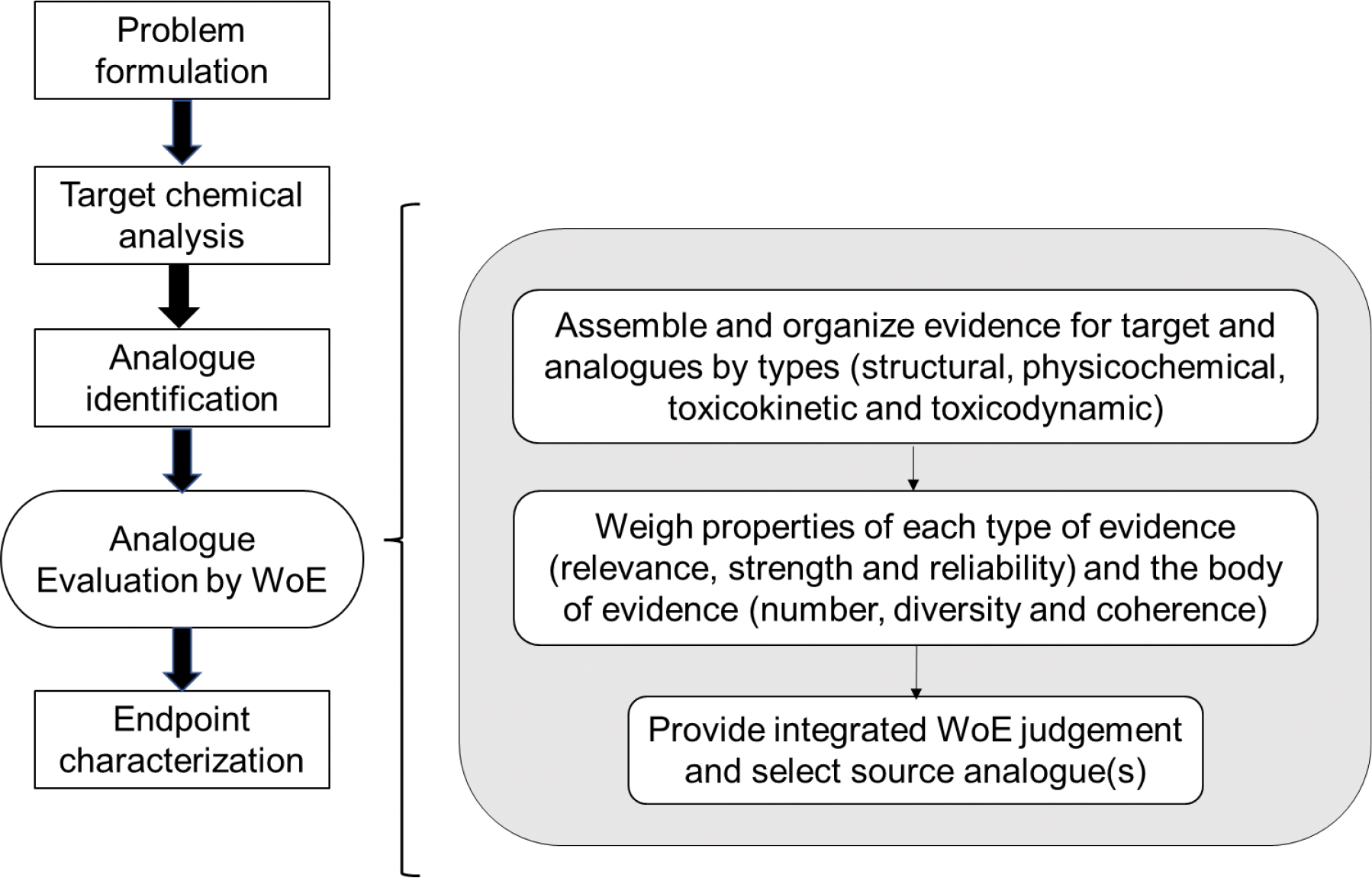
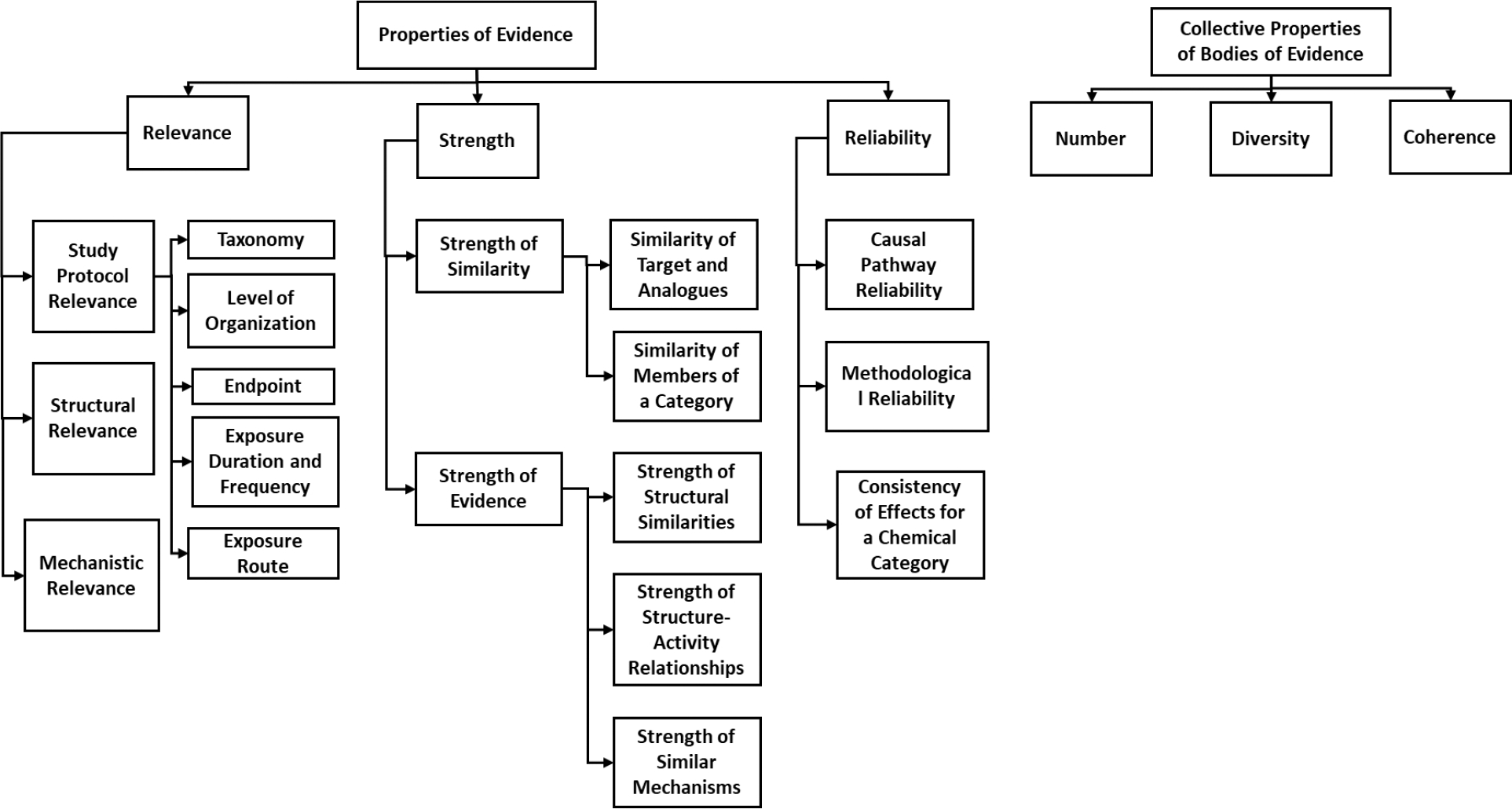
This paper provides a systematic weight-of-evidence method for read-across analyses of data-poor chemicals. The read-across technique extrapolates toxicity from analogous chemicals for which suitable test data are available to a target chemical. To determine that a candidate analogue is the 'best' and is sufficiently similar, the evidence for similarity of each candidate analogue to the target is weighed. We present a systematic weight of evidence method that provides transparency and imposes a consistent and rigorous inferential process. The method assembles relevant information concerning structure, physicochemical attributes, toxicokinetics, and toxicodynamics of the target and analogues. The information is then organized by evidence types and subtypes and weighted in terms of properties: relevance, strength, and reliability into weight levels, expressed as symbols. After evidence types are weighted, the bodies of evidence are weighted for collective properties: number, diversity, and coherence. Finally, the weights for the types and bodies of evidence are weighed for each analogue, and, if the overall weight of evidence is sufficient for one or more analogues, the analogue with the greatest weight is used to estimate the endpoint effect. We illustrate this WoE approach with a read-across analysis for screening the organochlorine contaminant, p,p'-dichlorodiphenyldichloroethane (DDD), for noncancer oral toxicity.
Keywords: Analogy; DDD; DDT; Evidence integration; Read-across; Weight of evidence.
Published by Elsevier Inc.
Figures
References
-
- Blackburn K, Stuard SB, 2014. A framework to facilitate consistent characterization of read across uncertainty. Regul Toxicol Pharmacol. 68, 353–62. - PubMed
-
- Bridges J, et al., 2017. Framework for the quantitative weight-of-evidence analysis of ‘omics data for regulatory purposes. Regul Toxicol Pharmacol 91 Suppl 1, S46–s60. - PubMed
-
- ChemIDplus, 2017. Chemidplus database. National Institutes of Health, U.S. Library of Medicine, Bethesda, MD.
-
- Cormier SM, et al., 2010. Causal Characteristics for Ecoepidemiology. Human and Ecological Risk Assessment: An International Journal. 16, 53–73.
MeSH terms
Grants and funding
LinkOut - more resources
Full Text Sources
Research Materials
Miscellaneous
