


SARS-CoV-2 Transmissibility Within Day Care Centers-Study Protocol of a Prospective Analysis of Outbreaks in Germany
- PMID: 34976930
- PMCID: PMC8717701
- DOI: 10.3389/fpubh.2021.773850
SARS-CoV-2 Transmissibility Within Day Care Centers-Study Protocol of a Prospective Analysis of Outbreaks in Germany
Abstract
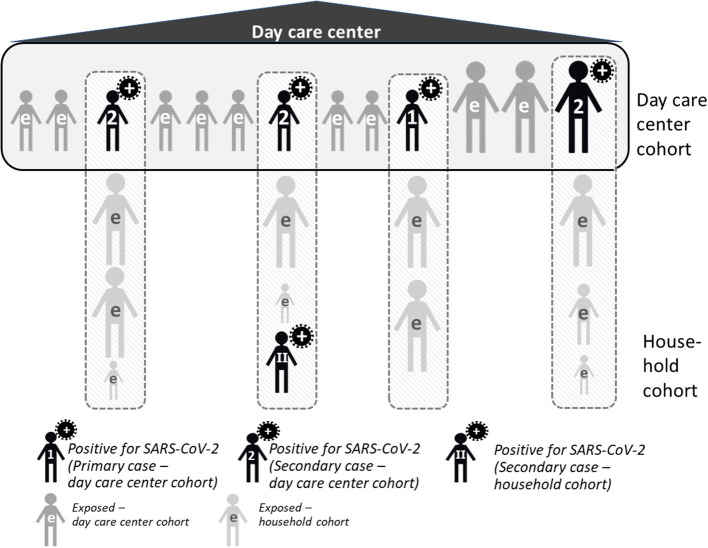
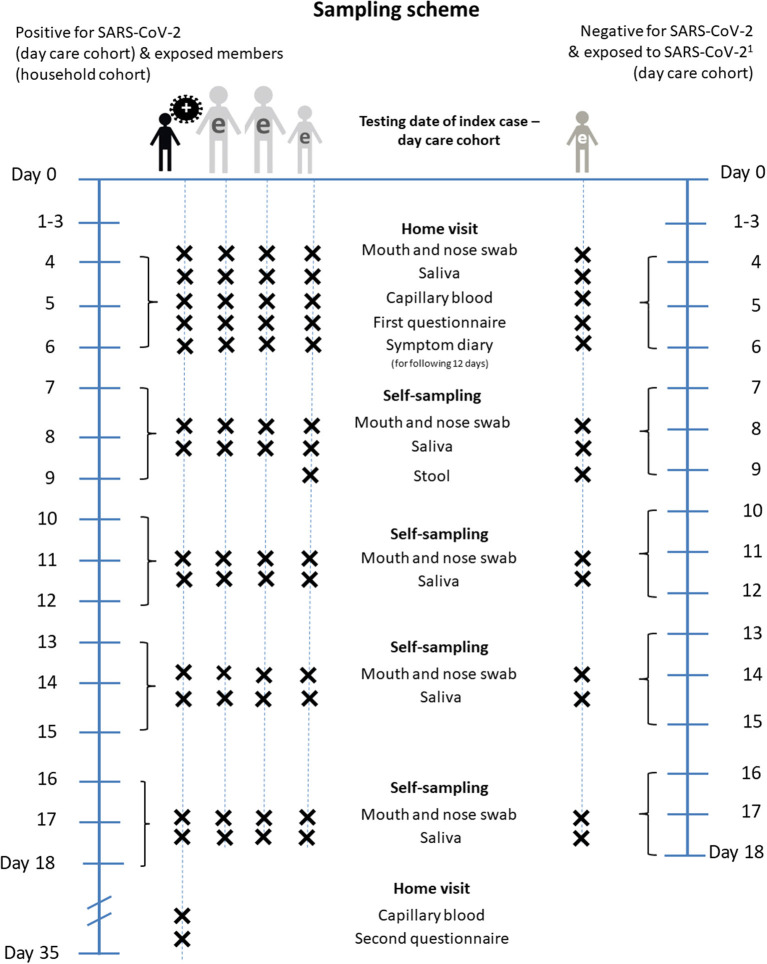
Introduction: Until today, the role of children in the transmission dynamics of SARS-CoV-2 and the development of the COVID-19 pandemic seems to be dynamic and is not finally resolved. The primary aim of this study is to investigate the transmission dynamics of SARS-CoV-2 in child day care centers and connected households as well as transmission-related indicators and clinical symptoms among children and adults. Methods and Analysis: COALA ("Corona outbreak-related examinations in day care centers") is a day care center- and household-based study with a case-ascertained study design. Based on day care centers with at least one reported case of SARS-CoV-2, we include one- to six-year-old children and staff of the affected group in the day care center as well as their respective households. We visit each child's and adult's household. During the home visit we take from each household member a combined mouth and nose swab as well as a saliva sample for analysis of SARS-CoV-2-RNA by real-time reverse transcription polymerase chain reaction (real-time RT-PCR) and a capillary blood sample for a retrospective assessment of an earlier SARS-CoV-2 infection. Furthermore, information on health status, socio-demographics and COVID-19 protective measures are collected via a short telephone interview in the subsequent days. In the following 12 days, household members (or parents for their children) self-collect the same respiratory samples as described above every 3 days and a stool sample for children once. COVID-19 symptoms are documented daily in a symptom diary. Approximately 35 days after testing the index case, every participant who tested positive for SARS-CoV-2 during the study is re-visited at home for another capillary blood sample and a standardized interview. The analysis includes secondary attack rates, by age of primary case, both in the day care center and in households, as well as viral shedding dynamics, including the beginning of shedding relative to symptom onset and viral clearance. Discussion: The results contribute to a better understanding of the epidemiological and virological transmission-related indicators of SARS-CoV-2 among young children, as compared to adults and the interplay between day care and households.
Keywords: COVID-19; SARS-CoV-2; children; day care center; secondary infection rate; susceptibility; symptoms; transmission.
Copyright © 2021 Schienkiewitz, Jordan, Hornbacher, Perlitz, Zeisler, Sandoni, Kubisch, Wess, Kuttig, Schaffrath-Rosario, Damerow, Rattay, Varnaccia, Loer, Wormsbächer, Cohrdes, Wetzstein, Albrecht, Hey, Michel, Schrick, Gößwald, Allen, Schlaud, Busch, Butschalowsky, Wernitz, Otte im Kampe, Buchholz, Haas, Schaade, Wieler, Ziese, Lampert and Loss.
Conflict of interest statement
The authors declare that the research was conducted in the absence of any commercial or financial relationships that could be construed as a potential conflict of interest.
Figures
References
-
- Robert Koch-Institut (RKI) Täglicher Lagebericht des RKI zur Coronavirus-Krankheit-2019 (COVID-19). Aktualisierter Stand für Deutschland. Berlin: RKI; (2020). Available online at: https://www.rki.de/DE/Content/InfAZ/N/Neuartiges_Coronavirus/Situationsb... (accessed July 13, 2020).
-
- Hoehl S, Kreutzer E, Schenk B, Westhaus S, Foppa I, Herrmann E. Longitudinal testing for respiratory and gastrointestinal shedding of SARS-CoV-2 in day care centres in Hesse, Germany. Results of the SAFE KiDS Study Clin Infect Dis. (2021) 73:e3036–41. 10.1101/2020.11.02.20223859 - DOI - PMC - PubMed
Publication types
MeSH terms
LinkOut - more resources
Full Text Sources
Medical
Miscellaneous
