


Insights into phosphatase-activated chemical defense in a marine sponge holobiont
- PMID: 34977575
- PMCID: PMC8637855
- DOI: 10.1039/d1cb00163a
Insights into phosphatase-activated chemical defense in a marine sponge holobiont
Abstract
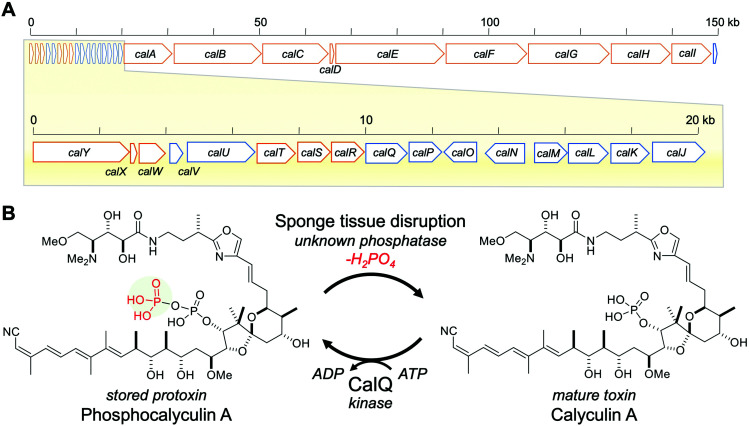
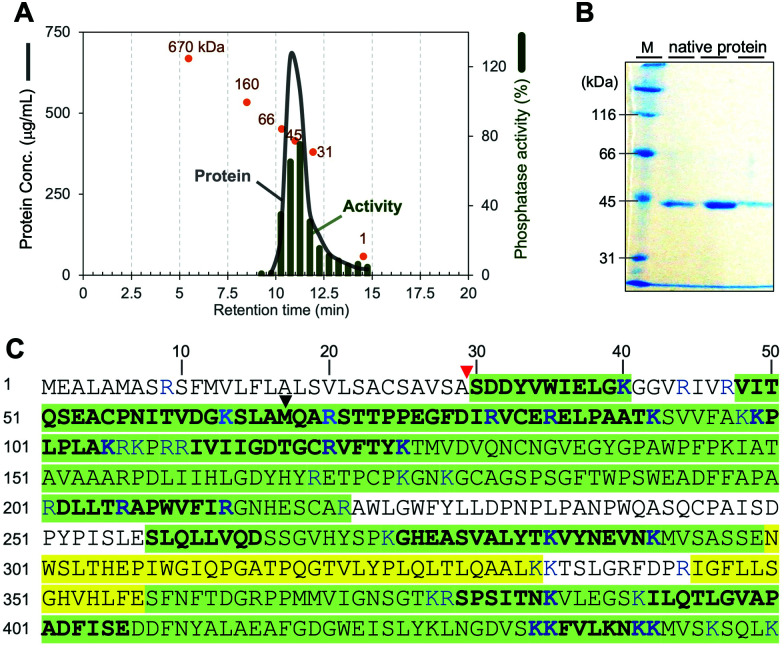
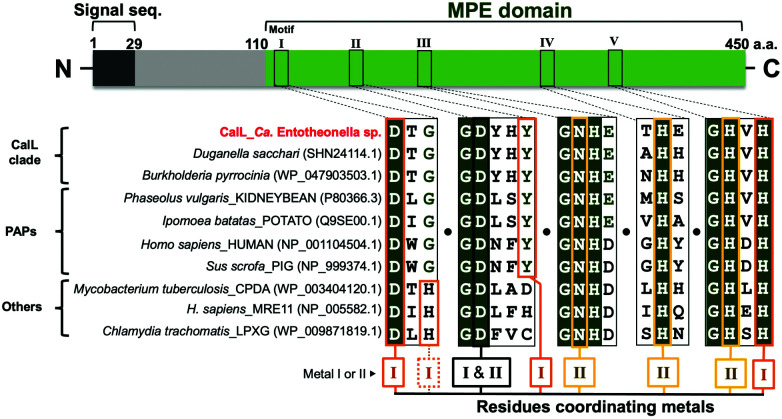
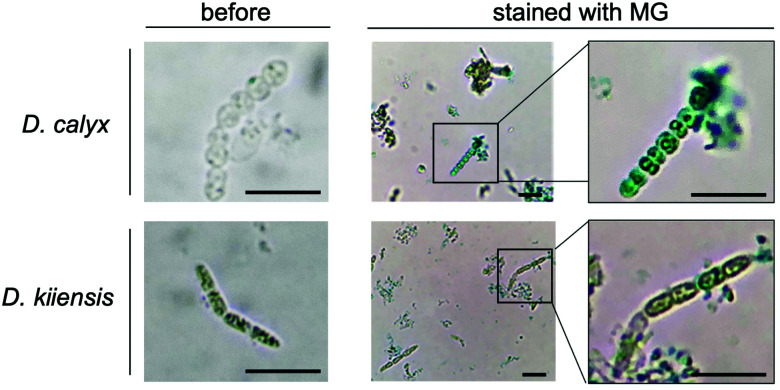
Marine sponges often contain potent cytotoxic compounds, which in turn evokes the principle question of how marine sponges avoid self-toxicity. In a marine sponge Discodermia calyx, the highly toxic calyculin A is detoxified by the phosphorylation, which is catalyzed by the phosphotransferase CalQ of a producer symbiont, "Candidatus Entotheonella" sp. Here we show the activating mechanism to dephosphorylate the stored phosphocalyculin A protoxin. The phosphatase specific to phosphocalyculin A is CalL, which is also encoded in the calyculin biosynthetic gene cluster. CalL represents a new clade and unprecedently coordinates the heteronuclear metals Cu and Zn. CalL is localized in the periplasmic space of the sponge symbiont, where it is ready for the on-demand production of calyculin A in response to sponge tissue disruption.
This journal is © The Royal Society of Chemistry.
Conflict of interest statement
There are no conflicts to declare.
Figures
References
-
- Wright J. T. Benkendorff K. Davis A. R. J. Exp. Mar. Biol. Ecol. 1997;213:199–213. doi: 10.1016/S0022-0981(96)02768-2. - DOI
LinkOut - more resources
Full Text Sources
Miscellaneous
