


The blood level of thioredoxin 1 as a supporting biomarker in the detection of breast cancer
- PMID: 34979986
- PMCID: PMC8722095
- DOI: 10.1186/s12885-021-09055-1
The blood level of thioredoxin 1 as a supporting biomarker in the detection of breast cancer
Abstract
Background: There is a long-time unmet need for a means to detect breast cancer (BC) using blood. Although mammography is accepted as the gold standard for screening, a blood-based diagnostic can complement mammography and assist in the accurate detection of BC in the diagnostic process period of early diagnosis. We have previously reported the possible use of thioredoxin 1 (Trx1) in serum as a novel means to detect BC. In the present study, we validated the clinical utility of Trx1 to identify BC by testing sera from biopsy-confirmed cancer patients and women without cancer.
Methods: We have generated monoclonal antibodies against Trx1 and developed an ELISA kit that can quantitate Trx1 in sera. The level of Trx1 was determined in each serum from women without cancer (n = 114), as well as in serum from patients with BC (n = 106) and other types of cancers (n = 74), including cervical, lung, stomach, colorectal, and thyroid cancer. The sera from BC patients were collected and classified by the subjects' age and cancer stage. In addition to the Trx1 levels of BC patients, several pathological and molecular aspects of BC were analyzed. Test results were retrospectively compared to those from mammography. Each test was duplicated, and test results were analyzed by ROC analysis, one-way ANOVA tests, and unpaired t-tests.
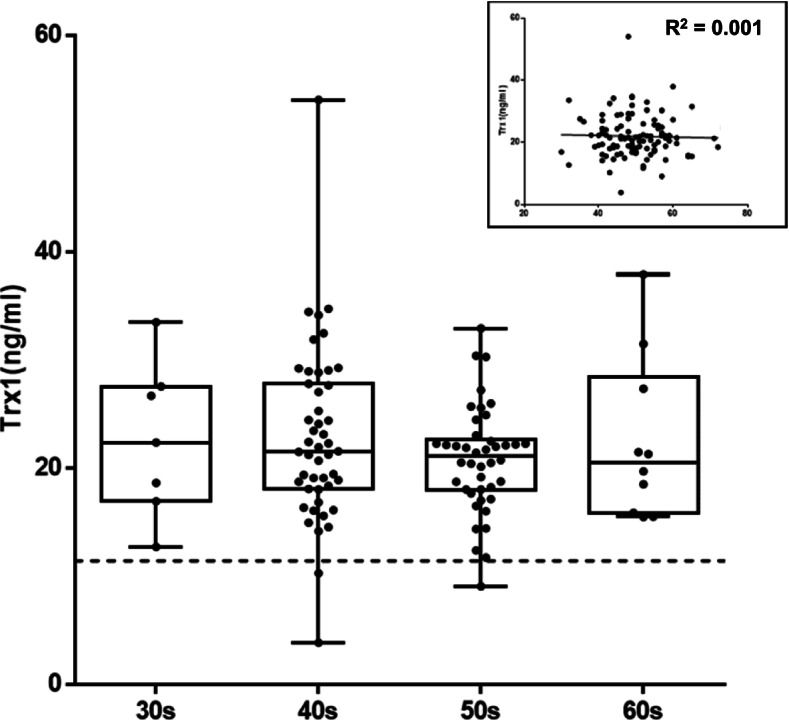
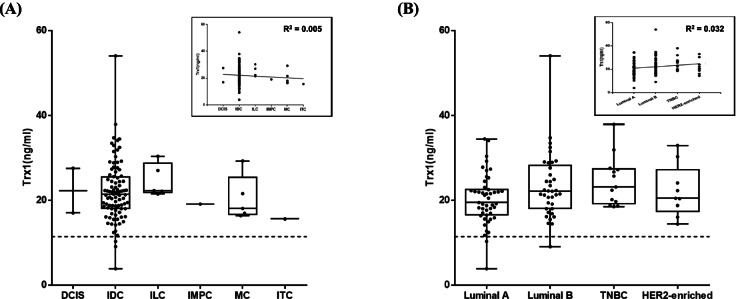
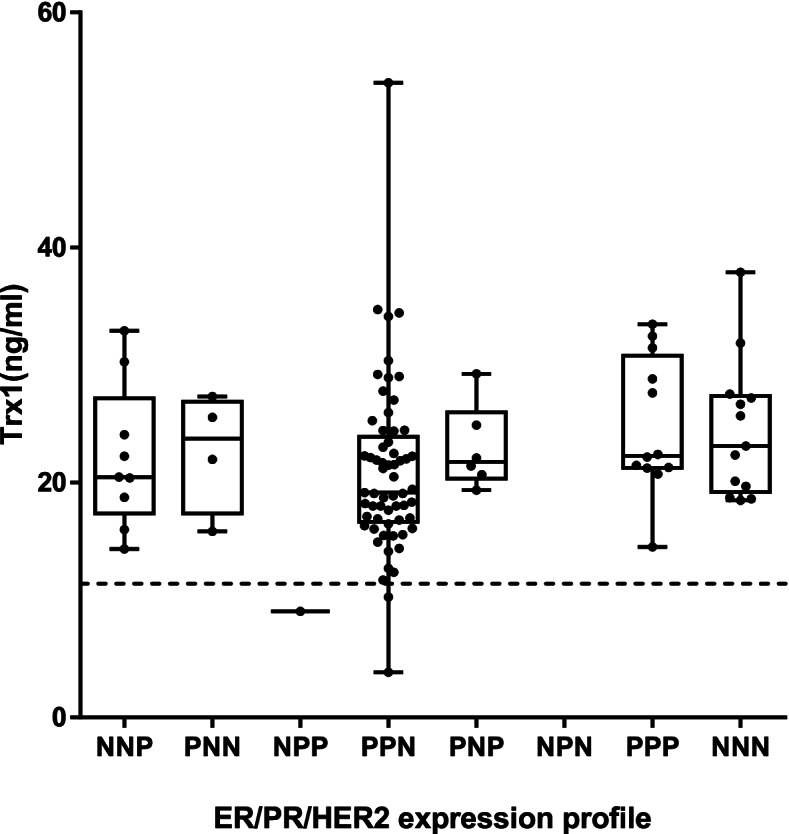
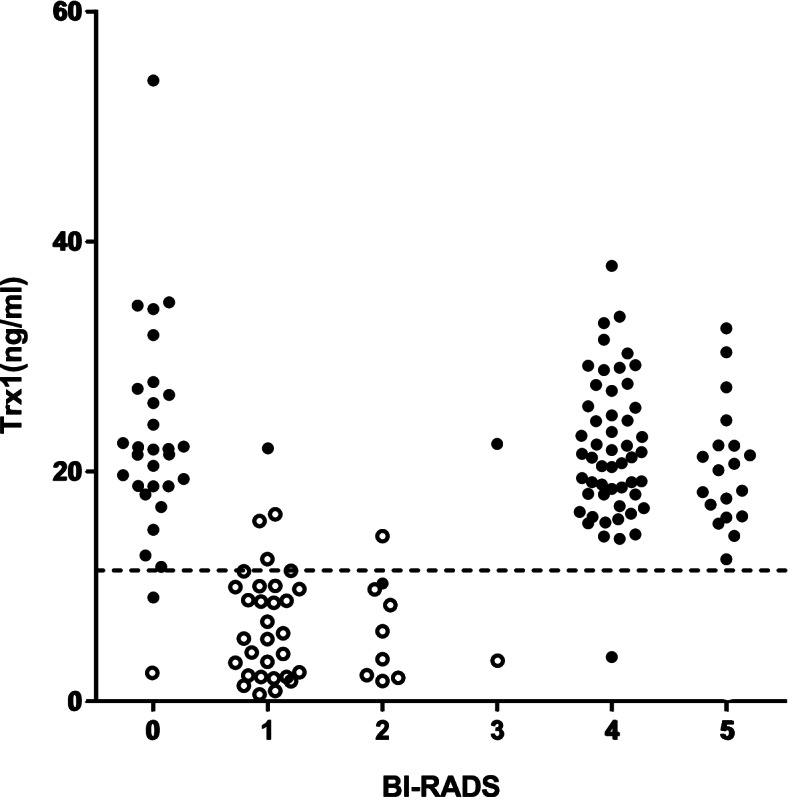
Results: The mean level of Trx1 from women without cancer was 5.45 ± 4.16 (±SD) ng/ml, that of the other malignant cancer patient group was 2.70 ± 2.01 ng/ml, and that from the BC group was 21.96 ± 6.79 ng/ml. The difference among these values was large enough to distinguish BC sera from non-BC control sera with a sensitivity of 97.17% and specificity of 94.15% (AUC 0.990, p < 0.0001). Most Trx1 levels from BC patients' sera were higher than the cut-off value of 11.4 ng/ml regardless of age, stage, histological grade, type, and specific receptors' expression profile of BC. The level of Trx1 could rescue women from most cases of misread or incomplete mammography diagnoses.
Conclusion: These results indicated that the blood level of Trx1 could be an effective and accurate means to assist the detection of BC during the early diagnosis period.
Keywords: Biomarker; Blood; Breast Cancer; Diagnostic interval; Diagnostics; Early diagnosis; Mammography; Sensitivity; Specificity; Thioredoxin 1.
© 2021. The Author(s).
Conflict of interest statement
The authors declare that they have no competing interests.
Figures


References
-
- WHO . Cancer profile. 2020.
-
- Sung H, Ferlay J, Siegel RL, Laversanne M, Soerjomataram I, Jemal A, Bray F. Global cancer statistics 2020: GLOBOCAN estimates of incidence and mortality worldwide for 36 cancers in 185 countries. CA Cancer J Clin. 2021;71:209–249. - PubMed
-
- Torre LA, Siegel RL, Ward EM, Jemal A. Global cancer incidence and mortality rates and trends – an update. Cancer Epidemiol Biomark Prev. 2016;25:16. - PubMed
-
- Agarwal G, Pradeep PV, Aggarwal V, Yip CH, Cheung PSY. Spectrum of breast cancer in Asian women. World J Surg. 2007;31:1031. - PubMed
Publication types
MeSH terms
Substances
Grants and funding
LinkOut - more resources
Full Text Sources
Medical
