Randomized Controlled Trial
. 2022 Oct;92(4):1122-1131.
doi: 10.1038/s41390-021-01884-x. Epub 2022 Jan 3.

Probiotic supplementation in neonates with congenital gastrointestinal surgical conditions: a pilot randomised controlled trial

Affiliations
Randomized Controlled Trial

Probiotic supplementation in neonates with congenital gastrointestinal surgical conditions: a pilot randomised controlled trial

Shripada Rao et al. Pediatr Res. 2022 Oct.

Abstract

Objective: To evaluate whether probiotic supplementation attenuates gut-dysbiosis in neonates with congenital gastrointestinal surgical conditions (CGISC).

Methods: Sixty-one neonates (≥35 weeks gestation) with CGISC were randomised to receive daily supplementation with a triple-strain bifidobacterial probiotic (n = 30) or placebo (n = 31) until discharge. Stool microbiota was analysed using 16S ribosomal RNA gene sequencing on samples collected before (T1), 1 week (T2), and 2 weeks (T3) after supplementation and before discharge (T4). The primary outcome was the sum of the relative abundance of potentially pathogenic families of Clostridiaceae, Enterobacteriaceae, Enterococcaceae, Pseudomonaceae, Staphylococcaeae, Streptococcaceae, and Yersiniaceae at T3.

Results: The median gestational age [38 weeks (IQR: 37.1-38.9)] was similar in both groups. The probiotic group had lower rates of caesarean deliveries (40% versus 70%, p = 0.02). The relative abundance of potentially pathogenic families was lower in the probiotic group compared to placebo at T3 [(median: 50.4 (IQR: 26.6-67.6) versus 67.1 (IQR: 50.9-96.2); p = 0.04). Relative abundance of Bifidobacteriaceae was higher in the probiotic group at T3 [(median: 39.8 (IQR: 24.9-52.1) versus 0.03 (IQR 0.02-2.1); p < 0.001). Stratified analysis continued to show a higher abundance of Bifidobacteriaceae in the probiotic group, irrespective of the mode of delivery.

Conclusions: Probiotic supplementation attenuated gut dysbiosis in neonates with CGISC.

Trial registration: http://www.anzctr.org.au (ACTRN12617001401347).

Impact: Probiotic supplementation attenuates gut dysbiosis and improves stool short-chain fatty acid levels in neonates with congenital gastrointestinal surgical conditions. This is the second pilot RCT of probiotic supplementation in neonates with congenital gastrointestinal conditions. These findings will pave the way for conducting multicentre RCTs in this area.


Conflict of interest statement

The authors declare no competing interests.

Figures

Fig. 1
Fig. 1
CONSORT flow diagram showing participant flow through the trial.
Fig. 2
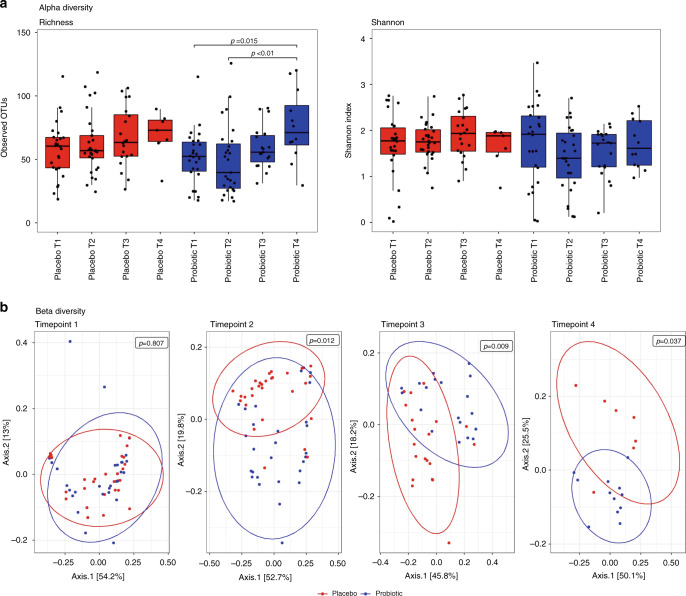
Fig. 2. Alpha and Beta diversity at various time points in the stool samples of study infants.
a Alpha diversity. Richness and the Shannon diversity index were similar between the probiotic and placebo groups at all time points (all p > 0.05). b Beta diversity as measured by weighted unifrac by time point. At baseline, infants in the probiotic group had similar community structures to the placebo group (p = 0.807). However, at subsequent time points T2, T3, and T4, the community structures of the probiotic group were significantly different from the placebo group (all p < 0.05).
Fig. 3
Fig. 3. Comparisons of relative abundances of bacterial families in the stool samples at various time points.
a Comparison of relative abundance of potentially pathogenic families (sum-total of Clostridiaceae, Enterobacteriaceae, Enterococcaceae, Pseudomonadaceae, Staphylococcaceae, Streptococcaceae and Yersineaceae) between probiotic and placebo at various time points. At the bacterial family level, the relative abundance of the sum-total of potentially pathogenic families of Clostridiaceae, Enterobacteriaceae, Enterococcaceae, Pseudomonadaceae, Staphylococcaceae, Streptococcaceae &Yersineaceae were significantly lower in the probiotic group compared to placebo at time points T2, T3, and T4 (p = 0.002, 0.033, and 0.007 respectively). b Comparison of relative abundance of family Bifidobacteriaceae between probiotic and placebo at various time points. The relative abundance of the family Bifidobacteriaceae was significantly higher in the probiotic group at T2, T3, and T4 (all p < 0.001).
Fig. 4
Fig. 4. Total SCFA levels in stools between probiotic and placebo groups at various time points.
Total SCFA levels in stools were significantly higher in the probiotic group at time point T3 (p = 0.008). At other time points, the differences between the two groups were not statistically significant.
Fig. 5
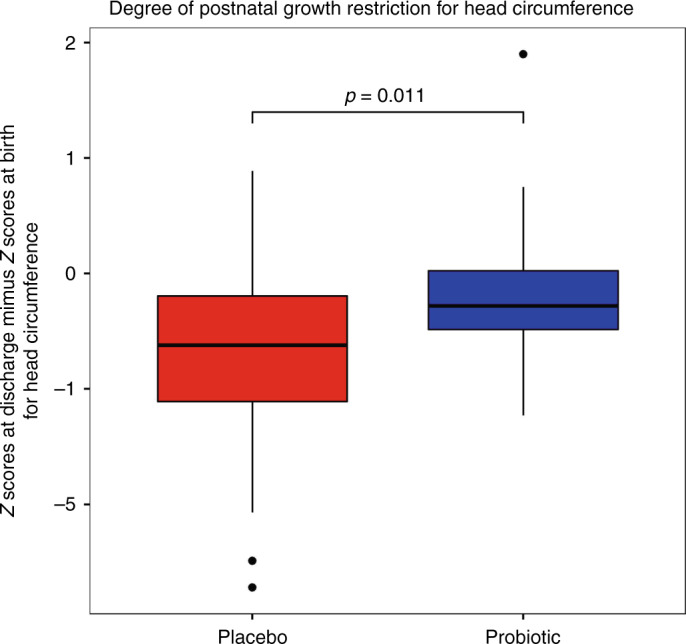
Fig. 5. Comparison of the degree of postnatal growth restriction for head circumference in study infants.
The degree of postnatal growth restriction for head circumference was less severe in the probiotic group than in the placebo group.

References

    1. Auber F, et al. Enteric nervous system impairment in gastroschisis. Eur. J. Pediatr. Surg. 2013;23:29–38. - PubMed
    1. Bairdain S, et al. A modern cohort of duodenal obstruction patients: predictors of delayed transition to full enteral nutrition. J. Nutr. Metab. 2014;2014:850820. doi: 10.1155/2014/850820. - DOI - PMC - PubMed
    1. Smith N. Oesophageal atresia and tracheo-oesophageal fistula. Early Hum. Dev. 2014;90:947–950. doi: 10.1016/j.earlhumdev.2014.09.012. - DOI - PubMed
    1. Chung EY, Yardley J. Are there risks associated with empiric acid suppression treatment of infants and children suspected of having gastroesophageal reflux disease. Hosp. Pediatr. 2013;3:16–23. doi: 10.1542/hpeds.2012-0077. - DOI - PubMed
    1. Schwartz MZ. Novel therapies for the management of short bowel syndrome in children. Pediatr. Surg. Int. 2013;29:967–974. doi: 10.1007/s00383-013-3404-7. - DOI - PubMed

Publication types

Substances

LinkOut - more resources