


A comparison of natural user interface and graphical user interface for narrative in HMD-based augmented reality
- PMID: 34980945
- PMCID: PMC8717307
- DOI: 10.1007/s11042-021-11723-0
A comparison of natural user interface and graphical user interface for narrative in HMD-based augmented reality
Abstract
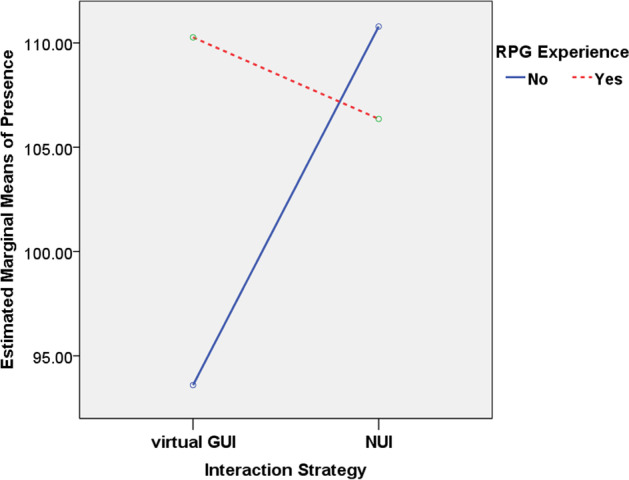
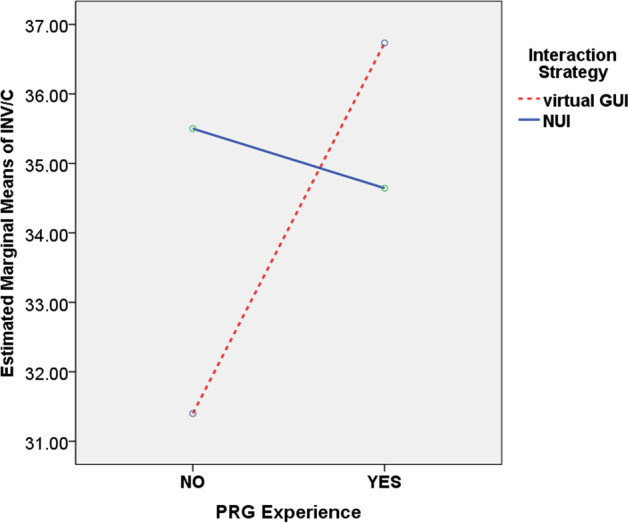
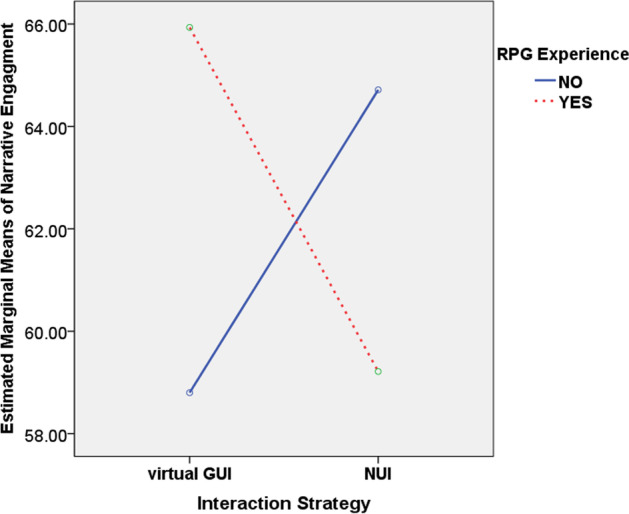
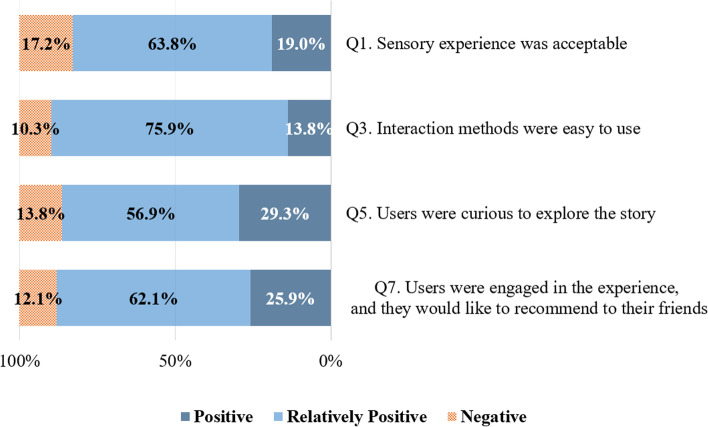
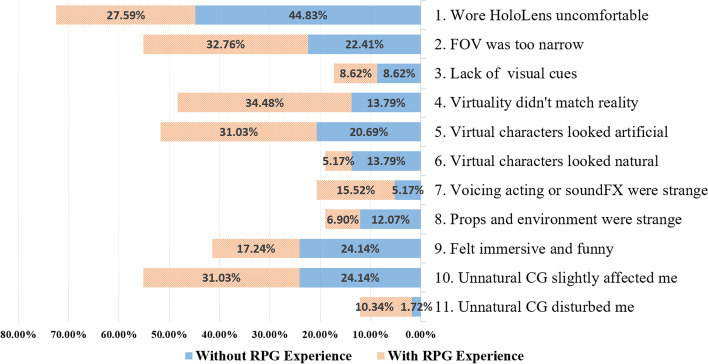
Over the years, the various mediums available for storytelling have progressively expanded, from spoken to written word, then to film, and now to Virtual Reality (VR) and Augmented Reality (AR). In 2016, the cutting-edge Head-Mounted Display (HMD) AR Microsoft HoloLens was released. However, though it has been several years, the quality of the user experience with narration using HMD-based AR technology has been rarely discussed. The present study explored interactive narrative in HMD-based AR regarding different user interfaces and their influence on users' presence, narrative engagement and reflection. Inspired by an existing exhibition at the National Holocaust Centre and Museum in the U.K., a HoloLens narrative application, entitled The AR Journey, was developed by the authors using two different interaction methods, Natural User Interface (NUI) and Graphical User Interface (GUI), which were used to perform an empirical study. As revealed from the results of the between-subject design experiment, NUI exhibited statistically significant advantages in creating presence for users without 3D Role Playing Game (RPG) experience, and GUI was superior in creating presence and increasing narrative engagement for users with 3D RPG experience. As indicated by the results of the interviews, the overall narrative experience in HMD-based AR was acceptable, and the branching narrative design was engaging. However, HoloLens hardware issues, as well as virtuality and reality mismatch, adversely affected user experience. Design guidelines were proposed according to the qualitative results.
Supplementary information: The online version contains supplementary material available at 10.1007/s11042-021-11723-0.
Keywords: Augmented Reality (AR); Game experience; Head Mounted Display (HMD); HoloLens; Interactive narrative; Narrative engagement; Natural User Interface (NUI); Presence.
© The Author(s), under exclusive licence to Springer Science+Business Media, LLC, part of Springer Nature 2021.
Figures
References
-
- Aylett RS, Louchart S, Dias J, Paiva A, Vala M (2005) FearNot!–an experiment in emergent narrative. International workshop on intelligent virtual agents. Springer, Berlin, p 305-16
-
- Azuma RT (1997) A Survey of Augmented Reality. Presence: Teleoperators and Virtual Environments 6(4):355–385.
-
- Barba E, Macintyre B, Rouse R, Bolter J (2010) Thinking inside the box: Making meaning in a Handheld AR experience. IEEE International Symposium on Mixed & Augmented Reality-arts
-
- Bartsch A, Kalch A, Oliver MB. Moved to think: The role of emotional media experiences in stimulating reflective thoughts. J Media Psychol. 2014;26(3):125. doi: 10.1027/1864-1105/a000118. - DOI
-
- Bartsch A. Emotional gratification in entertainment experience. Why viewers of movies and television series find it rewarding to experience emotions. Media Psychol. 2012;15(3):267–302. doi: 10.1080/15213269.2012.693811. - DOI
LinkOut - more resources
Full Text Sources
Other Literature Sources
Research Materials