


Percutaneous thrombectomy or ultrasound-accelerated thrombolysis for initial management of acute limb ischaemia
- PMID: 34981833
- PMCID: PMC8725191
- DOI: 10.1002/14651858.CD013486.pub2
Percutaneous thrombectomy or ultrasound-accelerated thrombolysis for initial management of acute limb ischaemia
Abstract
Background: Acute limb ischaemia (ALI), the sudden and significant reduction of blood flow to the limb, is considered a vascular emergency. In the general population, the incidence is estimated as 14 per 100,000. Prognosis depends on the time it takes to diagnose the condition and begin appropriate treatment. Standard initial interventional treatments include conventional open surgery and endovascular interventions such as catheter-directed thrombolysis (CDT). Percutaneous interventions, such as percutaneous thrombectomy (PT, including mechanical thrombectomy or pharmomechanical thrombectomy) and ultrasound-accelerated thrombolysis (USAT), are also performed as alternative endovascular techniques. The proposed advantages of PT and USAT include reduced time to revascularisation and when combined with catheter-directed thrombolysis, a reduction in dose of thrombolytic agents and infusion time. The benefits of PT or USAT versus open surgery or thrombolysis alone are still uncertain. In this review, we compared PT or USAT against standard treatment for ALI, in an attempt to determine if any technique is comparatively safer and more effective.
Objectives: To assess the safety and effectiveness of percutaneous thrombectomy or ultrasound-accelerated thrombolysis for the initial management of acute limb ischaemia in adults.
Search methods: The Cochrane Vascular Information Specialist searched the Cochrane Vascular Specialised Register, CENTRAL, MEDLINE, Embase, CINAHL, the World Health Organization (WHO) International Clinical Trials Registry Platform, and ClinicalTrials.gov to 3 March 2021. We searched reference lists of relevant studies and papers.
Selection criteria: We included randomised controlled trials (RCTs) that compared PT (any modality, including mechanical thrombectomy (aspiration, rheolysis, rotation) or pharmomechanical thrombectomy) or USAT with open surgery, thrombolysis alone, no treatment, or another PT modality for the treatment of ALI.
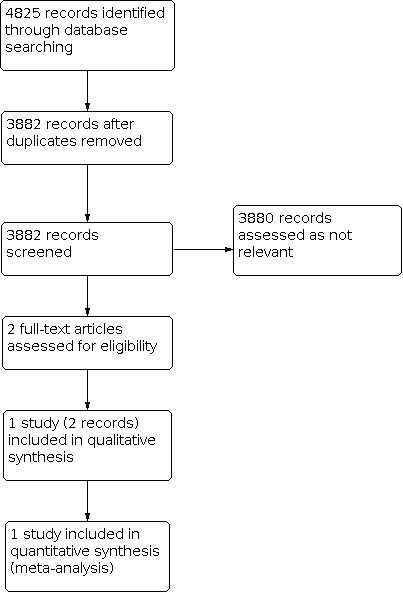
Data collection and analysis: Two review authors independently selected the studies, assessed risk of bias, extracted data, performed data analysis, and assessed the certainty of evidence according to GRADE. Outcomes of interest were primary patency, amputation rate, major bleeding, clinical success, secondary patency, and adverse effects.
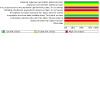
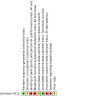
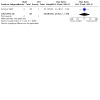
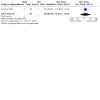
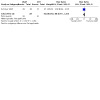
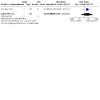
Main results: We included one RCT in this review. This study had a total of 60 participants and compared USAT with standard treatment (CDT). The study included 32 participants in the CDT group and 28 participants in the USAT group. We found no evidence of a difference between USAT and CDT alone for the following evaluated outcomes: amputation rate (risk ratio (RR) 1.14, 95% confidence interval (CI) 0.17 to 7.59); major bleeding (RR 1.71, 95% CI 0.31 to 9.53); clinical success (RR 1.00, 95% CI 0.94 to 1.07); and adverse effects (RR 5.69, 95% CI 0.28 to 113.72). We rated the certainty of the evidence as very low for these outcomes. We downgraded the certainty of the evidence for amputation rate, major bleeding, clinical success, and adverse effects by two levels due to serious limitations in the design (there was a high risk of bias in critical domains) and by two further levels due to imprecision (a small number of participants and only one study included). The study authors reported 30-day patency, but did not report primary and secondary patency separately. The patency rate in the successfully lysed participants was 71% (15/21) in the USAT group and 82% (22/27) in the CDT group. The study authors did not directly report secondary patency, which is patency after secondary procedures, but they did report on secondary procedures. Secondary procedures were subdivided into embolectomy and bypass grafting. Embolectomy was performed on 14% (4/28) of participants in the USAT group versus 3% (1/32) of participants in the CDT group. Bypass grafting was performed on 4% (1/28) of participants in the USAT group versus 0% in the CDT group. As we did not have access to the specific participant data, it was not possible to assess these outcomes further. We did not identify studies comparing the other planned interventions.
Authors' conclusions: There is insufficient evidence to assess the safety and effectiveness of USAT versus CDT alone for ALI for our evaluated outcomes: amputation rate, major bleeding, clinical success, and adverse effects. Primary and secondary patency were not reported separately. There was no RCT evidence for PT. Limitations of this systematic review derive from the single included study, small sample size, short clinical follow-up period, and high risk of bias in critical domains. For this reason, the applicability of the results is limited. There is a need for high-quality studies to compare PT or USAT against open surgery, thrombolysis alone, no treatment, or other PT modalities for ALI. Future trials should assess outcomes, such as primary patency, amputation rate, major bleeding, clinical success, secondary patency, and adverse effects.
Copyright © 2021 The Cochrane Collaboration. Published by John Wiley & Sons, Ltd.
Conflict of interest statement
STA: none known. DHM: none known. DGC: none known.
Figures
Update of
References
References to studies included in this review
Schrijver 2015 {published data only}
-
- Schrijver AM, Reijnen MM, Oostayen JA, Tutein Nolthenius RP, Valk PH, Hoksbergen AW, et al. Dutch randomized trial comparing standard catheter-directed thrombolysis versus ultrasound-accelerated thrombolysis for thromboembolic infrainguinal disease (DUET): design and rationale. Trials 2011;12:20. [DOI: 10.1186/1745-6215-12-20] [PMID: ] - DOI - PMC - PubMed
-
- Schrijver AM, Leersum M, Fioole B, Reijnen MM, Hoksbergen AW, Vahl AC, et al. Dutch randomized trial comparing standard catheter-directed thrombolysis and ultrasound-accelerated thrombolysis for arterial thromboembolic infrainguinal disease (DUET). Journal of Endovascular Therapy 2015;22(1):87-95. [DOI: 10.1177/1526602814566578] [PMID: ] - DOI - PubMed
Additional references
Aboyans 2018
-
- Aboyans V, Ricco JB, Bartelink ME, Bjorck M, Brodmann M, Cohnert T, et al. 2017 ESC guidelines on the diagnosis and treatment of peripheral arterial diseases, in collaboration with the European Society for Vascular Surgery (ESVS). Revista Espanola de Cardiologia (English ed.) 2018;71(2):111. [DOI: 10.1016/j.rec.2017.12.014] [PMID: ] - DOI - PubMed
Atkins 2004
Björck 2020
-
- Björck M, Earnshaw JJ, Acosta S, Bastos Gonçalves F, Cochennec F, Debus ES, et al. Editor's choice - European Society for Vascular Surgery (ESVS) 2020 clinical practice guidelines on the management of acute limb ischaemia. European Journal of Vascular and Endovascular Surgery 2020;59(2):173-218. [DOI: 10.1016/j.ejvs.2019.09.006] [PMID: ] - DOI - PubMed
Darwood 2018
de Athayde Soares 2020
-
- Athayde Soares R, Matielo MF, Brochado Neto FC, Pereira de Carvalho BV, Sacilotto R. Analysis of the safety and efficacy of the endovascular treatment for acute limb ischemia with percutaneous pharmacomechanical thrombectomy compared with catheter-directed thrombolysis. Annals of Vascular Surgery 2020;66:470-8. [DOI: 10.1016/j.avsg.2019.11.038] [PMID: ] - DOI - PubMed
de Donato 2021
-
- Donato G, Pasqui E, Sponza M, Intrieri F, Spinazzola A, Silingardi R, et al. Safety and efficacy of vacuum assisted thrombo-aspiration in patients with acute lower limb ischaemia: the INDIAN trial. European Journal of Vascular and Endovascular Surgery 2021;61(5):820-8. [DOI: 10.1016/j.ejvs.2021.01.004] [PMID: ] - DOI - PubMed
Dormandy 1999
-
- Dormandy J, Heeck L, Vig S. Acute limb ischemia. Seminars in Vascular Surgery 1999;12(2):148-53. [PMID: ] - PubMed
Eliason 2003
-
- Eliason JL, Wainess RM, Proctor MC, Dimick JB, Cowan JA Jr, Upchurch GR Jr, et al. A national and single institutional experience in the contemporary treatment of acute lower extremity ischemia. Annals of Surgery 2003;238(3):382-9; discussion 389-90. [DOI: 10.1097/01.sla.0000086663.49670.d1] [PMID: ] - DOI - PMC - PubMed
Falluji 2014
Fukuda 2015
Gandhi 2018
Gerhard‐Herman 2017
-
- Gerhard-Herman MD, Gornik HL, Barrett C, Barshes NR, Corriere MA, Drachman DE, et al. 2016 AHA/ACC guideline on the management of patients with lower extremity peripheral artery disease: executive summary. Vascular Medicine (London, England) 2017;22(3):NP1-43. [DOI: 10.1177/1358863X17701592] [PMID: ] - DOI - PubMed
GRADEpro GDT 2018 [Computer program]
-
- GRADEpro GDT. Version accessed 7 November 2018. Hamilton (ON): McMaster University (developed by Evidence Prime). Available at gradepro.org.
Higgins 2011
-
- Higgins JP, Green S, editor(s). Cochrane Handbook for Systematic Reviews of Interventions Version 5.1.0 (updated March 2011). The Cochrane Collaboration, 2011. Available from training.cochrane.org/handbook/archive/v5.1/.
Hynes 2012
Kasirajan 2001
Katsanos 2017
-
- Katsanos K, Al-Lamki SA, Parthipun A, Spiliopoulos S, Patel SD, Paraskevopoulos I, et al. Peripheral stent thrombosis leading to acute limb ischemia and major amputation: incidence and risk factors in the aortoiliac and femoropopliteal arteries. Cardiovascular and Interventional Radiology 2017;40(3):351-9. [DOI: 10.1007/s00270-016-1513-0] [PMID: ] - DOI - PMC - PubMed
Kronlage 2017
-
- Kronlage M, Printz I, Vogel B, Blessing E, Müller OJ, Katus HA, et al. A comparative study on endovascular treatment of (sub)acute critical limb ischemia: mechanical thrombectomy vs thrombolysis. Drug Design, Development and Therapy 2017;11:1233-41. [DOI: 10.2147/DDDT.S131503] [PMID: ] - DOI - PMC - PubMed
Lefebvre 2011
-
- Lefebvre C, Manheimer E, Glanville J. Chapter 6: Searching for studies. In: Higgins JPT, Green S, editor(s). Cochrane Handbook for Systematic Reviews of Interventions Version 5.1.0 (updated March 2011). The Cochrane Collaboration, 2011. Available from training.cochrane.org/handbook/archive/v5.1/.
Leung 2015
Liang 2019
Lichtenberg 2013
-
- Lichtenberg M, Stahlhoff FW, Boese D. Endovascular treatment of acute limb ischemia and proximal deep vein thrombosis using rotational thrombectomy: a review of published literature. Cardiovascular Revascularization Medicine 2013;14(6):343-8. [DOI: 10.1016/j.carrev.2013.08.005] [PMID: ] - DOI - PubMed
Mehran 2011
-
- Mehran R, Rao SV, Bhatt DL, Gibson CM, Caixeta A, Eikelboom J, et al. Standardized bleeding definitions for cardiovascular clinical trials: a consensus report from the Bleeding Academic Research Consortium. Circulation 2011;123(23):2736-47. [DOI: 10.1161/CIRCULATIONAHA.110.009449] [PMID: ] - DOI - PubMed
Muli Jogi 2018
-
- Muli Jogi RK, Damodharan K, Leong HL, Tan AC, Chandramohan S, Venkatanarasimha NK, et al. Catheter-directed thrombolysis versus percutaneous mechanical thrombectomy in the management of acute limb ischemia: a single center review. CVIR Endovascular 2018;1(1):35. [DOI: 10.1186/s42155-018-0041-1] [PMID: ] - DOI - PMC - PubMed
Norgren 2007
Purushottam 2014
Review Manager 2014 [Computer program]
-
- Review Manager 5 (RevMan 5). Version 5.3. Copenhagen: Nordic Cochrane Centre, The Cochrane Collaboration, 2014.
Rutherford 1997
Rutherford 2014
-
- Rutherford RB. Vascular Surgery. 8th edition. Vol. 2. Philadelphia: Elsevier Inc, 2014.
Schernthaner 2014
-
- Schernthaner MB, Samuels S, Biegler P, Benenati JF, Uthoff H. Ultrasound-accelerated versus standard catheter-directed thrombolysis in 102 patients with acute and subacute limb ischemia. Journal of Vascular and Interventional Radiology 2014;25(8):1149-56. [DOI: 10.1016/j.jvir.2014.03.015] [PMID: ] - DOI - PubMed
Schrijver 2011
-
- Schrijver AM, Reijnen MM, Oostayen JA, Tutein Nolthenius RP, Valk PH, Hoksbergen AW, et al. Dutch randomized trial comparing standard catheter-directed thrombolysis versus ultrasound-accelerated thrombolysis for thromboembolic infrainguinal disease (DUET): design and rationale. Trials 2011;12:20. [DOI: 10.1186/1745-6215-12-20] [PMID: ] - DOI - PMC - PubMed
Veenstra 2020
References to other published versions of this review
Publication types
MeSH terms
Substances
LinkOut - more resources
Full Text Sources
Research Materials
