Review
. 2022 Jan 4;19(1):4.
doi: 10.1186/s12974-021-02354-1.

Neuroinflammation as an etiological trigger for depression comorbid with inflammatory bowel disease

Affiliations
Review

Neuroinflammation as an etiological trigger for depression comorbid with inflammatory bowel disease

Colin F Craig et al. J Neuroinflammation. .

Abstract

Patients with inflammatory bowel disease (IBD) suffer from depression at higher rates than the general population. An etiological trigger of depressive symptoms is theorised to be inflammation within the central nervous system. It is believed that heightened intestinal inflammation and dysfunction of the enteric nervous system (ENS) contribute to impaired intestinal permeability, which facilitates the translocation of intestinal enterotoxins into the blood circulation. Consequently, these may compromise the immunological and physiological functioning of distant non-intestinal tissues such as the brain. In vivo models of colitis provide evidence of increased blood-brain barrier permeability and enhanced central nervous system (CNS) immune activity triggered by intestinal enterotoxins and blood-borne inflammatory mediators. Understanding the immunological, physiological, and structural changes associated with IBD and neuroinflammation may aid in the development of more tailored and suitable pharmaceutical treatment for IBD-associated depression.

Keywords: Depression; Gut-brain axis; Inflammatory bowel disease; Neuroinflammation.


Conflict of interest statement

The authors declare that they have no competing interests.

Figures
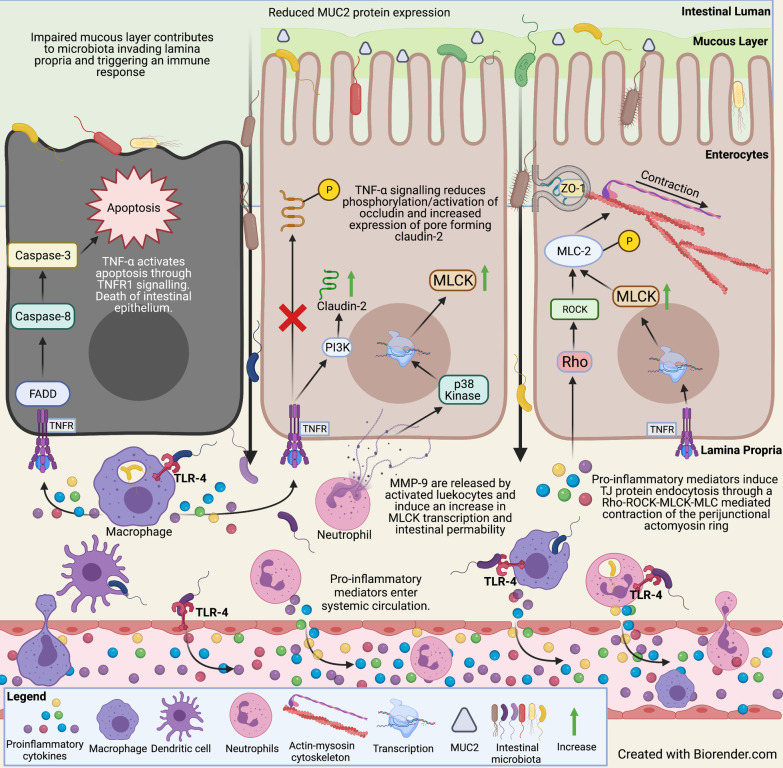
Fig. 1
Fig. 1
Schematic overview of the mechanisms underlying intestinal barrier dysfunction commonly seen in human IBD and animal models of colitis. Impaired mucous production and composition and/or impaired tight junction protein localisation and production result in luminal microbiota and toxin paracellularly translocating into the intestinal lamina propria layer. Immune cells in this region interacting with antigens trigger the production of inflammatory mediators, which facilitate the recruitment of other leukocytes and lymphocytes. Inflammatory mediators enter peripheral circulation whereby they may trigger distant immunological activation. FADD Fas-associated protein with death domain; IFN Interferon; IL Interleukin; MLC myosin light chain; MLCK myosin light-chain kinase; MMP metalloproteinase, P phosphate; PI3K phosphoinositide 3-kinase; ROCK Rho associated protein kinase; TJ tight junction; TLR toll-like receptor; TNF tumour necrosis factor; ZO zonula occludens
Fig. 2
Fig. 2
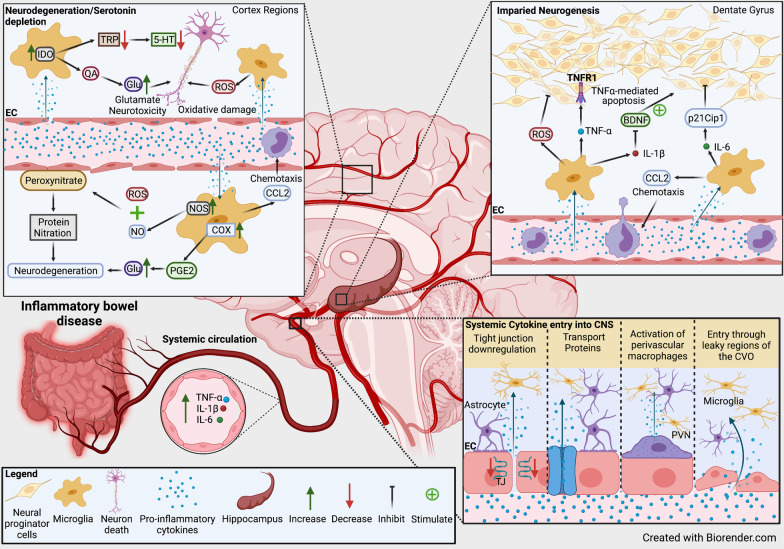
Schematic diagram of neuroinflammatory changes seen in and postulated in human and animals with intestinal inflammation. Circulating inflammatory mediators enter into brain parenchyma through the suggested mechanisms whereby they may modulate local glia populations such as the microglia. Microglia can impact the various neurobiological correlates of depression including neurodegeneration, serotonin biosynthesis, and hippocampal neurogenesis. 5-HT 5-hydroxytryptamine (serotonin); BDNF brain-derived neurotrophic factor; CCL2 chemokine (C–C motif) ligand 2; CNS central nervous system; COX cyclooxygenase; CVO circumventricular organ; EC endothelial cells; Glu glutamate; IDO indoleamine-pyrrole 2,3-dioxygenase; IL interleukin; NO nitric oxide; NOS nitric oxide synthase; PGE2 prostaglandin E2; PVN perivascular macrophages; QA quinolinic acid; ROS reactive oxygen species; TJ tight junction; TNF tumour necrosis factor; TNFR1 tumour necrosis factor receptor-1; TRP tryptophan
Fig. 3
Fig. 3
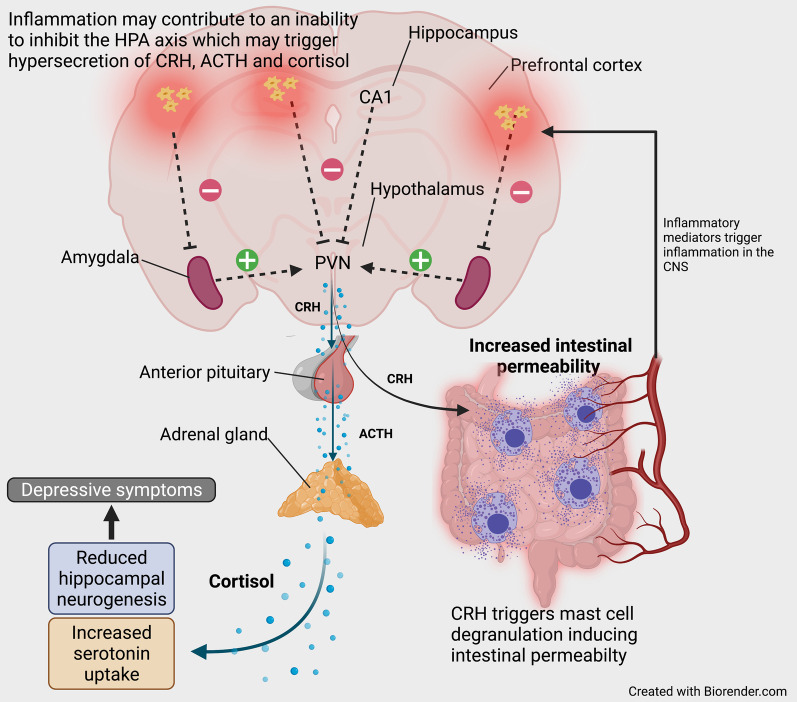
Schematic representation of neuroinflammatory-induced impairment of the HPA axis functioning. Resultant neuroinflammation associated with animal models of colitis may induce damage or neurobiological alteration in important regions associated with inhibition of the HPA axis. This may trigger the aberrant secretion of hippocampal, pituitary, or adrenal hormones triggering worsening of intestinal and cortical inflammation and depressive symptoms. ACTH adrenal corticotrophin-releasing hormone; CA1 cornu ammonis 1; CNS, central nervous system; CRH corticotrophin releasing hormone; HPA hypothalamic–pituitary–adrenal; PVN paraventricular nucleus

References

    1. Alatab S, Sepanlou SG, Ikuta K, Vahedi H, Bisignano C, Safiri S, et al. The global, regional, and national burden of inflammatory bowel disease in 195 countries and territories, 1990–2017: a systematic analysis for the Global Burden of Disease Study 2017. Lancet Gastroenterol Hepatol. 2020;5(1):17–30. - PMC - PubMed
    1. Byrne G, Rosenfeld G, Leung Y, Qian H, Raudzus J, Nunez C, et al. Prevalence of anxiety and depression in patients with inflammatory bowel disease. Can J Gastroenterol Hepatol. 2017;2017:6496727. - PMC - PubMed
    1. Nigro G, Angelini G, Grosso SB, Caula G, Sategna-Guidetti C. Psychiatric predictors of noncompliance in inflammatory bowel disease: psychiatry and compliance. J Clin Gastroenterol. 2001;32(1):1. - PubMed
    1. Katon WJ. Epidemiology and treatment of depression in patients with chronic medical illness. Dialogues Clin Neurosci. 2011;13(1):7–23. - PMC - PubMed
    1. Gracie DJ, Hamlin PJ, Ford AC. The influence of the brain–gut axis in inflammatory bowel disease and possible implications for treatment. Lancet Gastroenterol Hepatol. 2019;4(8):632–642. - PubMed

MeSH terms