


The anterior cingulate cortex and its role in controlling contextual fear memory to predatory threats
- PMID: 34984975
- PMCID: PMC8730726
- DOI: 10.7554/eLife.67007
The anterior cingulate cortex and its role in controlling contextual fear memory to predatory threats
Abstract
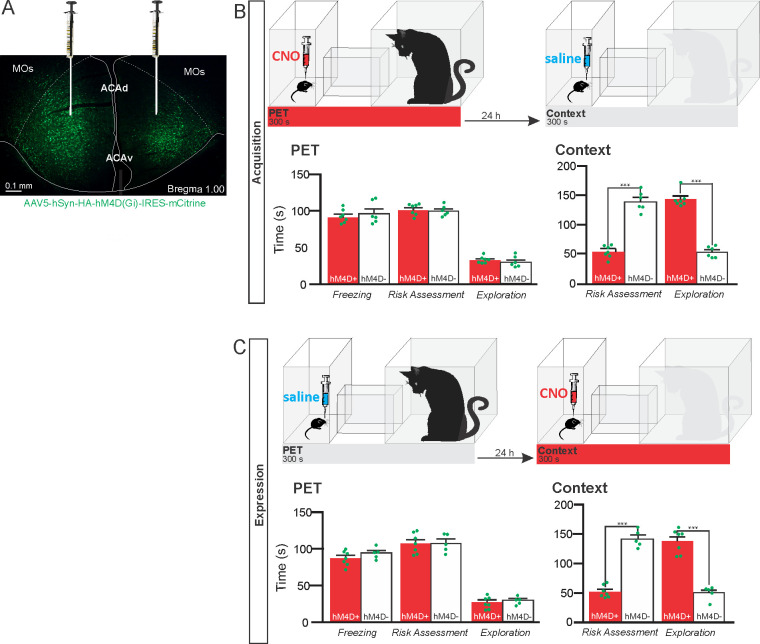
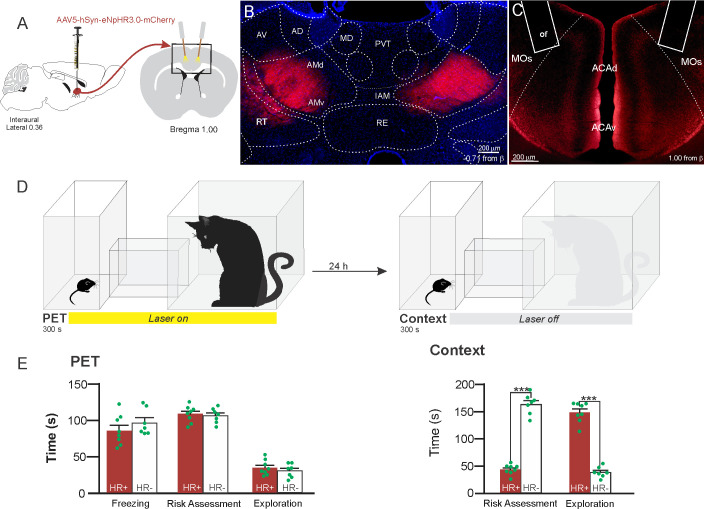
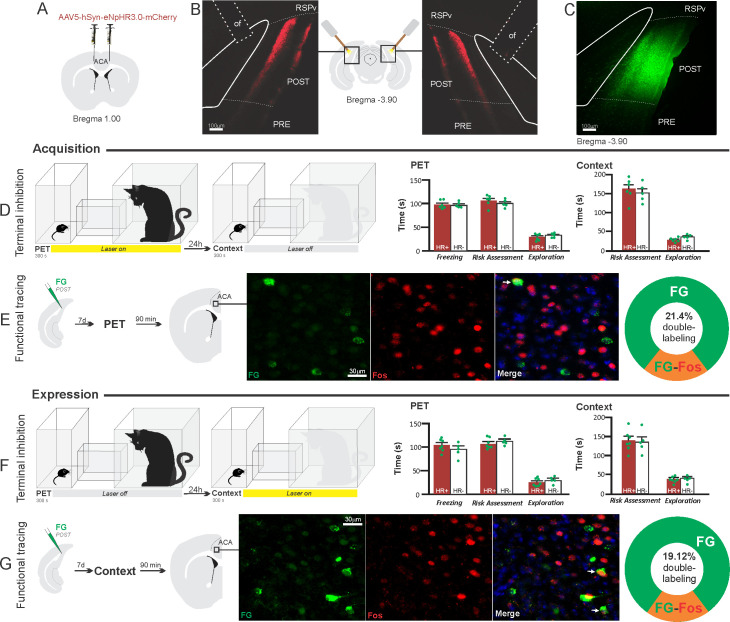
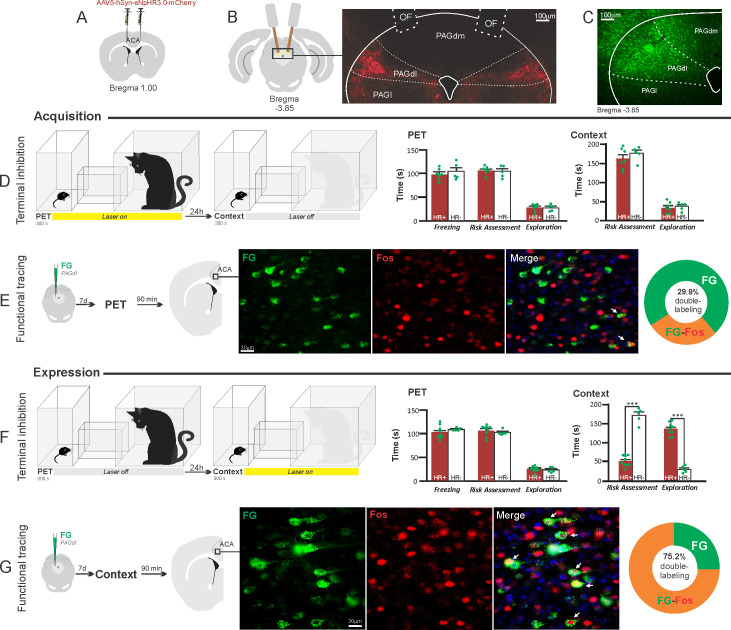
Predator exposure is a life-threatening experience and elicits learned fear responses to the context in which the predator was encountered. The anterior cingulate area (ACA) occupies a pivotal position in a cortical network responsive to predatory threats, and it exerts a critical role in processing fear memory. The experiments were made in mice and revealed that the ACA is involved in both the acquisition and expression of contextual fear to predatory threat. Overall, the ACA can provide predictive relationships between the context and the predator threat and influences fear memory acquisition through projections to the basolateral amygdala and perirhinal region and the expression of contextual fear through projections to the dorsolateral periaqueductal gray. Our results expand previous studies based on classical fear conditioning and open interesting perspectives for understanding how the ACA is involved in processing contextual fear memory to ethologic threatening conditions that entrain specific medial hypothalamic fear circuits.
Keywords: cerebral cortex; defensive behavior; fear memory; mouse; neuroscience.
© 2022, de Lima et al.
Conflict of interest statement
Md, MB, FO, NC No competing interests declared
Figures








References
-
- Abate G, Colazingari S, Accoto A, Conversi D, Bevilacqua A. Dendritic spine density and EphrinB2 levels of hippocampal and anterior cingulate cortex neurons increase sequentially during formation of recent and remote fear memory in the mouse. Behavioural Brain Research. 2018;344:120–131. doi: 10.1016/j.bbr.2018.02.011. - DOI - PubMed
-
- Bittencourt AS, Carobrez AP, Zamprogno LP, Tufik S, Schenberg LC. Organization of single components of defensive behaviors within distinct columns of periaqueductal gray matter of the rat: role of N-methyl-D-aspartic acid glutamate receptors. Neuroscience. 2004;125:71–89. doi: 10.1016/j.neuroscience.2004.01.026. - DOI - PubMed
Publication types
MeSH terms
LinkOut - more resources
Full Text Sources
Medical
Research Materials
