. 2022 Jan 4;38(1):110199.
doi: 10.1016/j.celrep.2021.110199.

Potent anti-viral activity of a trispecific HIV neutralizing antibody in SHIV-infected monkeys

Affiliations

Potent anti-viral activity of a trispecific HIV neutralizing antibody in SHIV-infected monkeys

Amarendra Pegu et al. Cell Rep. .

Abstract

Broadly neutralizing antibodies (bNAbs) represent an alternative to drug therapy for the treatment of HIV-1 infection. Immunotherapy with single bNAbs often leads to emergence of escape variants, suggesting a potential benefit of combination bNAb therapy. Here, a trispecific bNAb reduces viremia 100- to 1000-fold in viremic SHIV-infected macaques. After treatment discontinuation, viremia rebounds transiently and returns to low levels, through CD8-mediated immune control. These viruses remain sensitive to the trispecific antibody, despite loss of sensitivity to one of the parental bNAbs. Similarly, the trispecific bNAb suppresses the emergence of resistance in viruses derived from HIV-1-infected subjects, in contrast to parental bNAbs. Trispecific HIV-1 neutralizing antibodies, therefore, mediate potent antiviral activity in vivo and may minimize the potential for immune escape.


Conflict of interest statement

Declaration of interests L.X., Z.-y.Y., G.J.N., R.R.W., E.R., J.R.M., R.A.K., N.A.D.-R., T.Z., and A.P. are inventors on patent application WO 2017/074878, submitted by Sanofi, the United States of America, as represented by the Secretary, Department of Health and Human Services, and the National Institutes of Health, which discloses the use of anti-HIV antibodies. The other authors declare no competing interests.

Figures

Figure 1.
Figure 1.. Effect of trispecific antibody treatment on plasma viral load in SHIVBG505 infected animals.
(A) Plasma viral load in untreated (control) and trispecific antibody treated (treatment) SHIVBG505 infected animals. Trispecific antibody (20 mg/kg iv) was given at days 42 and 49 post intrarectal challenge with SHIVBG505. Antibody infusion times are indicated by the vertical dashed lines at day 42 and 49 post SHIV challenge. (B) Plasma viral load (red line, left Y-axis) and trispecific antibody levels (black line, right Y-axis) for each individual animal. Antibody infusions are indicated by the vertical dashed lines at day 42 and 49.
Figure 2.
Figure 2.. SHIV RNA detection by in situ confocal staining.
(A) Representative confocal image of whole lymph node showing SHIV RNA (green), CD20 (orange), and cellular nucleic acids (blue). Scale bar: 500 μm (B) Magnified area from (A) that shows an extra-follicular cell infected with SHIV (top) and a further magnified image (bottom) that shows the virally infected cell associated with T cell markers of CD3 (cyan) and CD4 (red). (C) Magnified area from (A) that shows an intra-follicular cell that is infected with SHIV (top) and a further magnified image (bottom) that shows the virally infected cells associated with T cell markers of CD3 (cyan) and CD4 (red). (D) Magnified area from (A) that shows the intra-follicular area filled with free virus and a further magnified image (bottom) shows the free virus associated with the FDC network (pink). Scale bars: 20 μm (top) and 10 μm (bottom). Additional detailed, merged images are shown in figure S4. (E) RNAscope quantification of SHIV gag mRNA containing cells and free virions in lymph nodes obtained from SHIV-infected animals pre- and post-infusion of the trispecific antibody. Indicated p values were calculated using a nonparametric Kruskal-Wallis test.
Figure 3.
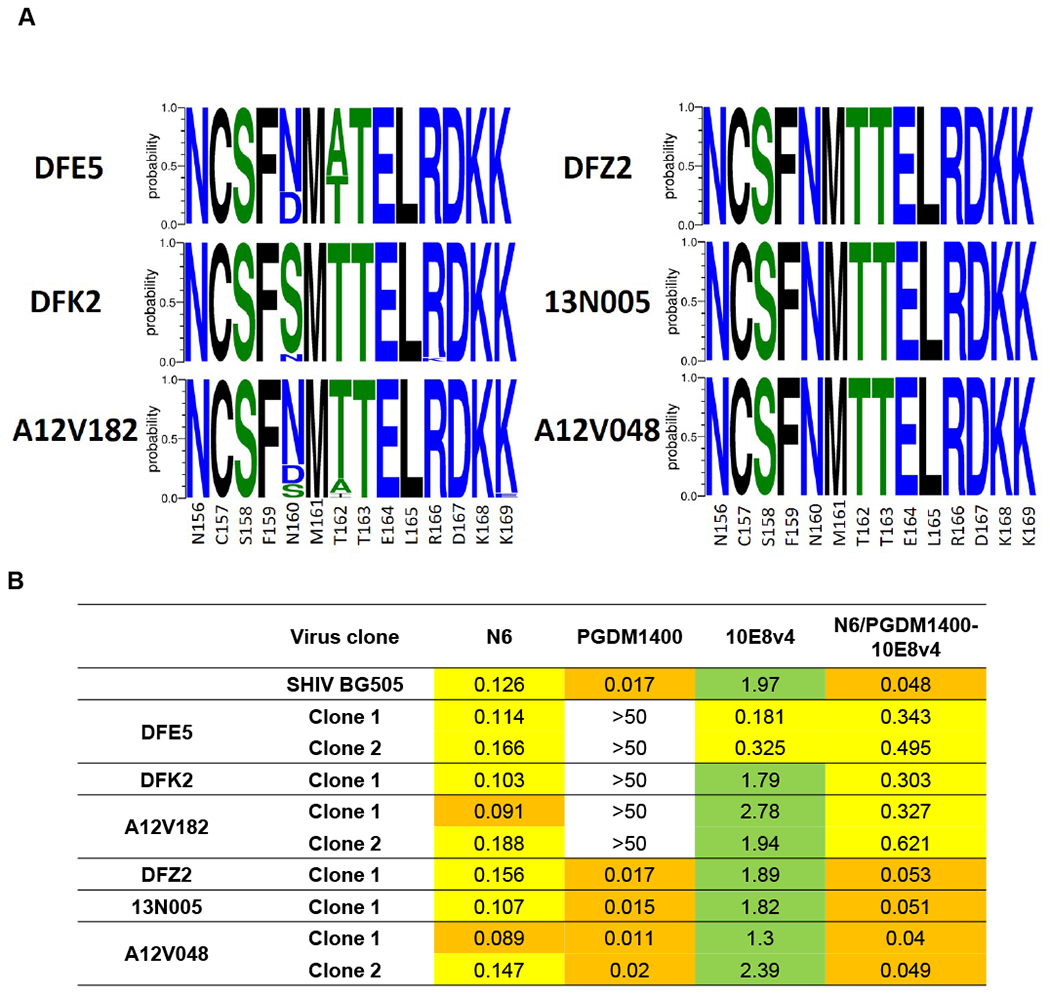
Figure 3.. Viral envelope mutations selected by trispecific antibody.
(A) Logo plots of SHIVBG505 Env V2 glycan region sequences obtained via Env-SGA in SHIVBG505 infected animals after trispecific antibody infusion. (B) Neutralization sensitivity to the parental and trispecific antibodies of pseudotyped viruses encoding the dominant plasma SHIV Env sequences obtained via Env-SGA post trispecific antibody infusion from each animal.
Figure 4.
Figure 4.. Effect of monoclonal and trispecific antibodies on replication of HIV-1 from infected donor CD4+ T cells.
Activated CD4+ T cells from five viremic HIV-1 infected donors were cultured in the presence of the indicated antibodies for 2-3 weeks and viral replication was quantified by measuring HIV-1 p24 protein and gag RNA levels in the culture supernatants. (A) HIV-1 p24 protein levels (% of control, where control is denoted as 100% for each time point) in the culture supernatants were quantified by measuring HIV-1 p24 protein levels in the culture supernatant over time by ELISA. The levels shown are means of the levels measured in triplicate wells for each antibody from one experiment performed for each donor. (B) HIV-1 gag RNA levels in the culture supernatants were quantified at the end of the incubation using real time qPCR. Viral load (copies/ml) for each donor were as follows: donor 1: 4740, donor 2: 4503, donor 3: 3488, donor 4: 60,910, donor 5: 1810.

References

    1. NCT03705169:Pharmacokinetics of SAR441236; https://clinicaltrials.gov/ct2/show/NCT03705169.
    1. Ackerman ME, Moldt B, Wyatt RT, Dugast AS, McAndrew E, Tsoukas S, Jost S, Berger CT, Sciaranghella G, Liu Q, et al. (2011). A robust, high-throughput assay to determine the phagocytic activity of clinical antibody samples. J Immunol Methods 366, 8–19. - PMC - PubMed
    1. Alpert MD, Heyer LN, Williams DE, Harvey JD, Greenough T, Allhorn M, and Evans DT (2012). A novel assay for antibody-dependent cell-mediated cytotoxicity against HIV-1- or SIV-infected cells reveals incomplete overlap with antibodies measured by neutralization and binding assays. J Virol 86, 12039–12052. - PMC - PubMed
    1. Arunachalam PS, Charles TP, Joag V, Bollimpelli VS, Scott MKD, Wimmers F, Burton SL, Labranche CC, Petitdemange C, Gangadhara S, et al. (2020). T cell-inducing vaccine durably prevents mucosal SHIV infection even with lower neutralizing antibody titers. Nat Med 26, 932–940. - PMC - PubMed
    1. Asokan M, Dias J, Liu C, Maximova A, Ernste K, Pegu A, McKee K, Shi W, Chen X, Almasri C, et al. (2020a). Fc-mediated effector function contributes to the in vivo antiviral effect of an HIV neutralizing antibody. Proc Natl Acad Sci U S A. - PMC - PubMed

Publication types

MeSH terms