


Do you feel itchy? A guide towards diagnosis and measurement of chronic kidney disease-associated pruritus in dialysis patients
- PMID: 34987778
- PMCID: PMC8702818
- DOI: 10.1093/ckj/sfab143
Do you feel itchy? A guide towards diagnosis and measurement of chronic kidney disease-associated pruritus in dialysis patients
Abstract
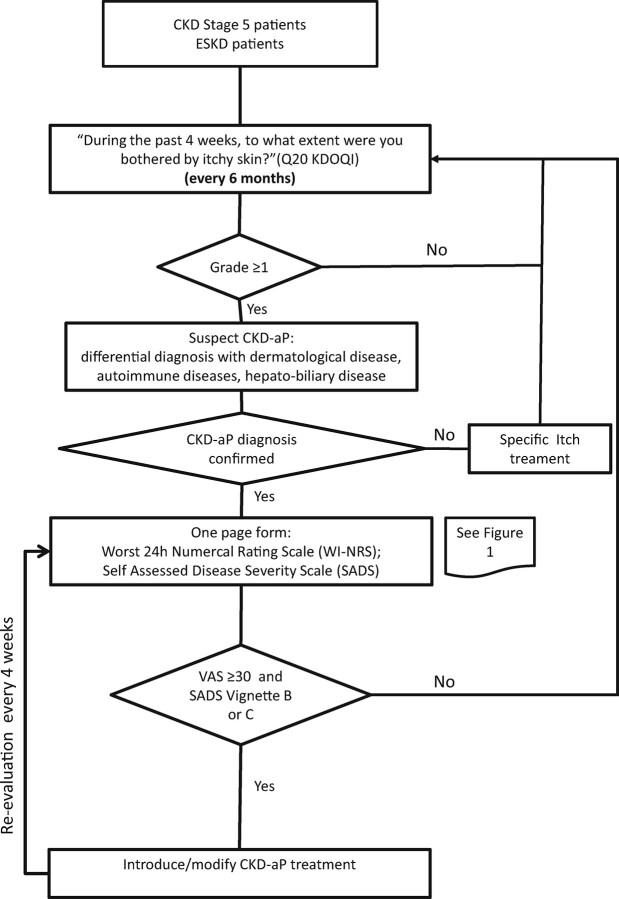
Chronic kidney disease-associated pruritus (CKD-aP) is a potentially distressing condition that affects a significant proportion of patients with end-stage kidney disease undergoing dialysis. CKD-aP may lead to worsening of patients' physical and mental health-related quality of life (HRQoL) and has also been linked with worse clinical outcomes, including increased mortality. Despite these detrimental effects, evidence from real-world studies shows that CKD-aP still remains overlooked by nephrologists and underreported by patients in clinical practice. Itch is subjective and therefore its diagnosis is often dependent on patients reporting this symptom. There is an opportunity to reduce the burden of CKD-aP on dialysis patients by increasing awareness about this condition and the availability of effective treatments. It is particularly important that nephrologists and other healthcare providers routinely ask their patients if they are experiencing itch. The differential diagnosis of CKD-aP requires a step-by-step identification and exclusion of possible alternative or concomitant causes of itch. Several simple validated self-reported assessment scales are available to evaluate the presence and severity of itch in a time-efficient manner, making them suitable for use in everyday clinical practice. The impact of CKD-aP on haemodialysis patients' HRQoL should also be assessed on a regular basis. This review provides a comprehensive overview of the differential diagnosis of CKD-aP and the diagnostic tools that are available to identify itch and quantify its severity and impact on patient HRQoL. A suggested algorithm to guide the screening, diagnosis and assessment of CKD-aP among dialysis patients in real-world practice is provided.
Keywords: chronic pruritus; diagnostic algorithm; dialysis; end-stage kidney disease; itch; patient-reported outcomes; quality of life; uraemic pruritus; uraemic syndrome.
© The Author(s) 2021. Published by Oxford University Press on behalf of ERA.
Figures
References
-
- Ständer S, Weisshaar E, Mettang T et al. Clinical classification of itch: a position paper of the International Forum for the Study of Itch. Acta Derm Venereol 2007; 87: 291–294 - PubMed
-
- Kini SP, DeLong LK, Veledar E et al. The impact of pruritus on quality of life: the skin equivalent of pain. Arch Dermatol 2011; 147: 1153–1156 - PubMed
-
- Masi CM, Cohen EP. Dialysis efficacy and itching in renal failure. Nephron 1992; 62: 257–261 - PubMed
-
- Murtagh FE, Addington-Hall JM, Edmonds PM et al. Symptoms in advanced renal disease: a cross-sectional survey of symptom prevalence in stage 5 chronic kidney disease managed without dialysis. J Palliat Med 2007; 10: 1266–1276 - PubMed
Publication types
LinkOut - more resources
Full Text Sources
Research Materials
