


Case Reports
doi: 10.1016/j.hrcr.2021.08.013.
eCollection 2021 Dec.
Incessant atrial and ventricular tachycardias associated with an SCN5A mutation
Affiliations
- PMID: 34987964
- PMCID: PMC8695285
- DOI: 10.1016/j.hrcr.2021.08.013
Item in Clipboard
Case Reports
Incessant atrial and ventricular tachycardias associated with an SCN5A mutation
HeartRhythm Case Rep.
.
No abstract available
Keywords: Atrial tachycardia; Catheter ablation; Quinidine; Sodium channel mutation; Ventricular tachycardia.
Figures
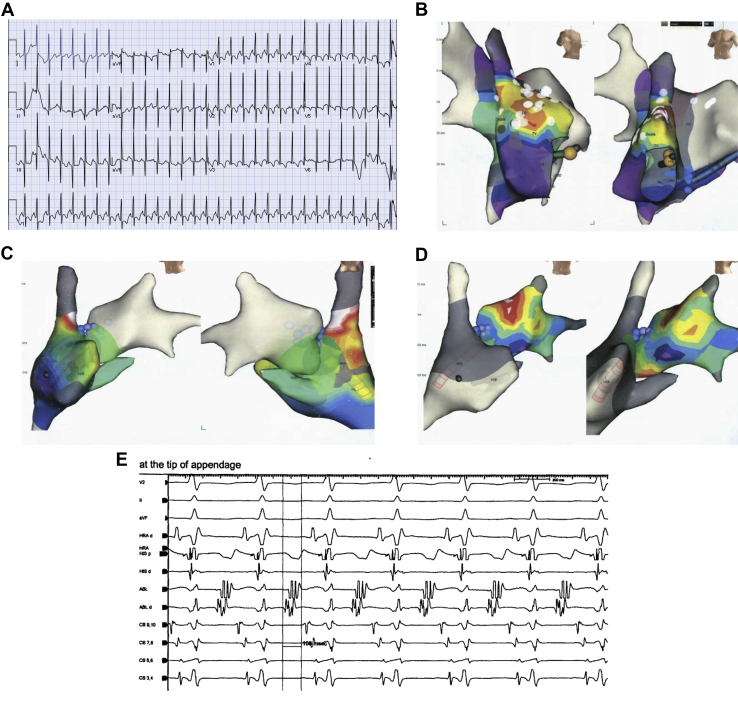
A: Twelve-lead electrocardiogram of ectopic atrial tachycardia at presentation with narrow QRS (60 ms). B–D: Electroanatomic maps during atrial tachycardia showing earliest atrial activation in the right atrial appendage (B), superior vena cava–right atrium junction (C), and roof of left atrium (D). E: Intracardiac electrograms during one of the ablation attempts in the right atrial appendage.
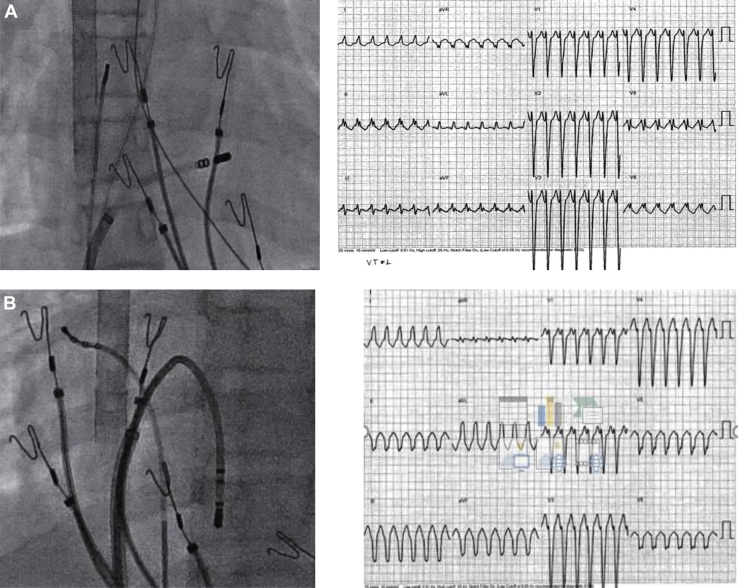
Radiographic images, 12-lead electrocardiograms, and intracardiac electrograms during ventricular tachycardia showing various morphologies and ablation location attempts. A: Anterior right ventricle (RV) wall. B: RV apex. C: Left ventricular septum. D: Purkinje-like potentials preceding the QRS onset at a site in the anterior RV.

Radiographic images, 12-lead electrocardiograms, and intracardiac electrograms during ventricular tachycardia showing various morphologies and ablation location attempts. A: Anterior right ventricle (RV) wall. B: RV apex. C: Left ventricular septum. D: Purkinje-like potentials preceding the QRS onset at a site in the anterior RV.

A: Representative sodium currents recorded in Chinese hamster ovary (CHO) cells transfected with human cardiac wild-type SCN5A. B: Representative sodium currents recorded in CHO cells transfected with L939P. C: Summary of the current-voltage relationships of the activations of the 2 groups of sodium current. The voltage-clamp protocol is shown as an insert.
References
-
- Brugada P., Brugada J. Right bundle branch block, persistent ST segment elevation and sudden cardiac death: a distinct clinical and electrocardiographic syndrome. A multicenter report. J Am Coll Cardiol. 1992;20:1391–1396. - PubMed
-
- Probst V., Kyndt F., Potet F., et al. Haploinsufficiency in combination with aging causes SCN5A-linked hereditary Lenègre disease. J Am Coll Cardiol. 2003;41:643–652. - PubMed
Publication types
Grants and funding
LinkOut - more resources
Full Text Sources
Miscellaneous
