


Evolution of a Short and Stereocontrolled Synthesis of (+)-7,20-Diisocyanoadociane
- PMID: 34990544
- PMCID: PMC9336542
- DOI: 10.1021/acs.joc.1c02700
Evolution of a Short and Stereocontrolled Synthesis of (+)-7,20-Diisocyanoadociane
Abstract
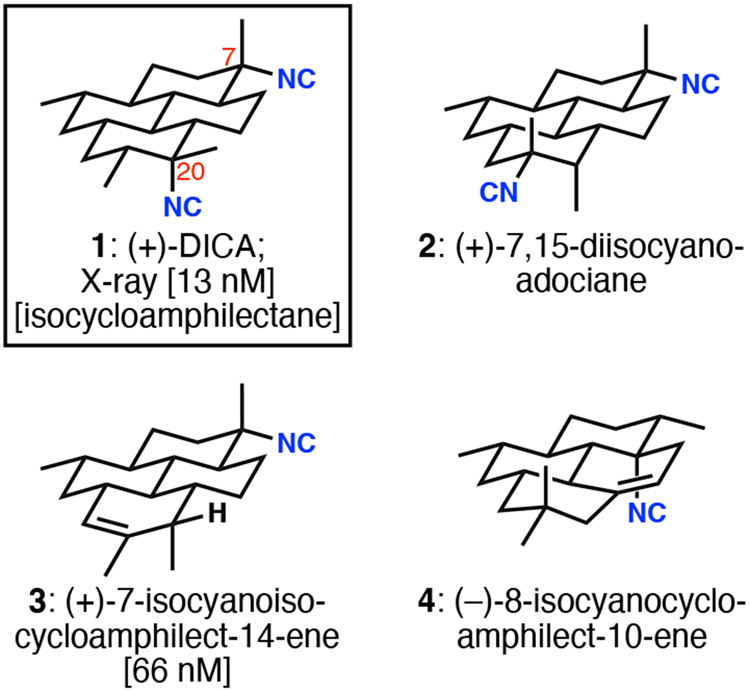
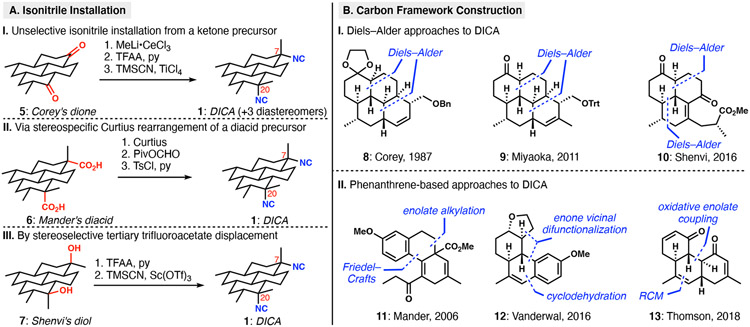
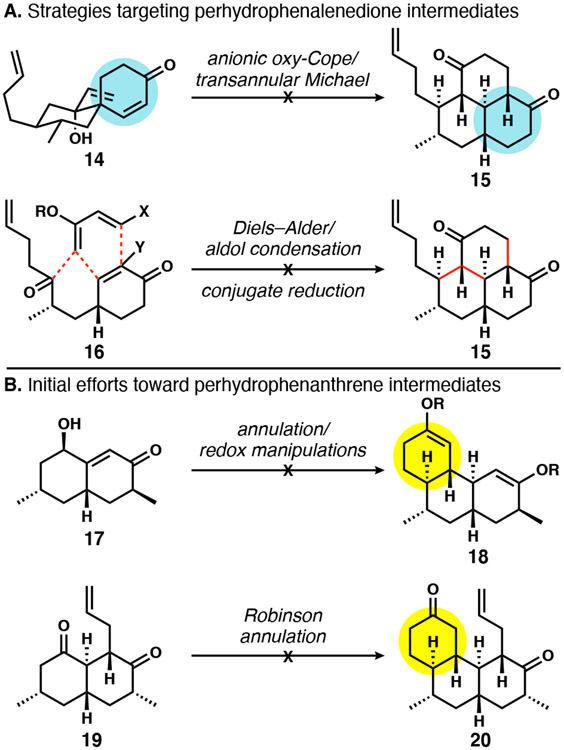
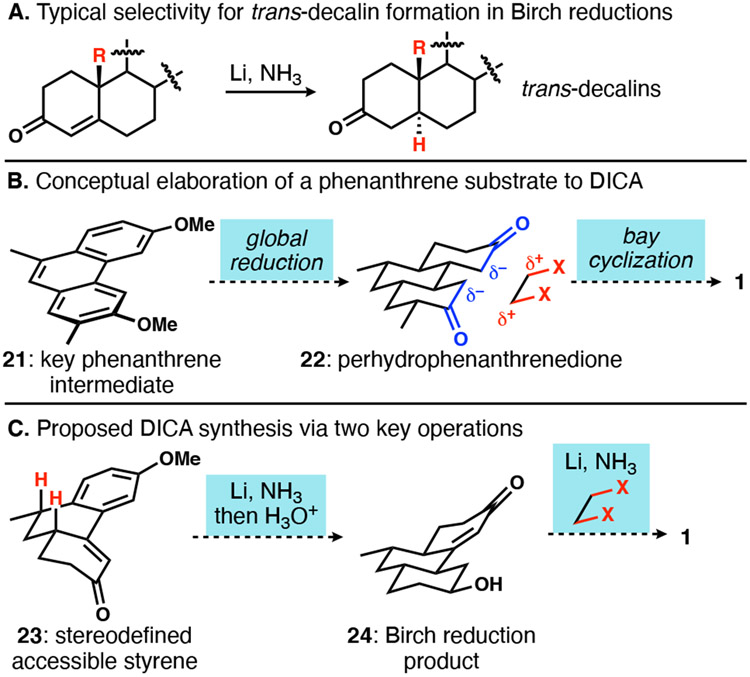
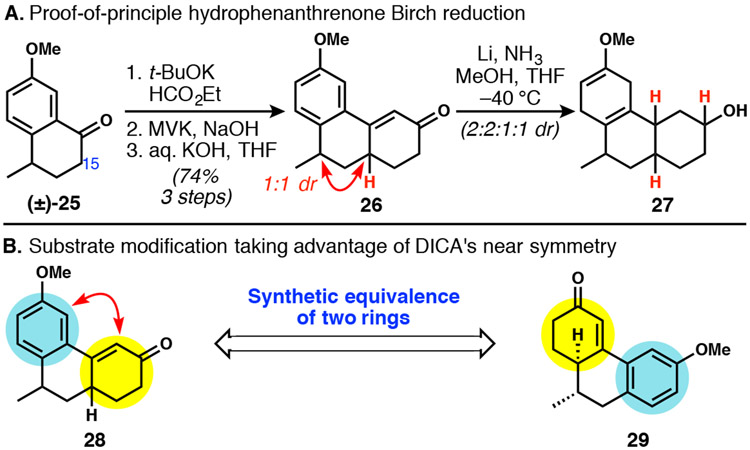
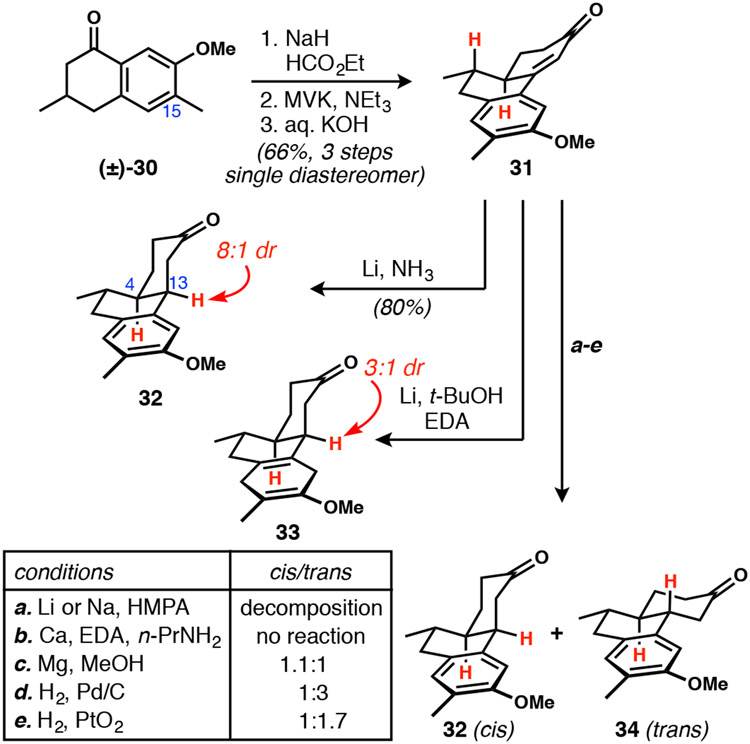
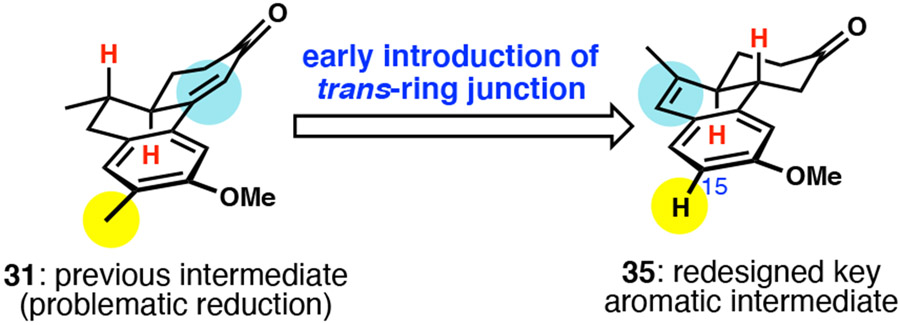
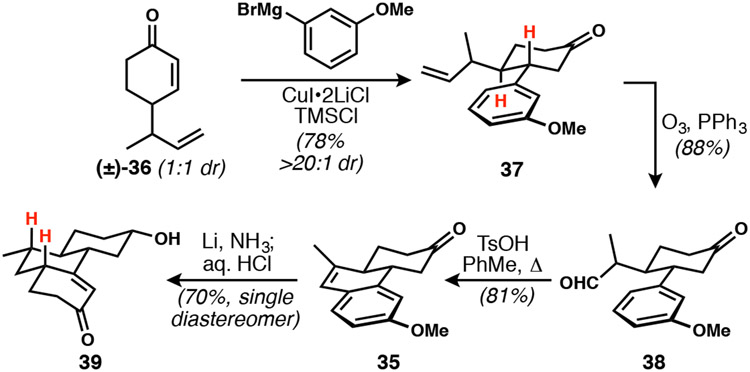
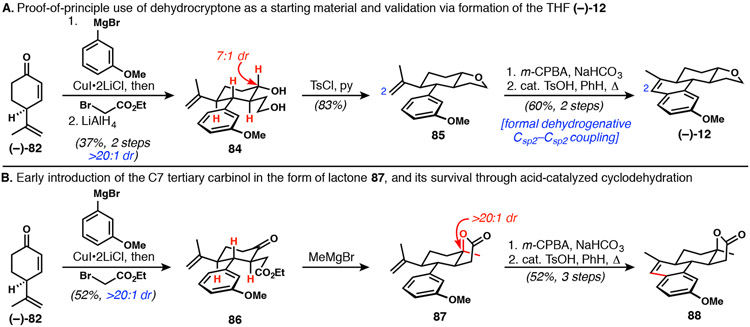
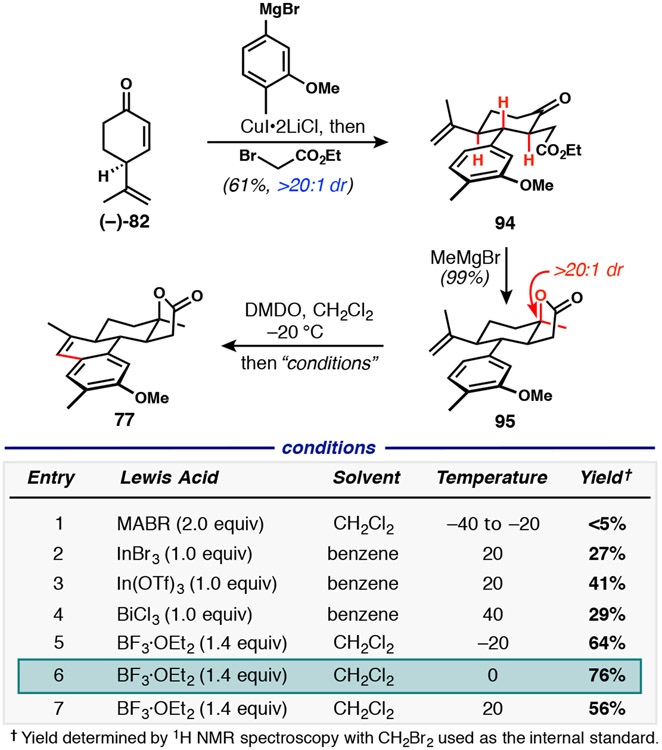
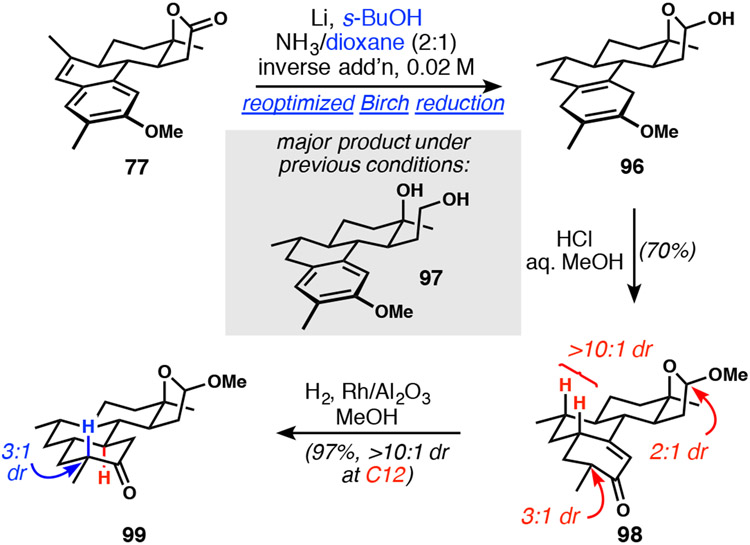
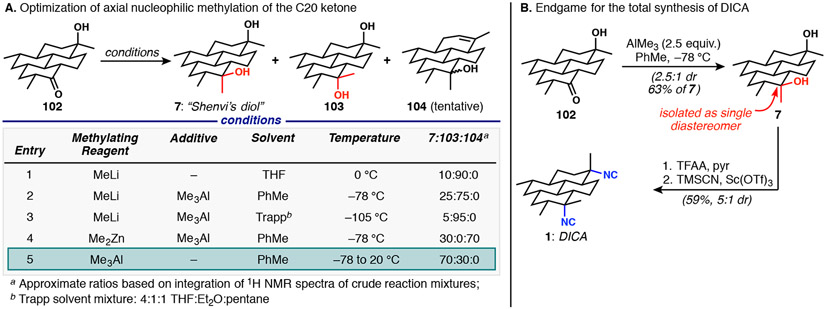
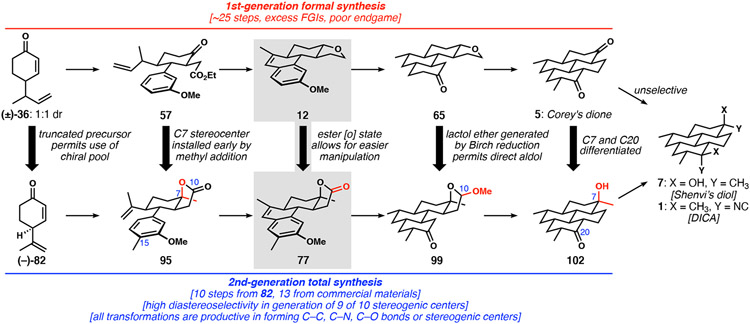
A full account of the development of a concise and highly stereoselective synthesis of (+)-7,20-diisocyanoadociane (DICA)─a structurally complex isocyanoditerpene with potent antiplasmodial activity─is described. The strategy that evolved relies on the rapid construction of unsaturated tricyclic precursors designed to undergo stereocontrolled Birch reductions and a subsequent "bay ring" formation to generate the isocycloamphilectane core. This report is divided into three sections: (1) a description of the initial strategy and the results that focused our efforts on a single route to the DICA core, (2) a discussion of the precise choreography needed to enable a first-generation formal synthesis of (±)-DICA, and (3) the execution of a 13-step second-generation synthesis of (+)-DICA that builds on important lessons learned from the first-generation effort.
Figures
References
-
- Garson MJ; Simpson JS Marine isocyanides and related natural products—structure, biosynthesis and ecology. Nat. Prod. Rep 2004, 21, 164–179. - PubMed
-
- Baker JT; Wells JR; Oberhansli WE; Hawes GB A new diisocyanide of novel ring structure from a sponge. J. Am. Chem. Soc 1976, 98, 4010–4012.
-
- Aside from DICA, the only other perhydropyrene ICT that has succumbed to synthesis is 8-isocyanocycloamphilec-10-ene 4, the unnatural enantiomer of which was made by Schindeler and Piers: Schindeler TW Ph.D. Dissertation, University of British Columbia, 1998.
-
- Corey EJ; Magriotis PA Total synthesis and absolute configuration of 7,20-diisocyanoadociane. J. Am. Chem. Soc 1987, 109, 287–289.
