


Innovative therapeutic concepts of progressive multifocal leukoencephalopathy
- PMID: 34994851
- PMCID: PMC8739669
- DOI: 10.1007/s00415-021-10952-5
Innovative therapeutic concepts of progressive multifocal leukoencephalopathy
Abstract
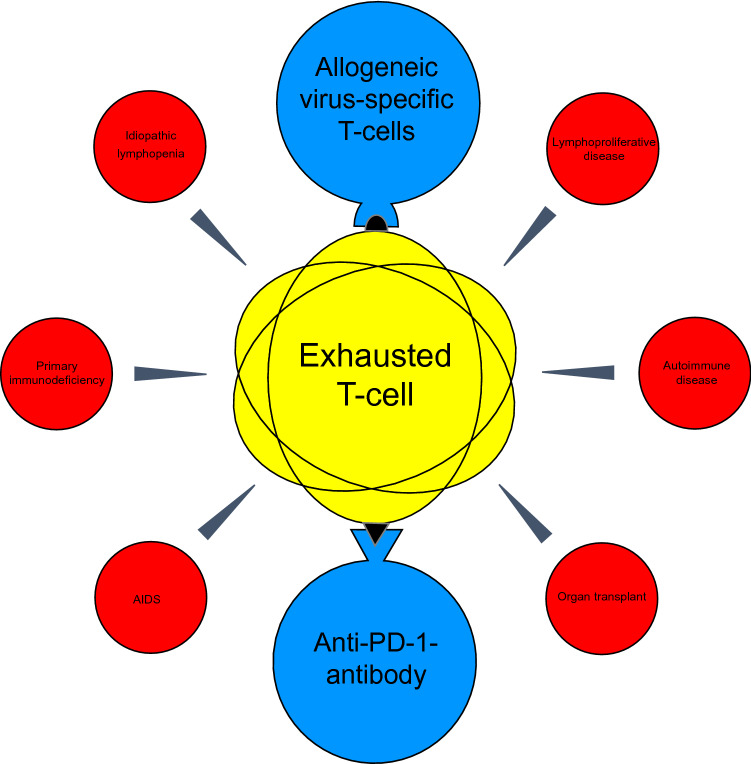
Progressive multifocal leukoencephalopathy (PML) is an opportunistic viral disease of the brain-caused by human polyomavirus 2. It affects patients whose immune system is compromised by a corresponding underlying disease or by drugs. Patients with an underlying lymphoproliferative disease have the worst prognosis with a mortality rate of up to 90%. Several therapeutic strategies have been proposed but failed to show any benefit so far. Therefore, the primary therapeutic strategy aims to reconstitute the impaired immune system to generate an effective endogenous antiviral response. Recently, anti-PD-1 antibodies and application of allogeneic virus-specific T cells demonstrated promising effects on the outcome in individual PML patients. This article aims to provide a detailed overview of the literature with a focus on these two treatment approaches.
Keywords: Allogeneic virus-specific T cells; Anti-PD-1-antibodies; Immune reconstitution; Immunosuppression; Progressive multifocal leukoencephalopathy.
© 2022. The Author(s).
Conflict of interest statement
The authors have no competing interests to declare that are relevant to the content of this article.
Figures
References
-
- Egli A, Infanti L, Dumoulin A, Buser A, Samaridis J, Stebler C, Gosert R, Hirsch HH. Prevalence of polyomavirus BK and JC infection and replication in 400 healthy blood donors. J Infect Dis. 2009;199:837–846. - PubMed
-
- Knowles WA, Pipkin P, Andrews N, Vyse A, Minor P, Brown DW, Miller E. Population-based study of antibody to the human polyomaviruses BKV and JCV and the simian polyomavirus SV40. J Med Virol. 2003;71:115–123. - PubMed
Publication types
MeSH terms
LinkOut - more resources
Full Text Sources
