Review
. 2022 Jan 20;185(2):235-249.
doi: 10.1016/j.cell.2021.12.012. Epub 2022 Jan 6.

Cell maturation: Hallmarks, triggers, and manipulation

Affiliations
Review

Cell maturation: Hallmarks, triggers, and manipulation

Juan R Alvarez-Dominguez et al. Cell. .

Abstract

How cells become specialized, or "mature," is important for cell and developmental biology. While maturity is usually deemed a terminal fate, it may be more helpful to consider maturation not as a switch but as a dynamic continuum of adaptive phenotypic states set by genetic and environment programing. The hallmarks of maturity comprise changes in anatomy (form, gene circuitry, and interconnectivity) and physiology (function, rhythms, and proliferation) that confer adaptive behavior. We discuss efforts to harness their chemical (nutrients, oxygen, and growth factors) and physical (mechanical, spatial, and electrical) triggers in vitro and in vivo and how maturation strategies may support disease research and regenerative medicine.

Keywords: biomaterials; cell maturity; circadian rhythms; directed stem cell differentiation; energy metabolism; machine–tissue interfaces; microfluidic chips; nanotechnology; organoids; tissue anatomy and physiology.


Conflict of interest statement

Declaration of interests D.A.M. is a founder of Semma Therapeutics and consultant for Semma Therapeutics/Vertex. J.R.A.-D. declares no competing interests.

Figures
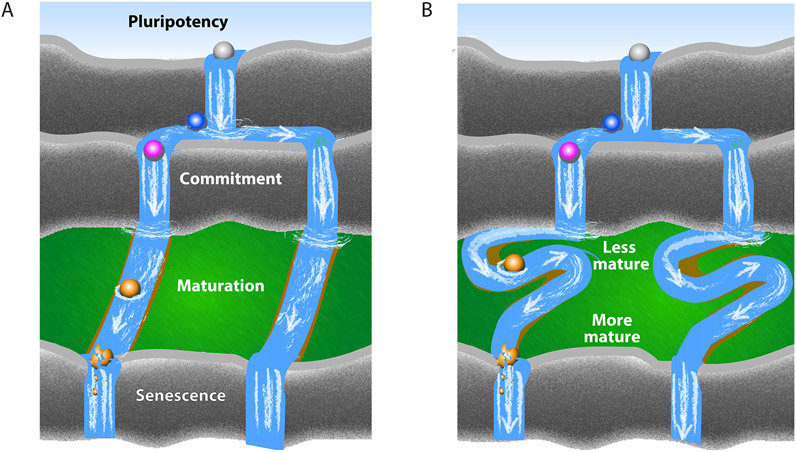
Figure 1.
Figure 1.. Cell Maturation
(A) Maturation is classically understood as a unidirectional progression over time. Following commitment to a specific fate, differentiated cells mature by gaining specialized phenotypes, which decay during senescence. Cells are represented as spheres, their developmental stages by changing colors, and their differentiation time course by floating down the river. (B) An alternative view of maturation as a fluid continuum of adaptive states: specialized cellular phenotypes are dynamically gained or lost in response to changes in the environment to attain maximally adaptive behavior.
Figure 2.
Figure 2.. Maturity Hallmarks
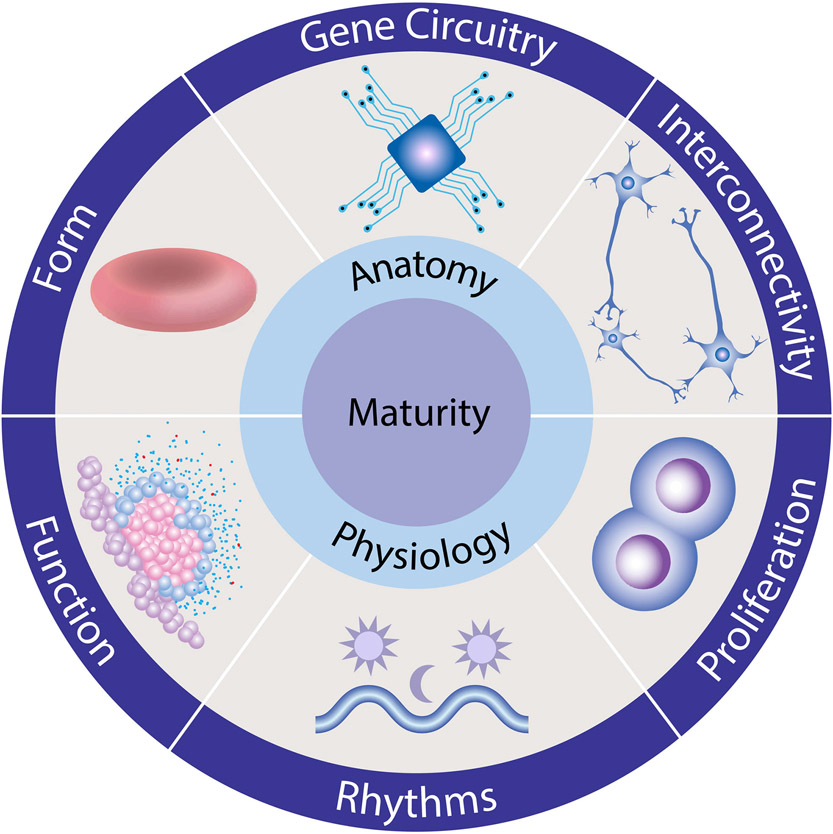
We suggest that most cell types acquire the same set of specialized traits during their maturation. These hallmarks are grouped into interrelated changes in anatomy (form, gene circuitry, interconnectivity) and physiology (function, rhythms, proliferation) that underlie phenotypic specialization.
Figure 3.
Figure 3.. Anatomical Maturation
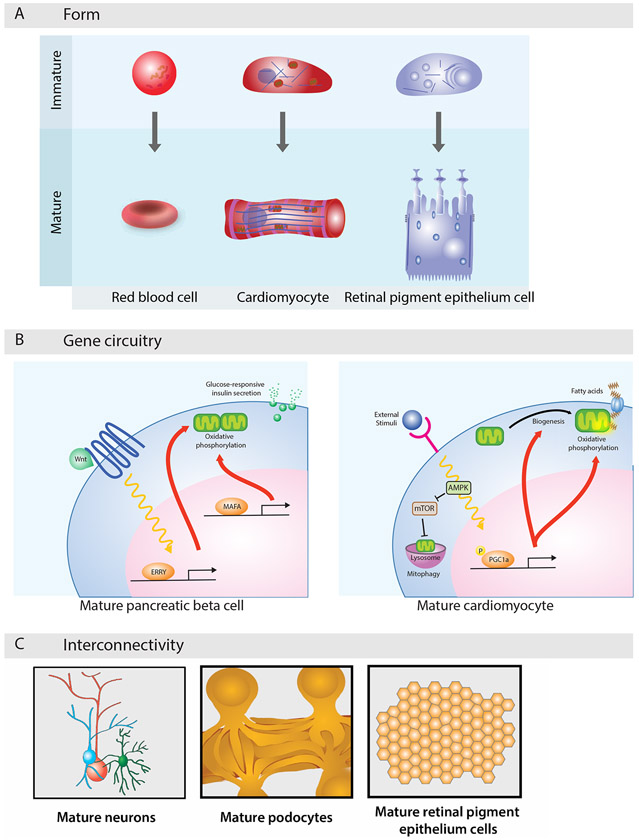
(A) Cells morph to become specialized for specific tasks. Red blood cells turn into discs that withstand large deformations as they traverse the vasculature; cardiomyocytes morph into elongated rods that generate large contractile forces; and retinal pigment epithelial cells form polarized transport networks that support directional flow of cargo. (B) Gene regulatory networks define maturation states. Transcriptional circuits set by MAFA and ERRγ in pancreatic beta cells enact mature coupling of insulin secretion to glucose oxidative metabolism, and post-transcriptional circuits mediated by AMPK and mTOR in maturing cardiomyocytes direct a metabolic shift toward fatty acid oxidation. (C) Interconnectivity allows mature cells to execute complex tasks. Networks of synapsing neurons coordinate specialized sensory transduction; interdigitating kidney podocytes form slits that enable blood filtration; and tightly packed retinal pigment epithelial cells establish a semipermeable blood-retinal barrier.
Figure 4.
Figure 4.. Physiological Maturation
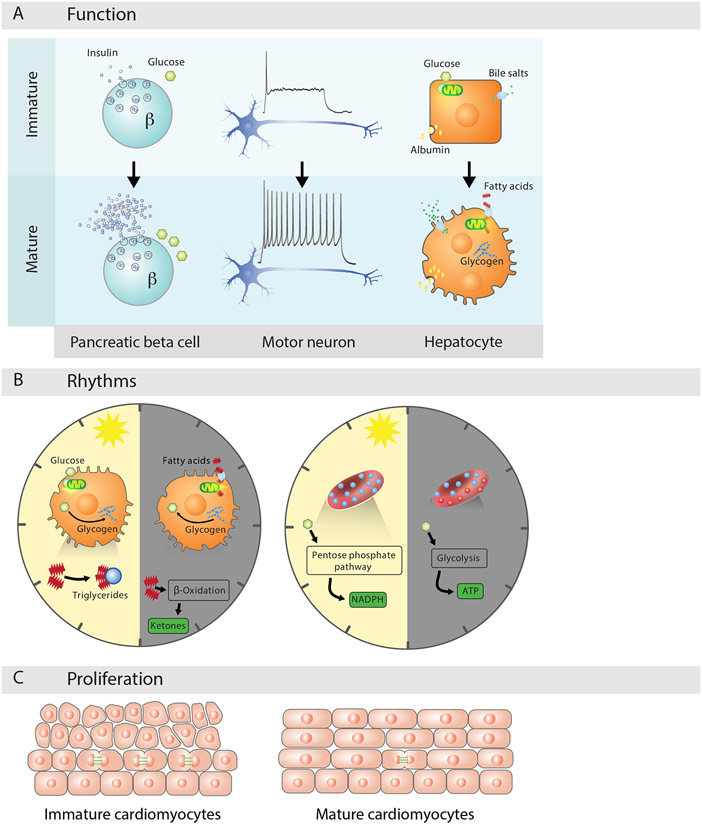
(A) Function specialization defines maturational change. Mature beta cells respond to glucose stimulation with increased selectivity and insulin release capacity; mature motor neurons respond to steady stimulation with repeated firing of decreasing frequency; and mature hepatocytes expand export of albumin and bile salts, metabolize glycogen, and oxidize lipids for energy. (B) A rhythmic physiology is vital for maximally adaptive functioning. Hepatocytes consume glucose and synthesize glycogen and triglycerides with daytime feeding, and shift to fatty acid consumption, glycogen breakdown, and ketone synthesis during nighttime fasting. Mature red cells turn to anaerobic glycolysis as oxygen dips at night, and re-route flux to NAPH synthesis to reduce hemoglobin oxidation as it rises during the day. (C) Proliferative adaptations underlie maturation states. Mature cardiomyocytes are mostly quiescent, as shifting to lipid metabolism for energy triggers cell cycle arrest due to increased oxidative DNA damage.
Figure 5.
Figure 5.. Maturity Triggers
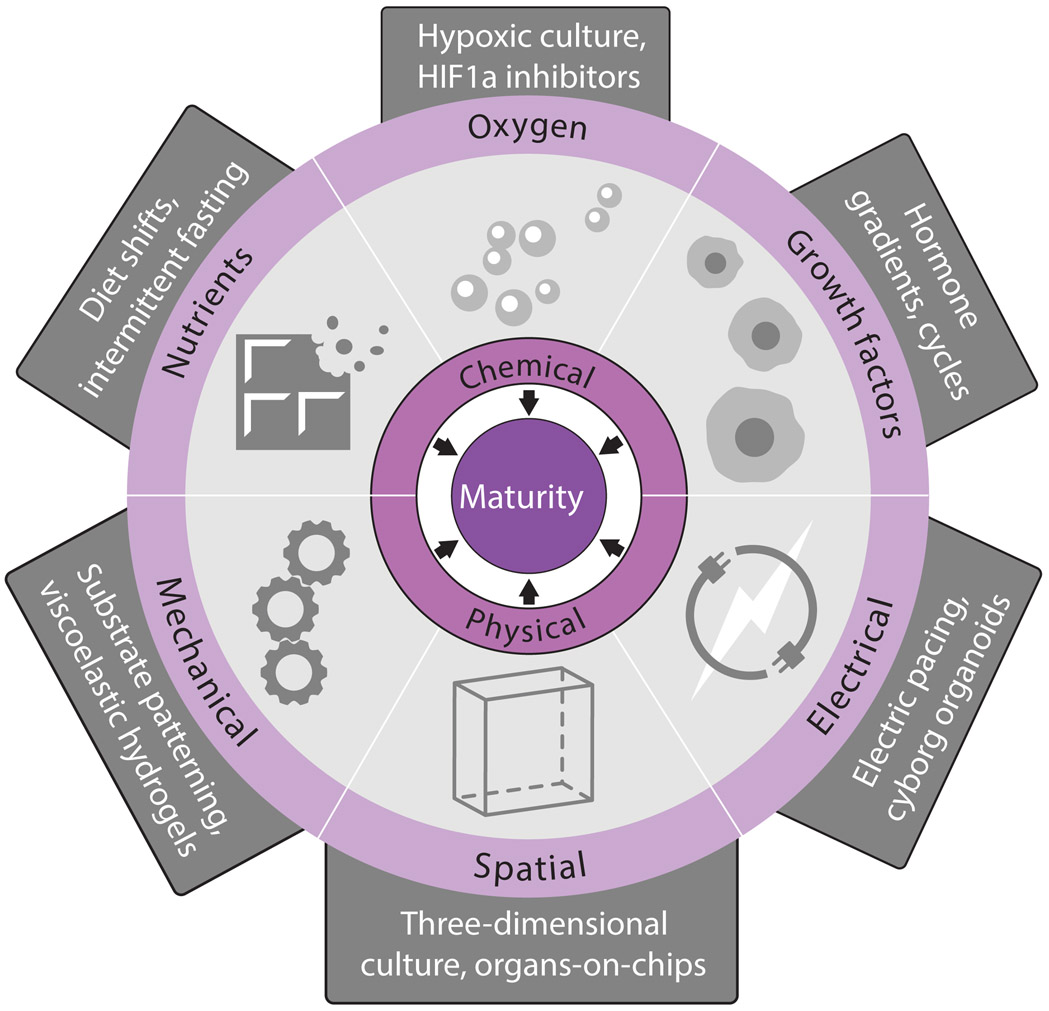
We propose that cell maturation is instructed by cues from the environment that may be grouped into chemical (nutrients, oxygen, growth factors) and physical (mechanical, spatial, electrical) triggers. Manipulations to the culture environment in vitro and in vivo enable control over each of these triggers. The manipulations listed are but illustrative examples of emerging efforts to gain mastery over maturational development on multiple fronts.
Figure 6.
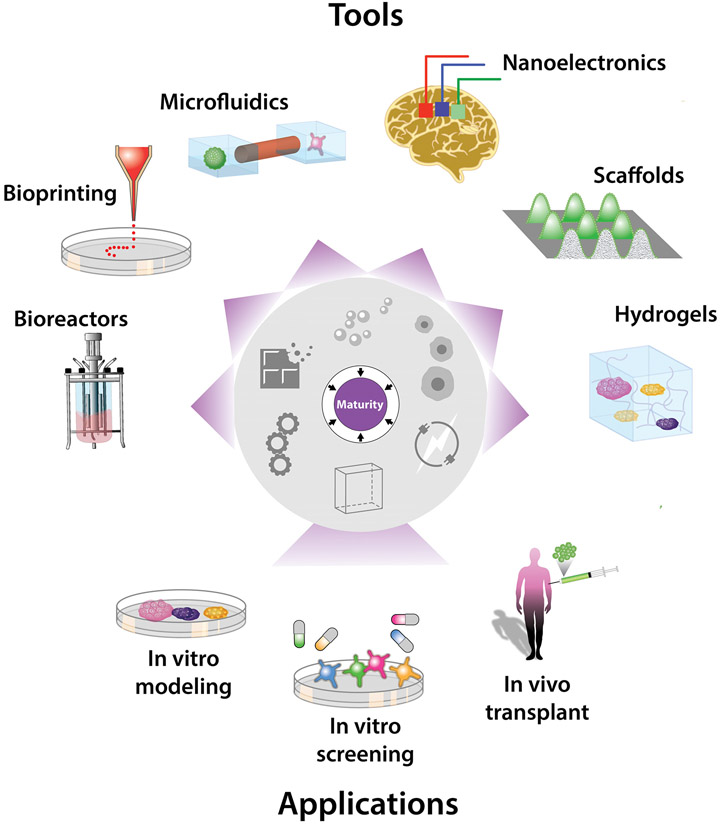
Figure 6.. Harnessing Maturation for Research and Clinical Applications
A growing toolbox makes it increasingly possible to harness cell maturation for applications in basic research, pharmacology, and regenerative medicine. The toolbox includes biomaterials and electromechanical devices offering standardized, scalable, and dynamic control over the physical and chemical environment, key for consistent and accurate mature cell and tissue production. Applications include modeling human development, physiology, and disease; discovering and testing therapeutic drugs and biologicals; and replacing lost, damaged, or aged tissues.

Comment in

References

    1. Abbott LF, and Nelson SB (2000). Synaptic plasticity: taming the beast. Nat Neurosci 3 Suppl, 1178–1183. - PubMed
    1. Aguayo-Mazzucato C, DiIenno A, Hollister-Lock J, Cahill C, Sharma A, Weir G, Colton C, and Bonner-Weir S (2015). MAFA and T3 Drive Maturation of Both Fetal Human Islets and Insulin-Producing Cells Differentiated From hESC. J Clin Endocrinol Metab 100, 3651–3659. - PMC - PubMed
    1. Aguayo-Mazzucato C, Koh A, El Khattabi I, Li WC, Toschi E, Jermendy A, Juhl K, Mao K, Weir GC, Sharma A, et al. (2011). Mafa expression enhances glucose-responsive insulin secretion in neonatal rat beta cells. Diabetologia 54, 583–593. - PMC - PubMed
    1. Aguayo-Mazzucato C, Zavacki AM, Marinelarena A, Hollister-Lock J, El Khattabi I, Marsili A, Weir GC, Sharma A, Larsen PR, and Bonner-Weir S (2013). Thyroid hormone promotes postnatal rat pancreatic beta-cell development and glucose-responsive insulin secretion through MAFA. Diabetes 62, 1569–1580. - PMC - PubMed
    1. Alvarez-Dominguez JR, Donaghey J, Rasouli N, Kenty JHR, Helman A, Charlton J, Straubhaar JR, Meissner A, and Melton DA (2020). Circadian Entrainment Triggers Maturation of Human In Vitro Islets. Cell Stem Cell 26, 108–122 e110. - PubMed

Publication types

LinkOut - more resources