


Triglyceride/low-density-lipoprotein cholesterol ratio is the most valuable predictor for increased small, dense LDL in type 2 diabetes patients
- PMID: 34996463
- PMCID: PMC8742340
- DOI: 10.1186/s12944-021-01612-8
Triglyceride/low-density-lipoprotein cholesterol ratio is the most valuable predictor for increased small, dense LDL in type 2 diabetes patients
Abstract
Background: Small, dense low-density lipoprotein (sd-LDL) increases in type 2 diabetes patients and causes arteriosclerosis. Non-high-density-lipoprotein cholesterol (non-HDL-C) is thought to be useful for predicting arteriosclerosis and sd-LDL elevation; however, there are no data about whether the triglyceride /low-density-lipoprotein cholesterol (TG/LDL-C) ratio is a valuable predictor for sd-LDL.
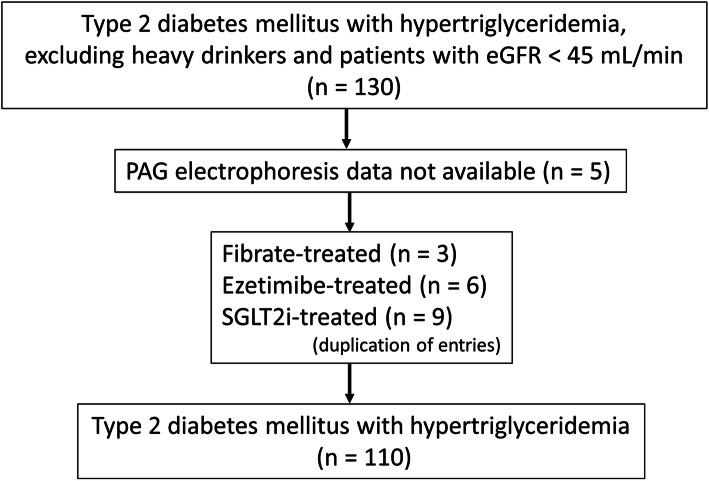
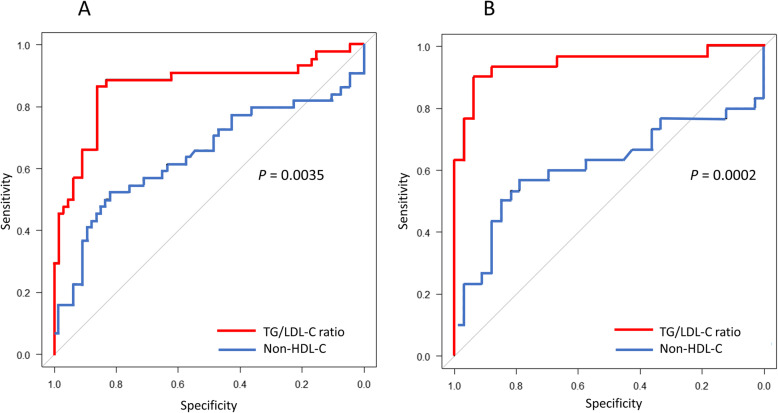
Methods: A total of 110 type 2 diabetes patients with hypertriglyceridemia were analyzed. No patients were treated with fibrates, but 47 patients were treated with statins. LDL-C was measured by the direct method. LDL-migration index (LDL-MI) using electrophoresis (polyacrylamide gel, PAG) was calculated, and a value ≥0.400 was determined to indicate an increase in sd-LDL. Simple regression analyses were carried out between LDL-MI and lipid markers. Receiver operating characteristic curves of lipid markers for predicting high LDL-MI were applied to determine the area under the curve (AUC), sensitivity, specificity, and cut-off point.
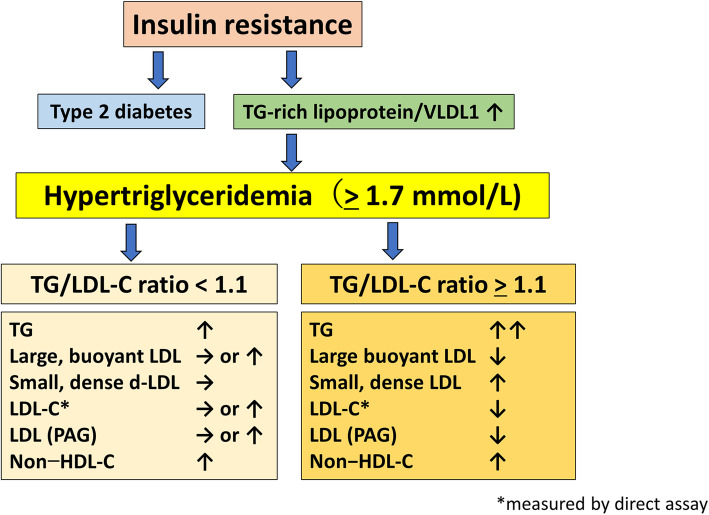
Results: LDL-MI correlated negatively with LDL-C (P = 0.0027) and PAG LDL fraction (P < 0.0001) and correlated positively with TGs, non-HDL-C, TG/LDL-C ratio, TG/HDL-C ratio, and non-HDL-C/HDL-C ratio among all study patients. Similar results were obtained for patients analyzed according to statin treatment. The AUCs (95% confidence interval) were 0.945 (0.884-1.000) for TG/LDL-C ratio and 0.614 (0.463-0.765) for non-HDL-C in patients without statins (P = 0.0002). The AUCs were 0.697 (0.507-0.887) for TG/LDL-C and 0.682 (0.500-0.863) for non-HDL-C in patients treated with statins. The optimal cut-off point for TG/LDL-C ratio for increased LDL-MI was 1.1 (molar ratio) regardless of statin treatment. The sensitivity and specificity of the TG/LDL-C ratio (90.0 and 93.9%, respectively) were higher than those of non-HDL-C (56.7 and 78.8%, respectively) in patients without statins.
Conclusions: The TG/LDL-C ratio is a reliable surrogate lipid marker of sd-LDL and superior to non-HDL-C in type 2 diabetes patients not treated with statins.
Keywords: Dense LDL; Non–HDL-C; Small; TG/LDL-C ratio; Triglycerides; Type 2 diabetes mellitus.
© 2021. The Author(s).
Conflict of interest statement
The authors declare no conflict of interest.
Figures
References
-
- Hoogeveen RC, Gaubatz JW, Sun W, Dodge RC, Crosby JR, Jiang J, et al. Small dense low-density lipoprotein-cholesterol concentrations predict risk for coronary heart disease: the Atherosclerosis Risk In Communities (ARIC) study. Arterioscler Thromb Vasc Biol. 2014;34:1069–1077. doi: 10.1161/ATVBAHA.114.303284. - DOI - PMC - PubMed
-
- Noda H, Iso H, Irie F, Sairenchi T, Ohtaka E, Ohta H. Association between non-high-density lipoprotein cholesterol concentrations and mortality from coronary heart disease among Japanese men and women: the Ibaraki Prefectural Health Study. J Atheroscler Thromb. 2010;17:30–36. doi: 10.5551/jat.1016. - DOI - PubMed
MeSH terms
Substances
LinkOut - more resources
Full Text Sources
Medical
Miscellaneous
