


Comparison of high-frequency in-pipe SARS-CoV-2 wastewater-based surveillance to concurrent COVID-19 random clinical testing on a public U.S. university campus
- PMID: 34998780
- PMCID: PMC8732902
- DOI: 10.1016/j.scitotenv.2021.152877
Comparison of high-frequency in-pipe SARS-CoV-2 wastewater-based surveillance to concurrent COVID-19 random clinical testing on a public U.S. university campus
Abstract
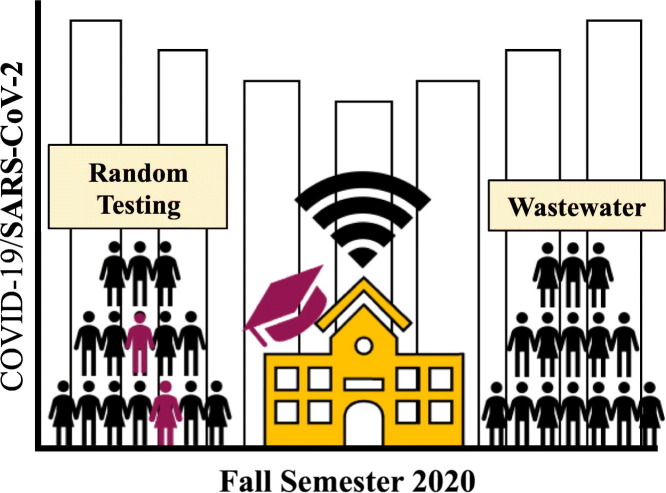
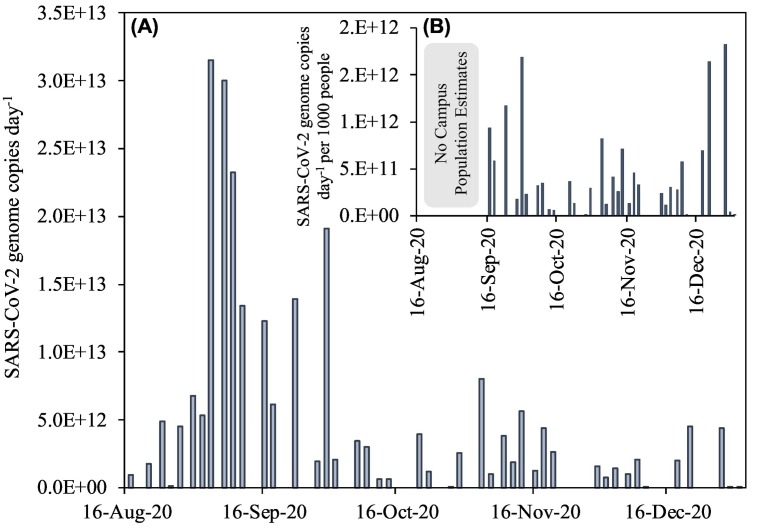
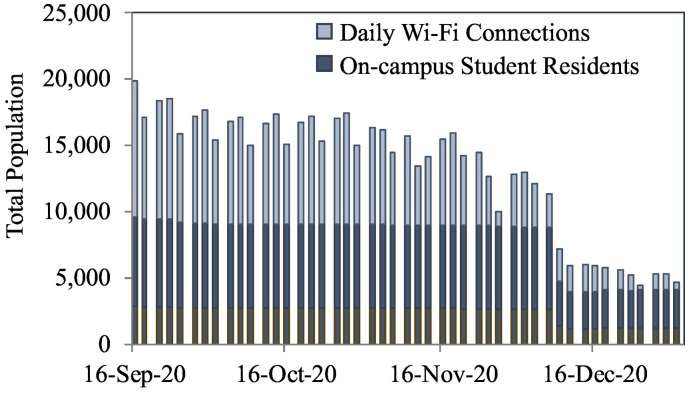
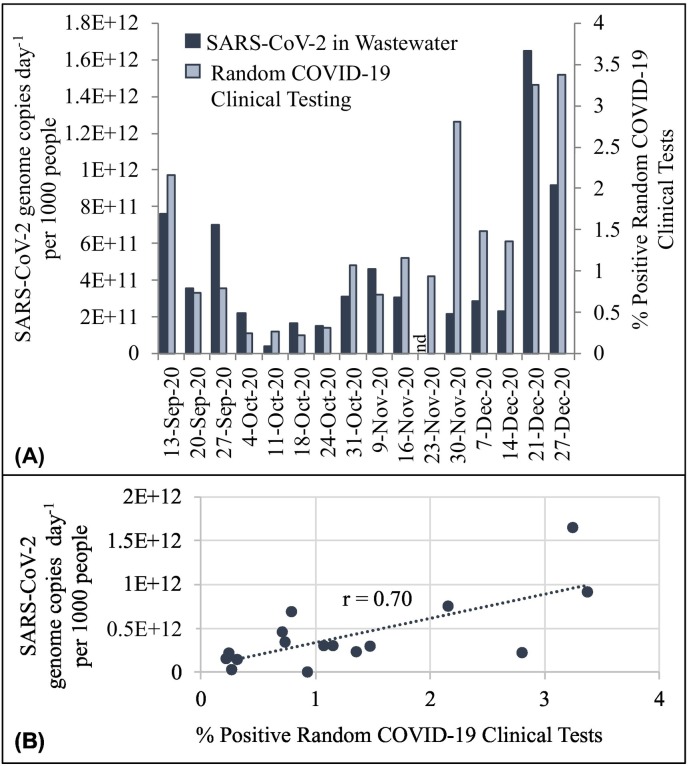
Wastewater-based epidemiology (WBE) is utilized globally as a tool for quantifying the amount of Severe Acute Respiratory Syndrome Coronavirus 2 (SARS-CoV-2) within communities, yet the efficacy of community-level wastewater monitoring has yet to be directly compared to random Coronavirus Disease of 2019 (COVID-19) clinical testing; the best-supported method of virus surveillance within a single population. This study evaluated the relationship between SARS-CoV-2 RNA in raw wastewater and random COVID-19 clinical testing on a large university campus in the Southwestern United States during the Fall 2020 semester. Daily composites of wastewater (24-hour samples) were collected three times per week at two campus locations from 16 August 2020 to 1 January 2021 (n = 95) and analyzed by reverse transcriptase-quantitative polymerase chain reaction (RT-qPCR) targeting the SARS-CoV-2 E gene. Campus populations were estimated using campus resident information and anonymized, unique user Wi-Fi connections. Resultant trends of SARS-CoV-2 RNA levels in wastewater were consistent with local and nationwide pandemic trends showing peaks in infections at the start of the Fall semester in mid-August 2020 and mid-to-late December 2020. A strong positive correlation (r = 0.71 (p < 0.01); n = 15) was identified between random COVID-19 clinical testing and WBE surveillance methods, suggesting that wastewater surveillance has a predictive power similar to that of random clinical testing. Additionally, a comparative cost analysis between wastewater and clinical methods conducted here show that WBE was more cost effective, providing data at 1.7% of the total cost of clinical testing ($6042 versus $338,000, respectively). We conclude that wastewater monitoring of SARS-CoV-2 performed in tandem with random clinical testing can strengthen campus health surveillance, and its economic advantages are maximized when performed routinely as a primary surveillance method, with random clinical testing reserved for an active outbreak situation.
Keywords: College campus; Maintenance hole; Neighborhood-level monitoring; Random surveillance testing; Saliva testing; Sewer; Wastewater collection system; Wastewater-based epidemiology; Wi-fi data.
Copyright © 2022 Elsevier B.V. All rights reserved.
Conflict of interest statement
Declaration of competing interest R.U.H. and E.M.D. are cofounders of AquaVitas, LLC, 9260 E. Raintree, Ste. 130, Scottsdale, AZ 85260, USA, a startup company providing commercial services in wastewater-based epidemiology. R.U.H., J.W., and D.A.B. are current or former members of OneWaterOneHealth, a non-profit project managed by the university's Foundation.
Figures
References
-
- Bowes D.A., Driver E.M., Kraberger S., Fontenele R.S., Holland L.A., Wright J., et al. medRxiv; 2021. Unrestricted Online Sharing of High-frequency, High-resolution Data on SARS-CoV-2 in Wastewater to Inform the COVID-19 Public Health Response in Greater Tempe, Arizona. 2021.07.29.21261338.
MeSH terms
Substances
LinkOut - more resources
Full Text Sources
Medical
Miscellaneous
