


Evidences and perspectives of the use of probiotics, prebiotics, synbiotics, and postbiotics as adjuvants for prevention and treatment of COVID-19: A bibliometric analysis and systematic review
- PMID: 35002079
- PMCID: PMC8720301
- DOI: 10.1016/j.tifs.2021.12.033
Evidences and perspectives of the use of probiotics, prebiotics, synbiotics, and postbiotics as adjuvants for prevention and treatment of COVID-19: A bibliometric analysis and systematic review
Erratum in
-
Corrigendum to 'Evidences and perspectives of the use of probiotics, prebiotics, synbiotics, and postbiotics as adjuvants for prevention and treatment of COVID-19: A bibliometric analysis and integrative review' [Trends in Food Science & Technology 120 (2022) 174-192].Trends Food Sci Technol. 2022 Mar;121:156-160. doi: 10.1016/j.tifs.2022.01.028. Epub 2022 Jan 31. Trends Food Sci Technol. 2022. PMID: 35125655 Free PMC article.
Abstract
Background: Coronavirus disease-19 (COVID-19) is an infectious disease transmitted by the virus responsible for the severe acute respiratory syndrome 2 (SARS-CoV-2), which exhibit several clinical manifestations including gastrointestinal symptoms.
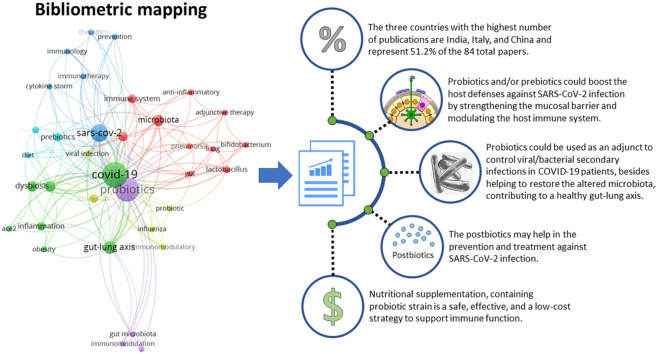
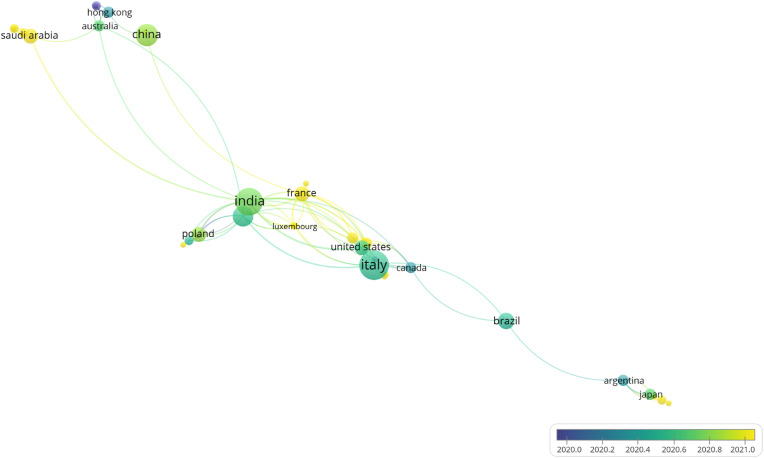
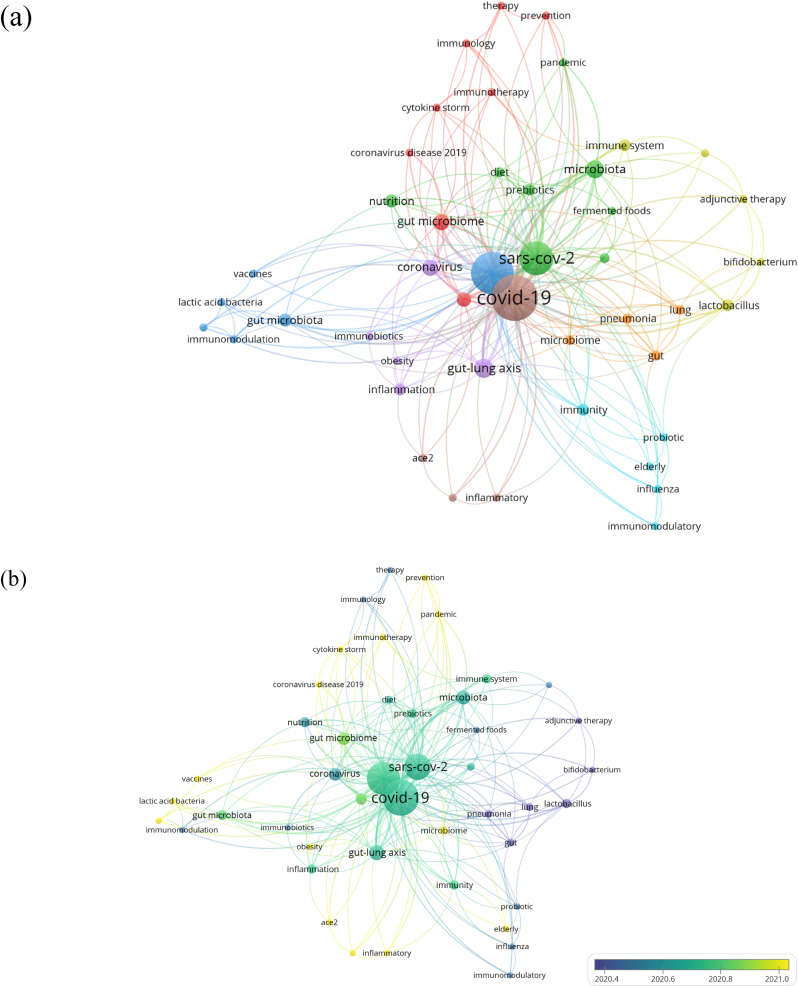
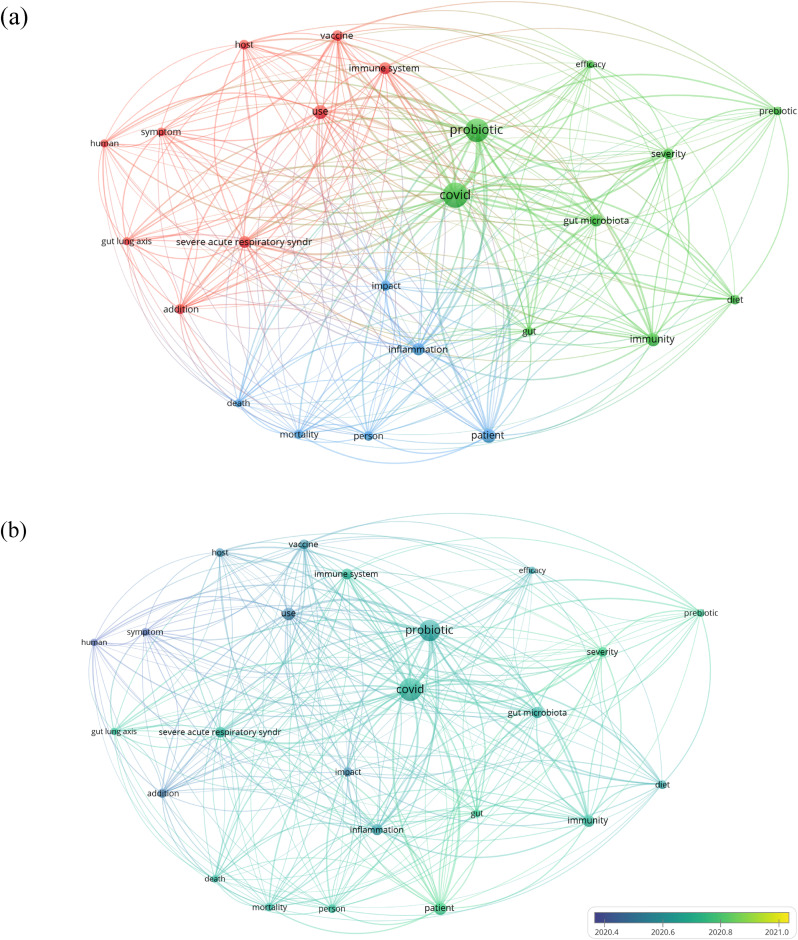
Scope and approach: This review aimed to provide insights and perspectives for the use of probiotics, prebiotics, synbiotics, and postbiotics as adjuvants for prevention/treatment and/or modulation of the microbiota in COVID-19 patients. Eighty-four studies published in the Scopus database from the onset of the pandemic until December 2021 were assessed and submitted to a bibliometric analysis adapted from VOSviewer software.
Key findings and conclusions: Through bibliometric analysis, it might be suggested that the modulation of the gut/lung microbiome is promising as an adjuvant for the prevention/treatment of COVID-19 patients, due to immunomodulation properties related to probiotics and prebiotics. So far, few clinical studies involving the application of probiotics in COVID-19 patients have been completed, but reduction in the duration of the disease and the severity of symptoms as fatigue, olfactory dysfunction and breathlessness, nausea and vomiting and other gastrointestinal symptoms were some of the main findings. However, probiotics are not recommended to immunocompromised patients in corticosteroid therapy. The future perspectives point to the modulation of the intestinal microbiota by probiotics, prebiotics, synbiotics, and postbiotics represent a promising adjuvant approach for improving the health of patients with COVID-19.
Keywords: Diet; Functional foods; Gut-lung axis; Immunomodulation; Microbiome; Pandemic.
© 2022 Elsevier Ltd. All rights reserved.
Conflict of interest statement
The authors declare to have no conflicts of interest.
Figures
References
-
- d'Ettorre G., Ceccarelli G., Marazzato M., Campagna G., Pinacchio C., Alessandri F., et al. Challenges in the management of SARS-CoV2 infection: The role of oral bacteriotherapy as complementary therapeutic strategy to avoid the progression of COVID-19. Frontiers of Medicine. 2020;7:389. doi: 10.3389/fmed.2020.00389. - DOI - PMC - PubMed
-
- Al Noman A., Islam M.S., Sana S., Mondal P., Meem R.I., Rana S., et al. Correction to: A review of the genome, epidemiology, clinical features, prevention, and treatment scenario of COVID-19: Bangladesh aspects. The Egyptian Journal of Bronchology. 2021;15:8. doi: 10.1186/s43168-021-00057-y. - DOI
Publication types
LinkOut - more resources
Full Text Sources
Molecular Biology Databases
Miscellaneous