


Identification of Genetic Variants of Human Papillomavirus in a Group of Mexican HIV/AIDS Patients and Their Possible Association with Cervical Cancer
- PMID: 35003280
- PMCID: PMC8702602
- DOI: 10.33073/pjm-2021-047
Identification of Genetic Variants of Human Papillomavirus in a Group of Mexican HIV/AIDS Patients and Their Possible Association with Cervical Cancer
Abstract
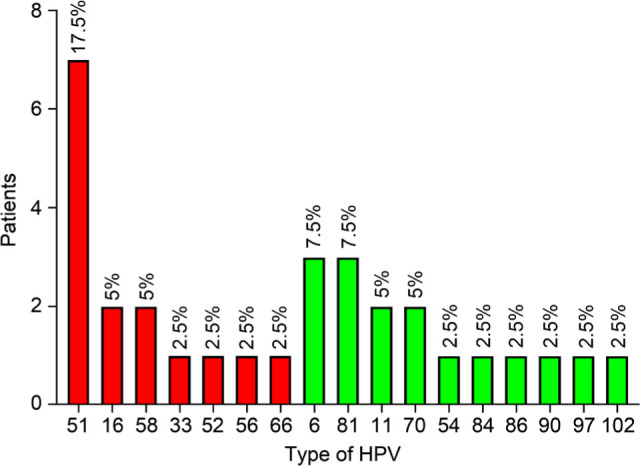
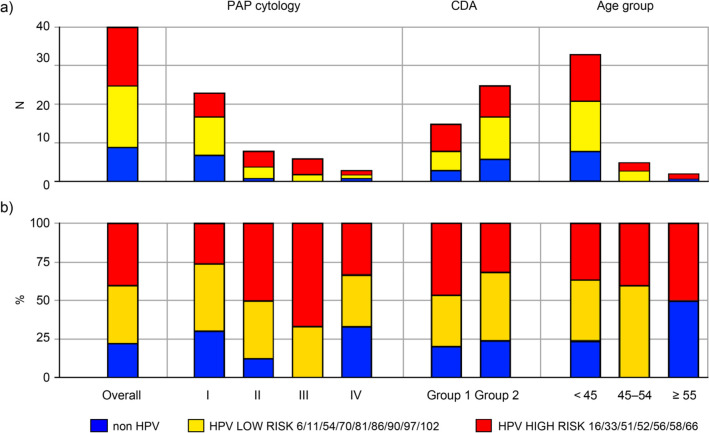
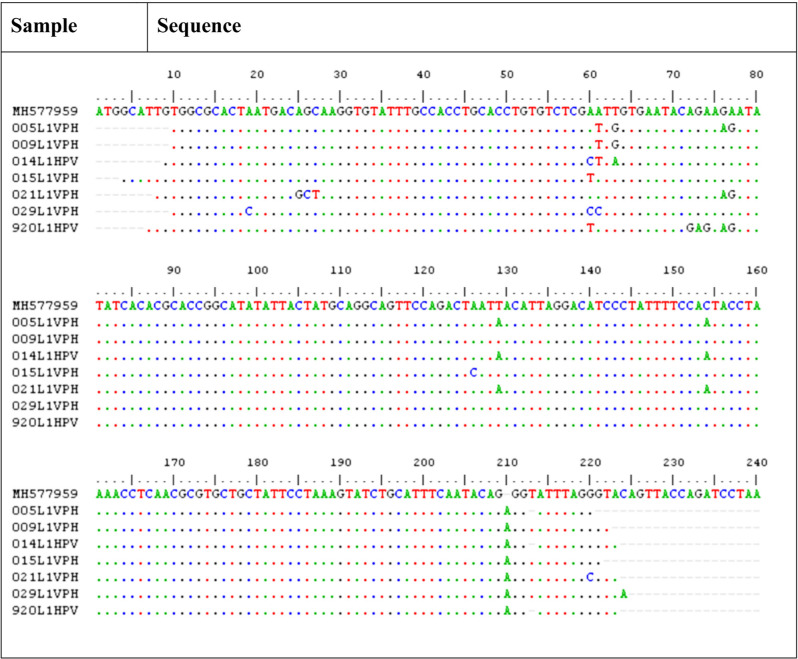
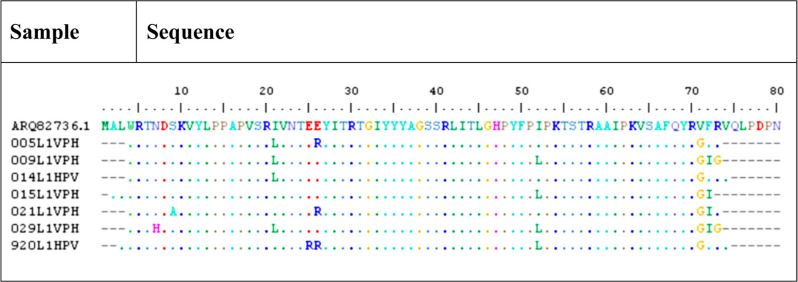
Infections caused by the human immunodeficiency virus (HIV) and human papillomavirus (HPV) cause thousands of deaths worldwide each year. So far, there has been no consensus on whether there is a direct relationship between the incidence of neoplasms and the immunosuppression caused by HIV that could help understand if coinfection increases the likelihood of cervical cancer. The objective of the study was to identify the presence of genetic variants of HPV in a group of HIV-positive women and their possible association with cervical cancer. Cervical samples were taken from HIV-positive patients for cytological analysis to identify the HPV genotype by polymerase chain reaction (PCR) and sequencing. The most prevalent L1 capsid protein mutations in the HPV genotype were analyzed in silico. Various types of HPV were identified, both high-risk (HR) and low-risk (LR). The most prevalent genotype was HPV51. Analysis of the L1 gene sequences of HPV51 isolates showed nucleotide variations. Of the samples analyzed in Puebla, Mexico, HPV51 had the highest incidence (17.5%, 7/40). Different mutations, which could be used as population markers, were detected in this area, and they have not been reported in the L1 databases for HPV51 in Mexico. Genotypes 6, 14, 86, 87, 89, and 91, not detected or reported in samples from patients with HPV in Mexico, were also identified. Data from the population analyzed suggest no direct relationship between HIV immunosuppression and cervical cancer, regardless of the high- or low-risk HPV genotype. Furthermore, it is possible to develop regional population markers for the detection of HPV based on the mutations that occur in the sequence of nucleotides analyzed.
Keywords: cervical cancer; human immunodeficiency virus; human papillomavirus; polymorphism.
© 2021 Felipe Ortiz-Gutiérrez et al.
Conflict of interest statement
Conflict of interest The authors do not report any financial or personal connections with other persons or organizations, which might negatively affect the contents of this publication and/or claim authorship rights to this publication.
Figures
References
-
- Abel S, Najioullah F, Voluménie JL, Accrombessi L, Carles G, Catherine D, Chiappetta D, Clavel C, Codjo-Sodokine A, El Guedj M, et al. ; for HP2V study group . High prevalence of human papillomavirus infection in HIV-infected women living in French Antilles and French Guiana. PLoS One. 2019. Sep 4;14(9): e0221334. 10.1371/journal.pone.0221334 - DOI - PMC - PubMed
-
- Aguilar-Lemarroy A, Vallejo-Ruiz V, Cortés-Gutiérrez EI, Salgado-Bernabé ME, Ramos-González NP, Ortega-Cervantes L, Arias-Flores R, Medina-Díaz IM, Hernández-Garza F, Santos-López G, et al. ; IMSS Research Network on HPV . Human papillomavirus infections in Mexican women with normal cytology, precancerous lesions, and cervical cancer: type-specific prevalence and HPV coinfections. J Med Virol. 2015. May;87(5):871–884. 10.1002/jmv.24099 - DOI - PubMed
-
- Bishop B, Dasgupta J, Klein M, Garcea RL, Christensen ND, Zhao R, Chen XS. Crystal structures of four types of human papillomavirus L1 capsid proteins: understanding the specificity of neutralizing monoclonal antibodies. J Biol Chem. 2007. Oct;282(43): 31803–31811. 10.1074/jbc.M706380200 - DOI - PubMed
-
- Bruni L, Albero G, Serrano B, Mena M, Gómez D, Muñoz J, Bosch FX, de Sanjosé S. Human papillomavirus and related diseases in the World. Summary Report. Barcelona (Spain): ICO/IARC Information Centre on HPV and Cancer (HPV Information Centre); 2019. Jan 22.
