


Epidemiology and Outcomes of Hospitalizations Due to Hepatocellular Carcinoma
- PMID: 35003948
- PMCID: PMC8723719
- DOI: 10.7759/cureus.20089
Epidemiology and Outcomes of Hospitalizations Due to Hepatocellular Carcinoma
Abstract
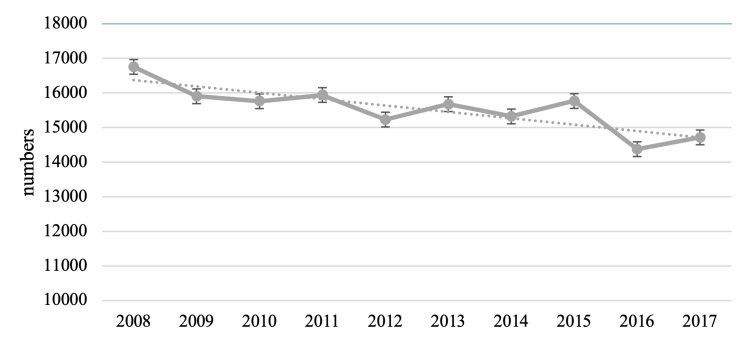
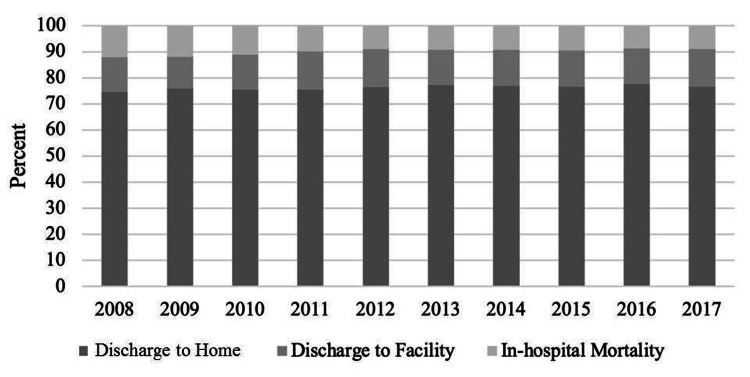
Background Hepatocellular Carcinoma (HCC) is a severe complication of cirrhosis and the incidence of HCC has been increasing in the United States (US). We aim to describe the trends, characteristics, and outcomes of hospitalizations due to HCC across the last decade. Methods We derived a study cohort from the Nationwide Inpatient Sample (NIS) for the years 2008-2017. Adult hospitalizations due to HCC were identified using the International Classification of Diseases (9th/10th Editions) Clinical Modification diagnosis codes (ICD-9-CM/ICD-10-CM). Comorbidities were also identified by ICD-9/10-CM codes and Elixhauser Comorbidity Software (Agency for Healthcare Research and Quality, Rockville, Maryland, US). Our primary outcomes were in-hospital mortality and discharge to the facility. We then utilized the Cochran-Armitage trend test and multivariable survey logistic regression models to analyze the trends, outcomes, and predictors. Results A total of 155,436 adult hospitalizations occurred due to HCC from 2008-2017. The number of hospitalizations with HCC decreased from 16,754 in 2008 to 14,715 in 2017. Additionally, trends of in-hospital mortality declined over the study period but discharge to facilities remained stable. Furthermore, in multivariable regression analysis, predictors of increased mortality in HCC patients were advanced age (OR 1.1; 95%CI 1.0-1.2; p< 0.0001), African American (OR 1.3; 95%CI 1.1-1.4;p< 0.001), Rural/ non-teaching hospitals (OR 2.7; 95%CI 2.4-3.3; p< 0.001), uninsured (OR 1.9; CI 1.6-2.2; p< 0.0001) and complications like septicemia and pneumonia as well as comorbidities such as hypertension, diabetes mellitus, and renal failure. We observed similar trends in discharge to facilities. Conclusions In this nationally representative study, we observed a decrease in hospitalizations of patients with HCC along with in-hospital mortality; however, discharge to facilities remained stable over the last decade. We also identified multiple predictors significantly associated with increased mortality, some of which are potentially modifiable and can be points of interest for future studies.
Keywords: hepatocellular carcinoma; hepatocellular carcinoma (hcc); in-hospital mortality; outcome; trends.
Copyright © 2021, Mullangi et al.
Conflict of interest statement
The authors have declared that no competing interests exist.
Figures
References
-
- Hepatocellular carcinoma. Llovet JM, Kelley RK, Villanueva A, et al. Nat Rev Dis Primers. 2021;7:6. - PubMed
-
- NIH: cancer stat facts: liver and intrahepatic bile duct cancer. [ May; 2021 ];https://seer.cancer.gov/statfacts/html/livibd.html 2021
-
- Hepatocellular carcinoma is leading in cancer-related disease burden among hospitalized baby boomers. Gadiparthi C, Yoo ER, Are VS, et al. Ann Hepatol. 2019;18:679–684. - PubMed
LinkOut - more resources
Full Text Sources