Review
. 2021 Dec 10;25(1):103598.
doi: 10.1016/j.isci.2021.103598. eCollection 2022 Jan 21.

Recent advances in the fabrication of 2D metal oxides

Affiliations
Review

Recent advances in the fabrication of 2D metal oxides

Huaguang Xie et al. iScience. .

Abstract

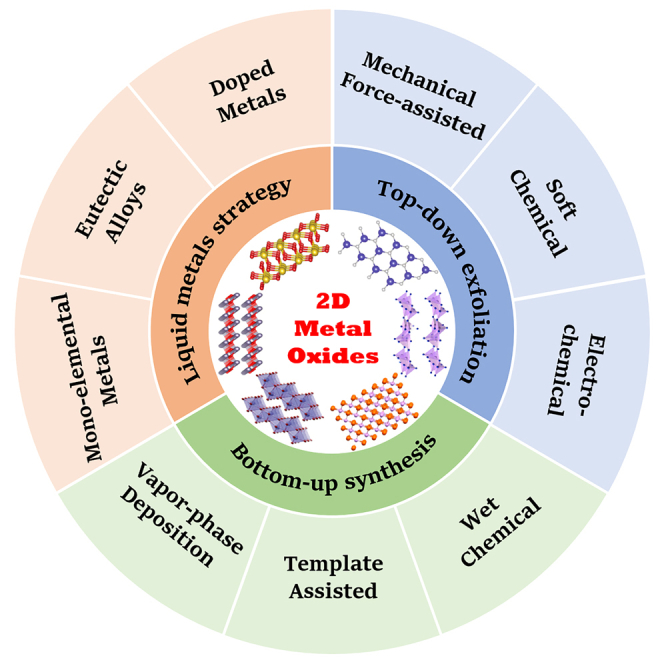
Atomically thin two-dimensional (2D) metal oxides exhibit unique optical, electrical, magnetic, and chemical properties, rendering them a bright application prospect in high-performance smart devices. Given the large variety of both layered and non-layered 2D metal oxides, the controllable synthesis is the critical prerequisite for enabling the exploration of their great potentials. In this review, recent progress in the synthesis of 2D metal oxides is summarized and categorized. Particularly, a brief overview of categories and crystal structures of 2D metal oxides is firstly introduced, followed by a critical discussion of various synthesis methods regarding the growth mechanisms, advantages, and limitations. Finally, the existing challenges are presented to provide possible future research directions regarding the synthesis of 2D metal oxides. This work can provide useful guidance on developing innovative approaches for producing both 2D layered and non-layered nanostructures and assist with the acceleration of the research of 2D metal oxides.

Keywords: Applied sciences; Materials synthesis; Nanomaterials.


Conflict of interest statement

The authors declare no competing interests.

Figures
None
Graphical abstract
Figure 1
Figure 1
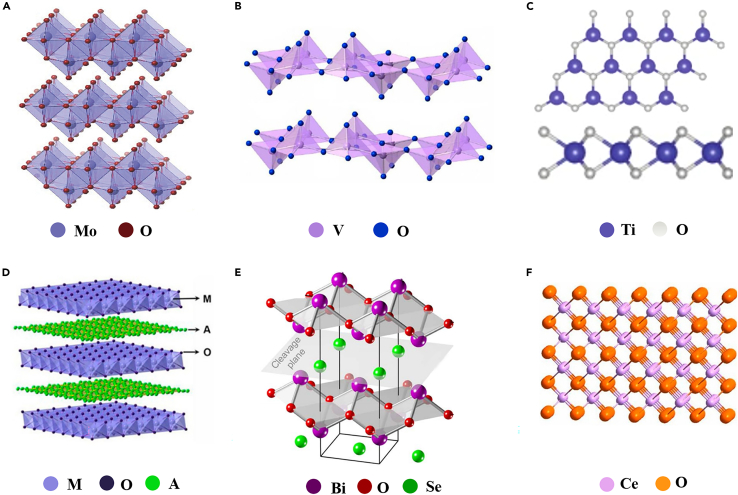
Crystal structure diagram of various 2D MOXs (A) MoO3 (Yang et al., 2017a) Copyright 2017, Wiley-Blackwell. (B) V2O5 (Tan et al., 2017) Copyright 2017, American Chemical Society. (C) h-TiO2 (Zhang et al., 2021a) Copyright 2021, Springer Nature. (D) LDHs. M, metal cations; O, hydroxide ions; A, charge-balancing anion or solvation molecule (Tan et al., 2017) Copyright 2017, American Chemical Society. (E) Bi2O2Se (Chen et al., 2018) Copyright 2018, American Association for the Advancement of Science. (F) CeO2 (Tan et al., 2017) Copyright 2017, American Chemical Society.
Figure 2
Figure 2
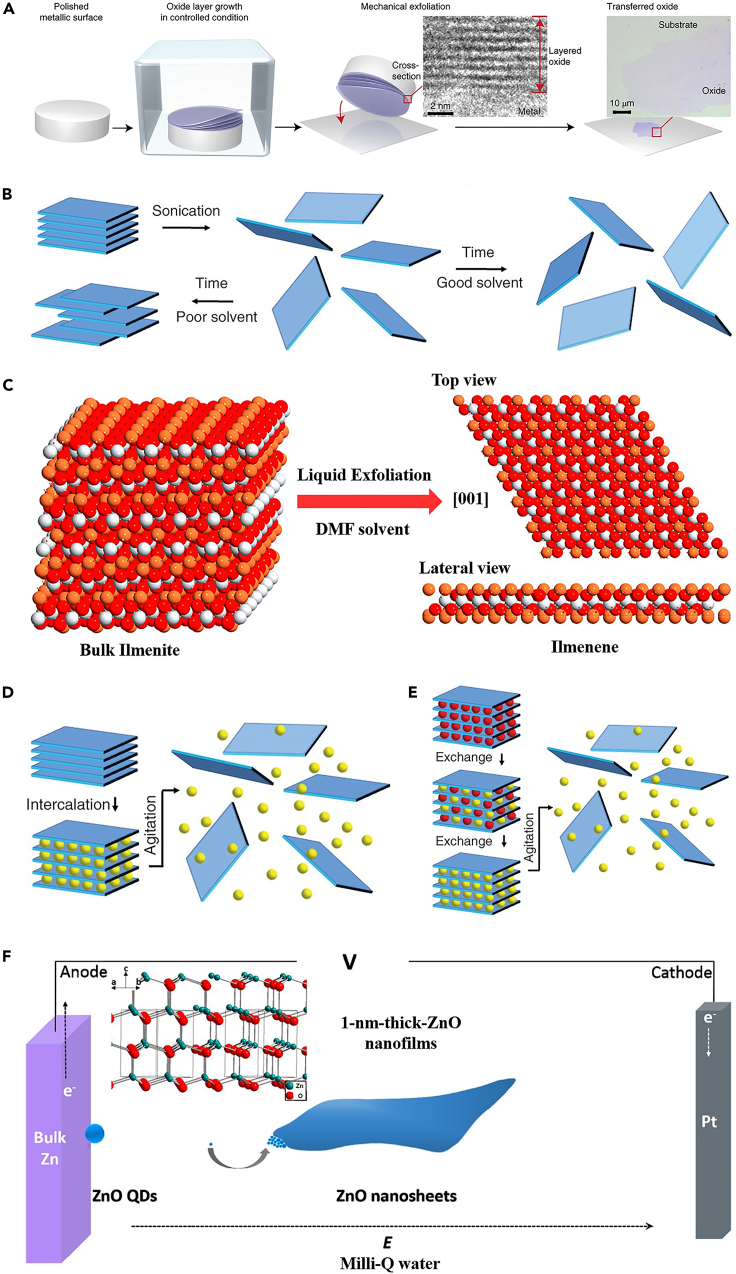
The schematic diagram of various top-down exfoliation methods (A) The schematic diagram of layered growth and subsequent mechanical exfoliation (Zhang et al., 2021a) Copyright 2021, Springer Nature. (B) The schematic diagram of ultrasonic-assisted liquid-phase exfoliation (Xiong et al., 2020) Copyright 2020, World Scientific Publishing Co. Pte Ltd. (C) The schematic of the liquid-phase exfoliation of bulk ilmenite in DMF to ilmenene (Puthirath Balan et al., 2018a) Copyright 2018 American Chemical Society. (D) The schematic diagram of ion intercalation-assisted exfoliation (Xiong et al., 2020) Copyright 2020, World Scientific Publishing Co. Pte Ltd. (E) The schematic diagram of ion exchange-assisted exfoliation (Xiong et al., 2020) Copyright 2020, World Scientific Publishing Co. Pte Ltd. (F) Apparatus for reagent-free electrophoretic synthesis for the formation of metal oxide nanosheets (Hou et al., 2017) Copyright 2017, American Chemical Society.
Figure 3
Figure 3
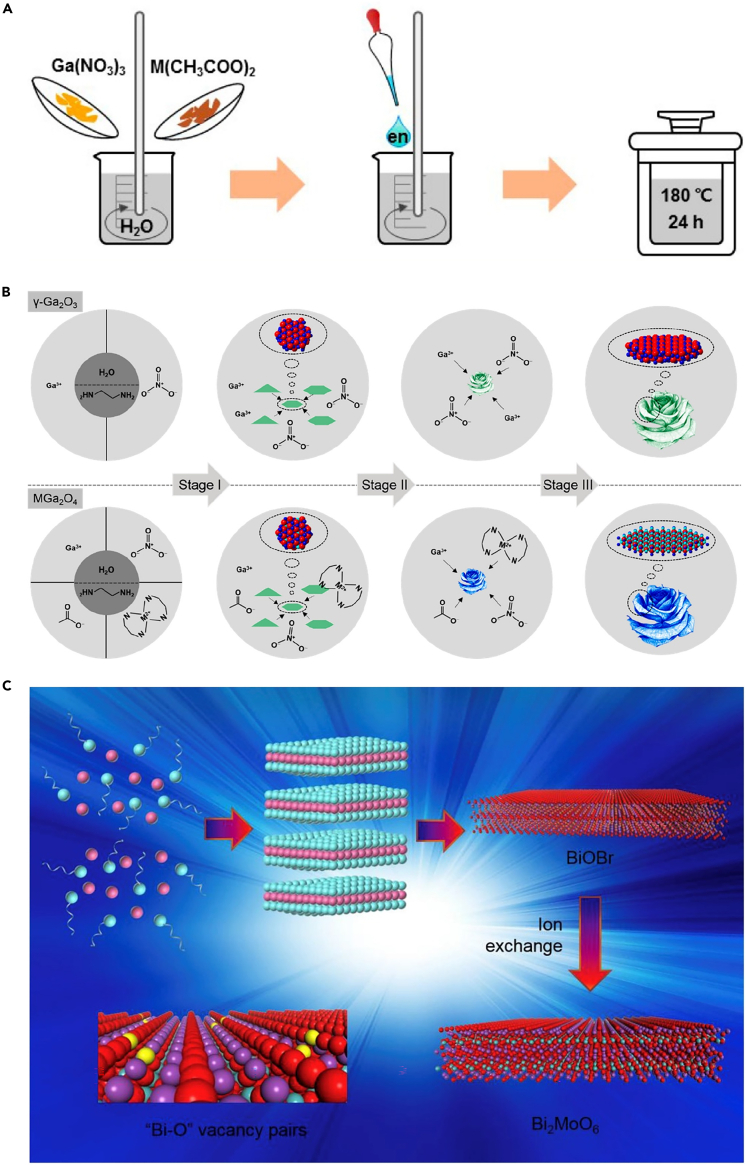
Bottom-up synthesis: hydrothermal/solvothermal synthesis of 2D MOXs (A) The schematic diagram describing the formation process of spinel-type 2D oxide nanosheets (Yang et al., 2019) Copyright 2019, American Chemical Society. (B) Schematic diagrams describing the formation of γ-Ga2O3 nanosheets, MGa2O4 nanosheets, and their self-assembling into nanoflowers (Yang et al., 2019) Copyright 2019, American Chemical Society. (C) Schematic template-assisted strategy to fabricate freestanding Bi2MoO6 ultrathin nanosheet (Di et al., 2019) Copyright 2019, Elsevier BV.
Figure 4
Figure 4
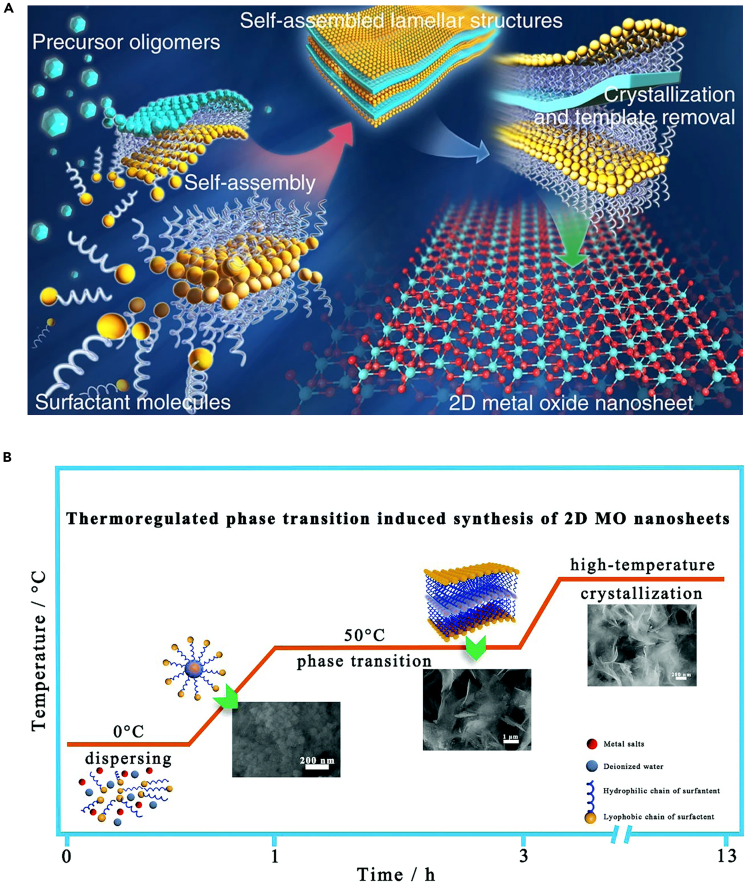
Bottom-up synthesis: self-assembly synthesis of 2D MOXs (A) Schematic illustration for the self-assembly of 2D metal oxide nanosheets (Lei et al., 2021) Copyright 2021, Elsevier. (B) Schematic illustration for the synthesis of 2D metal oxide nanosheets based on the thermo-regulated phase transition (Zhang et al., 2019) Copyright 2019, Royal Society of Chemistry.
Figure 5
Figure 5
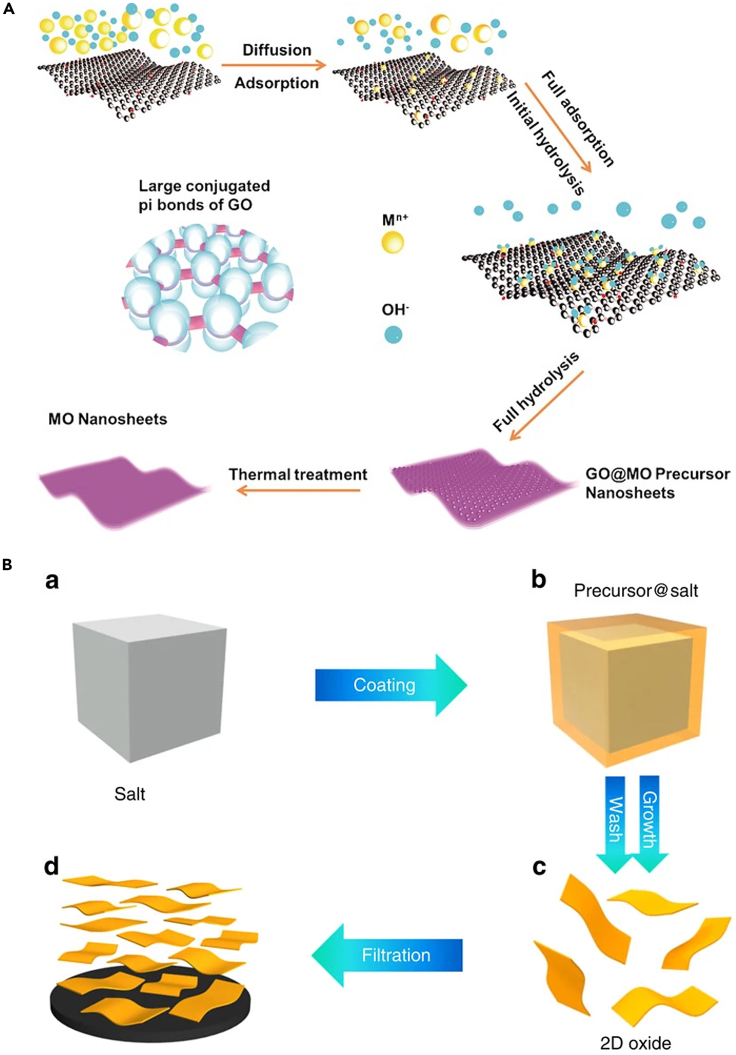
Bottom-up synthesis: template-assisted synthesis of 2D MOXs (A) The strategy for the synthesis of large-size ultrathin 2D MOXs by GO template (Zhao et al., 2021a) Copyright 2021, John Wiley and Sons Ltd. (B) Schematic diagram of 2D MOXs synthesis by salt template method (Xiao et al., 2016) Copyright 2016, Springer Nature.
Figure 6
Figure 6
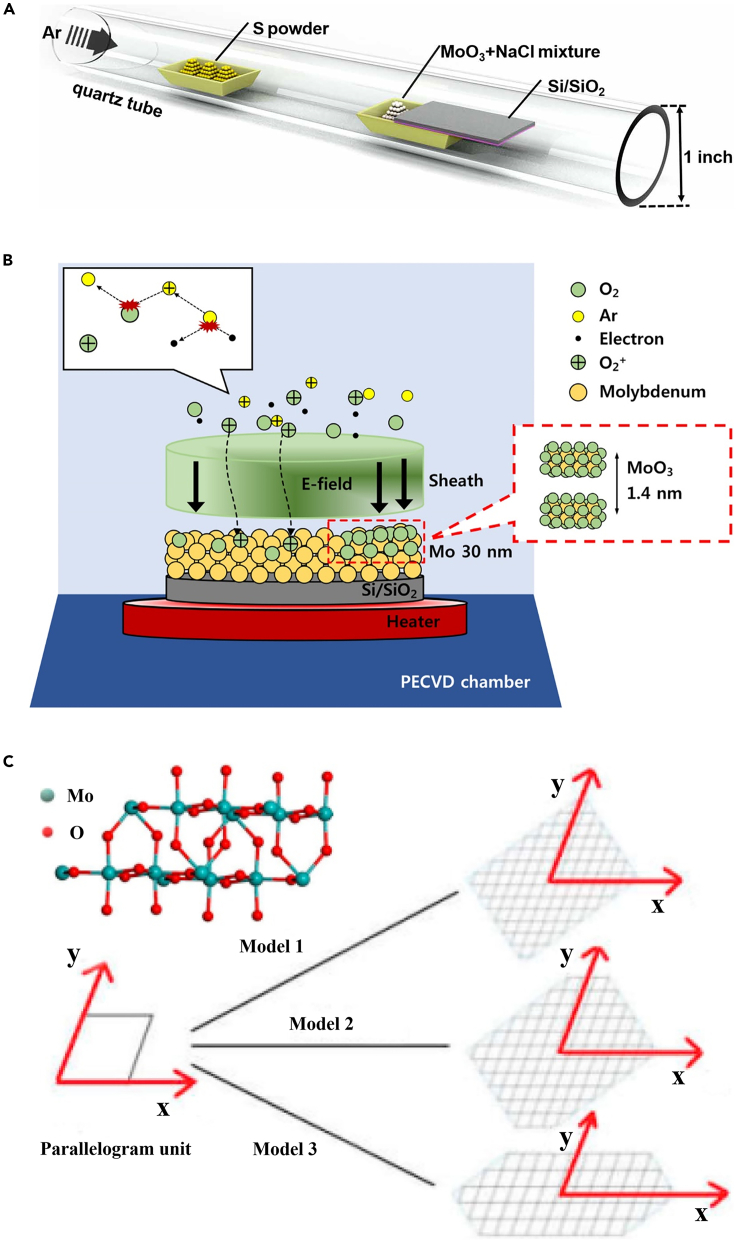
Bottom-up synthesis: CVD synthesis of 2D MOXs (A) The set-up diagram for the synthesis of MoO3-MoS2 heterostructures (Guo et al., 2021) Copyright 2021, IOP Publishing Ltd. (B) Schematic for the synthesis of MoO3 on Si/SiO2 (Kim et al., 2017) Copyright 2017, IOP Publishing Ltd. (C) The schematic of three growth models of 2D MoO2 and their corresponding atomic structure was constructed with the thinnest plane (020) (Luo et al., 2020) Copyright 2020, Elsevier BV.
Figure 7
Figure 7
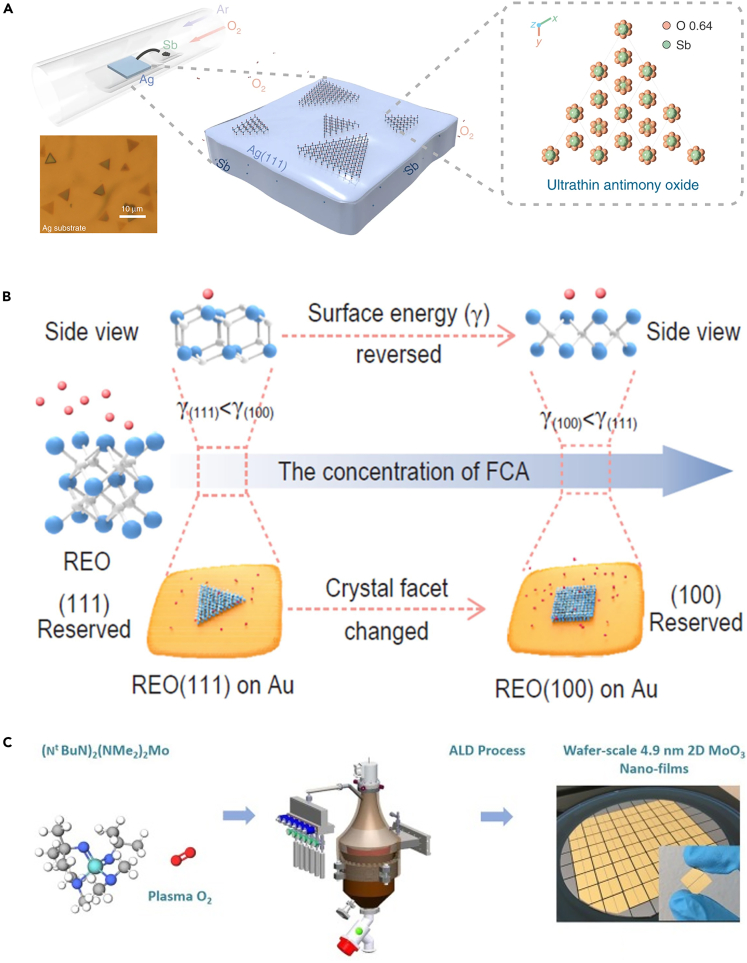
Bottom-up synthesis: liquid metal-assisted CVD strategy and ALD synthesis of 2D MOXs (A) The schematic for the growth of ultrathin antimony oxide on the resolidified Ag substrate and related optical microscope image (Yang et al., 2020a) Copyright 2020, Springer Nature. (B) Schematic illustration of the facet-controllable synthesis strategy assisted by the FCA (blue atoms, RE atoms; white atoms, O atoms; red atoms, X ions) (Li et al., 2021b) Copyright 2021, Oxford University Press. (C) The schematic to prepare the 2D α-MoO3 nanofilms via the ALD method (Wei et al., 2018) Copyright 2018, Elsevier.
Figure 8
Figure 8
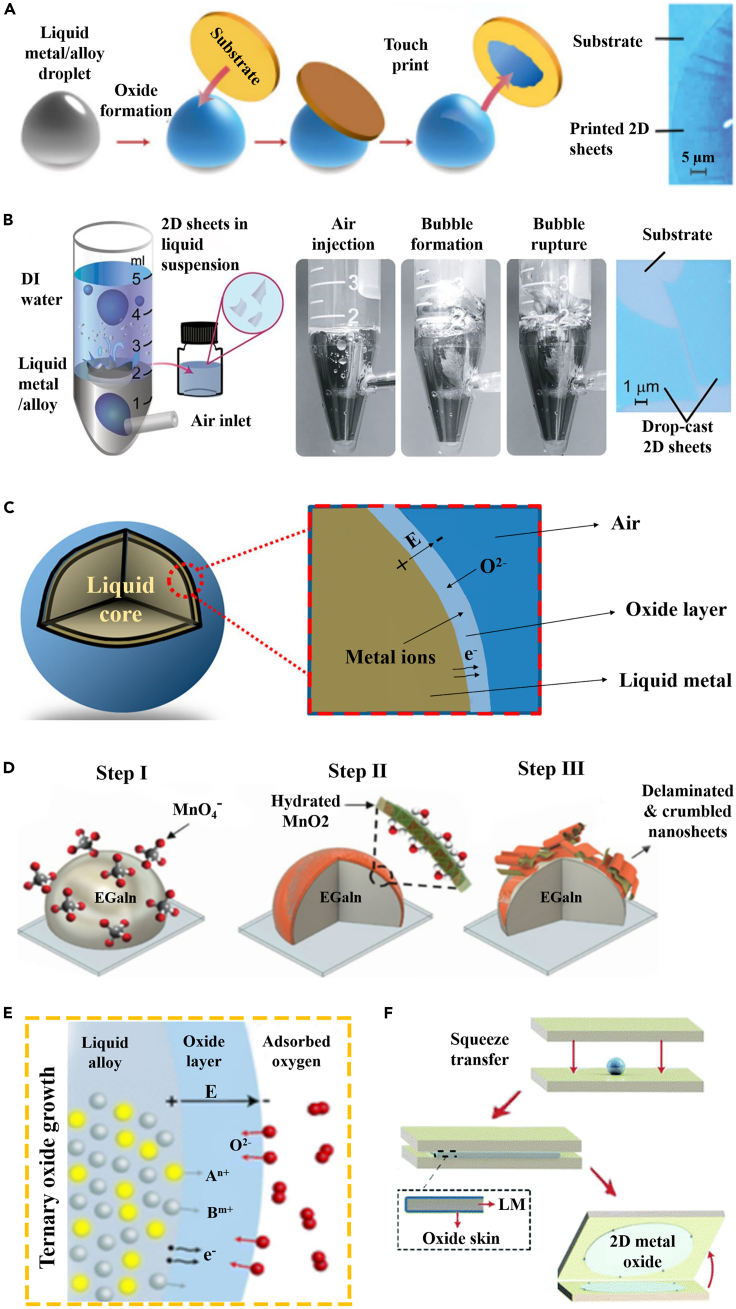
Liquid metal strategy: the schematic to prepare 2D MOXs by three generations liquid metal methods (A) The schematic to prepare the ultrathin 2D MOXs by touch printing on the liquid metal or alloy surface (Zavabeti et al., 2018) Copyright 2018, American Chemical Society. (B) The schematic of the gas injection method (Zhao et al., 2021b) Copyright 2021, Tsinghua University Press. (C) The growth mechanism of an oxide skin that described by the Cabrera–Mott model (Goff et al., 2021) Copyright 2021, Royal Society of Chemistry. (D) The formation process of the hydrated MnO2 on the surface of EGaIn in an aqueous KMnO4 solution (Ghasemian et al., 2019) Copyright 2019, Wiley-VCH Verlag. (E) Schematic illustration of ternary oxide growing on the liquid alloy surface. (F) Schematic illustration of the squeeze printing process (Shi et al., 2021) Copyright 2021, Springer Nature.
Figure 9
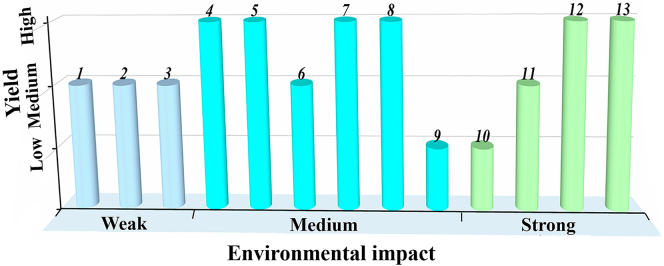
Figure 9
A comparative figure comparing the yield/environmental impacts of all synthetic processes The numbers in the figure represent various synthesis methods, as shown below. 1, CVD; 2, PLD; 3, ALD; 4, Liquid metal strategy; 5, Template-assisted; 6, Soft chemical exfoliation; 7, Electrochemical exfoliation; 8, Ultrasonic-assisted liquid-phase exfoliation; 9, Cleavage plane-oriented exfoliation; 10, Mechanical exfoliation; 11, SC-CO2-assisted exfoliation; 12, Hydrothermal/solvothermal synthesis; 13, Self-assembly.

References

    1. Aghamohammadi H., Eslami-Farsani R., Torabian M., Amousa N. Recent advances in one-pot functionalization of graphene using electrochemical exfoliation of graphite: a review study. Synth. Met. 2020;269:116549. doi: 10.1016/j.synthmet.2020.116549. - DOI
    1. Alkathiri T., Dhar N., Jannat A., Syed N., Mohiuddin M., Alsaif M.M.Y.A., Datta R.S., Messalea K.A., Zhang B.Y., Khan M.W., et al. Atomically thin TiO2 nanosheets synthesized using liquid metal chemistry. Chem. Commun. 2020;56:4914–4917. doi: 10.1039/d0cc01456g. - DOI - PubMed
    1. Alli U., Hettiarachchi S.J., Kellici S. Chemical functionalisation of 2D materials by batch and continuous hydrothermal flow synthesis. Chem. Eur. J. 2020;26:6447–6460. doi: 10.1002/chem.202000383. - DOI - PubMed
    1. Alsaif M.M.Y.A., Balendhran S., Field M.R., Latham K., Wlodarski W., Ou J.Z., Kalantar-Zadeh K. Two dimensional α-MoO3 nanoflakes obtained using solvent-assisted grinding and sonication method: application for H2 gas sensing. Sensors Actuators, B Chem. 2014;192:196–204. doi: 10.1016/j.snb.2013.10.107. - DOI
    1. Alsaif M.M.Y.A., Field M.R., Daeneke T., Chrimes A.F., Zhang W., Carey B.J., Berean K.J., Walia S., Van Embden J., Zhang B., et al. Exfoliation solvent dependent plasmon resonances in two-dimensional sub-stoichiometric molybdenum oxide nanoflakes. ACS Appl. Mater. Inter. 2016;8:3482–3493. doi: 10.1021/acsami.5b12076. - DOI - PubMed

LinkOut - more resources