. 2021 Dec 20:13:100160.
doi: 10.1016/j.metop.2021.100160. eCollection 2022 Mar.

Turmeric extract alleviates endocrine-metabolic disturbances in letrozole-induced PCOS by increasing adiponectin circulation: A comparison with Metformin

Affiliations

Turmeric extract alleviates endocrine-metabolic disturbances in letrozole-induced PCOS by increasing adiponectin circulation: A comparison with Metformin

Mohd Zahoor Ul Haq Shah et al. Metabol Open. .

Erratum in

Abstract

One of the most common causes of female infertility is polycystic ovarian syndrome, which affects 6-21% of the population. Regrettably, the currently available treatments are mostly symptomatic and ineffective. As a result, safer options are needed now more than ever. In a letrozole PCOS albino mouse model, the current study compares the therapeutic advantages of Turmeric extract (Curcuma longa) to metformin. Adiponectin is a circulating protein generated by adipocytes that has been linked to metabolic diseases (MDs) in an inverse relationship. The effects of Turmeric Extract (Curcuma Longa) in contrast to Metformin, as well as the involvement of adiponectin in endocrine-metabolic abnormalities in experimentally induced PCOS mice model, were studied in this study. Letrozole (6 mg/kg) was administered orally (p.o) for 21 days to induce PCOS, followed by a dose of Turmeric Extract (Curcuma longa) (175 mg/kg and p.o) and Metformin (150 mg/kg) for 30 days, both with normal saline water (0.9%) as the carrier. The findings revealed that LET-treated mice displayed PCOS-like characteristics, such as higher LH levels, increased body weight growth, and ovarian morphology with numerous cysts, increase in fasting blood glucose, lipid profile, plasma lipid peroxidation (MDA) and IL-6, as well as a decrease in serum Progesterone, Estrogen, FSH, SOD and GSH levels in the ovary. These changes were linked to lower levels of circulating adiponectin and were reversed when treated Turmeric extract. By altering circulating androgen-adiponectin balance, the data implies that Turmeric extract alleviates endocrine-metabolic abnormalities and inflammation-related comorbidities associated with LET-induced PCOS.

Keywords: Adiponectin; Metformin; Oxidative stress; Polycystic ovary syndrome; Turmeric extract (Curcuma Longa).


Figures

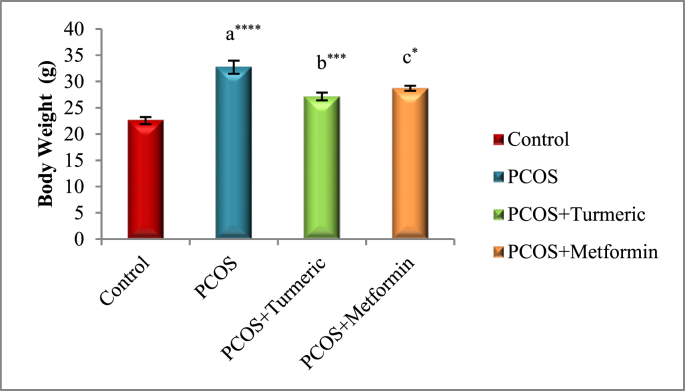
Fig. 1
Fig. 1
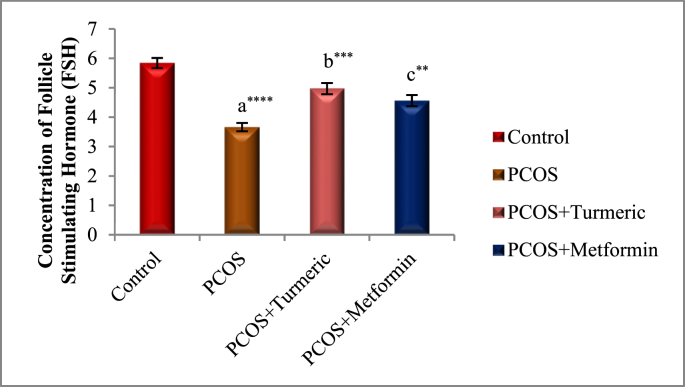
Control: Normal Saline, PCOS: Letrozole; PCOS+ Turmeric: Turmeric (175 mg/kg), PCOS+Metformin: Metformin (150 mg/kg) a PCOS vs. control; b PCOS+Turmeric VS PCOS; c PCOS+Metformin vs PCOS; *P < 0.05, **P < 0.01, ****P < 0.0001, n = 6.
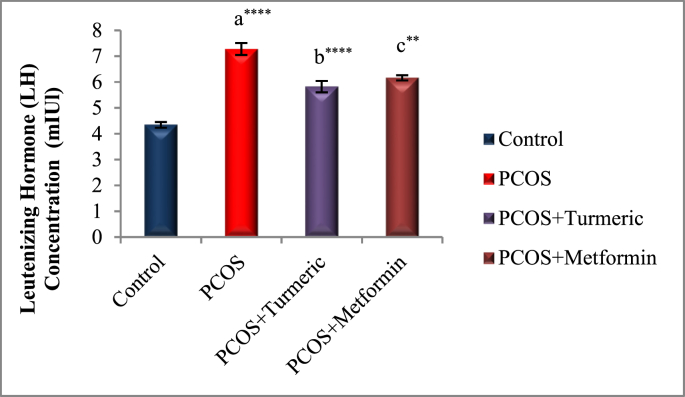
Fig. 2A
Fig. 2A
Control: Normal Saline, PCOS: Letrozole (6 mg/kg); PCOS+ Turmeric: Turmeric (175 mg/kg), PCOS+Metformin: Metformin (150 mg/kg) a PCOS vs. control; b PCOS+Turmeric VS PCOS; c PCOS+Metformin vs PCOS; **P < 0.01, ****P < 0.0001, (n = 6).
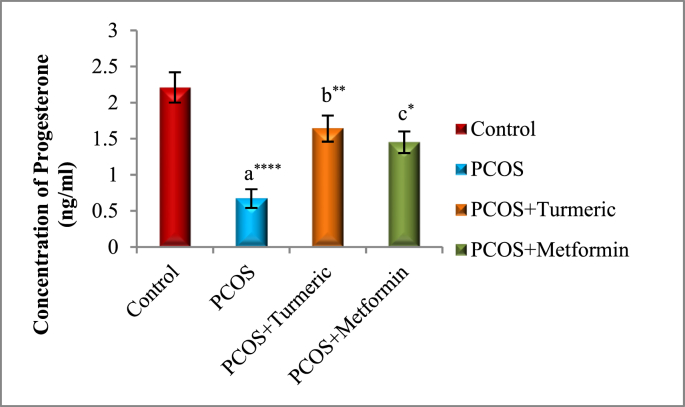
Fig. 2B
Fig. 2B
Control: Normal Saline, PCOS: Letrozole (6 mg/kg); PCOS+ Turmeric: Turmeric (175 mg/kg), PCOS+Metformin: Metformin (150 mg/kg) a PCOS vs. control; b PCOS+Turmeric VS PCOS; c PCOS+Metformin vs PCOS; *P < 0.05, **P < 0.01, ****P < 0.0001, n = 6.
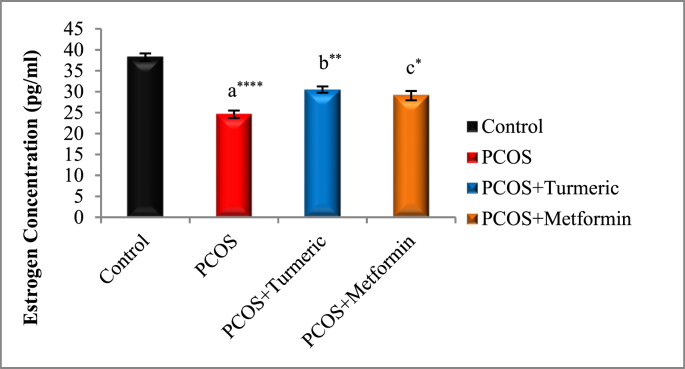
Fig. 2C
Fig. 2C
Control: Normal Saline, PCOS: Letrozole (6 mg/kg); PCOS+ Turmeric: Turmeric (175 mg/kg), PCOS+Metformin: Metformin (150 mg/kg) a PCOS vs. control; b PCOS+Turmeric VS PCOS; c PCOS+Metformin vs PCOS; *P < 0.05, **P < 0.01, ****P < 0.0001, (n = 6).
Fig. 2D
Fig. 2D
Control: Normal Saline, PCOS: Letrozole (6 mg/kg); PCOS+ Turmeric: Turmeric (175 mg/kg), PCOS+Metformin: Metformin (150 mg/kg) a PCOS vs. control; b PCOS+Turmeric VS PCOS; c PCOS+Metformin vs PCOS; **P < 0.01, ***P < 0.001, ****P < 0.0001, (n = 6).
Fig. 3A
Fig. 3A
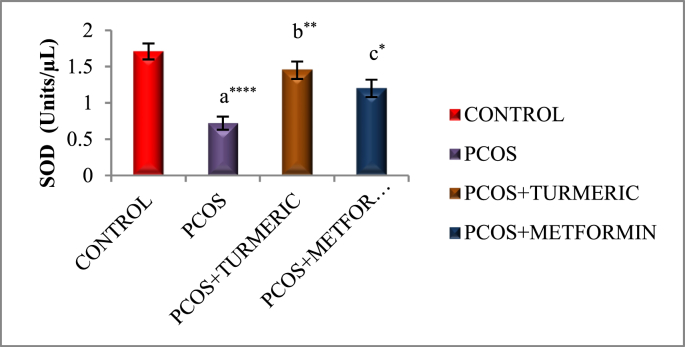
Control: Normal Saline, PCOS: Letrozole (6 mg/kg); PCOS+ Turmeric: Turmeric (175 mg/kg), PCOS+Metformin: Metformin (150 mg/kg) a PCOS vs. control; b PCOS+Turmeric VS PCOS; c PCOS+Metformin vs PCOS; *P < 0.05, **P < 0.01, ****P < 0.0001, (n = 6).
Fig. 3B
Fig. 3B
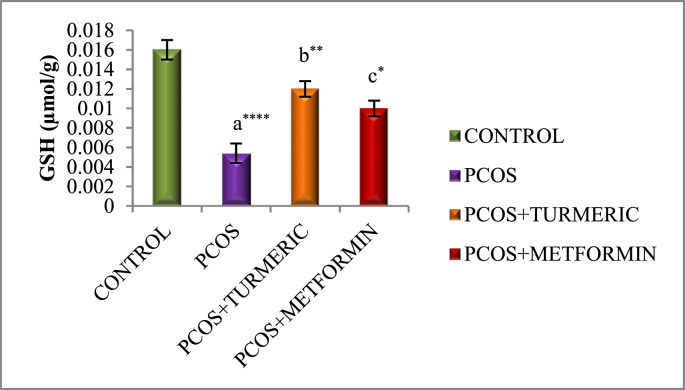
Control: Normal Saline, PCOS: Letrozole (6 mg/kg); PCOS+ Turmeric: Turmeric (175 mg/kg), PCOS+Metformin: Metformin (150 mg/kg) a PCOS vs. control; b PCOS+Turmeric VS PCOS; c PCOS+Metformin vs PCOS; *P < 0.05, **P < 0.01, ****P < 0.0001, (n = 6).
Fig. 3C
Fig. 3C
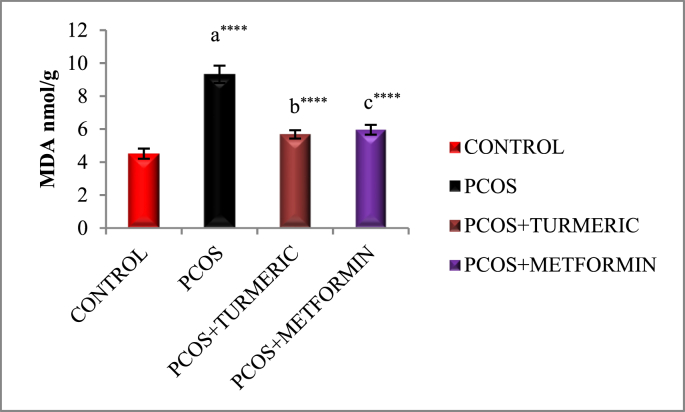
Control: Normal Saline, PCOS: Letrozole (6 mg/kg); PCOS+ Turmeric: Turmeric (175 mg/kg), PCOS+Metformin: Metformin (150 mg/kg) a PCOS vs. control; b PCOS+Turmeric VS PCOS; c PCOS+Metformin vs PCOS; ****P < 0.0001, (n = 6).
Fig. 4A
Fig. 4A
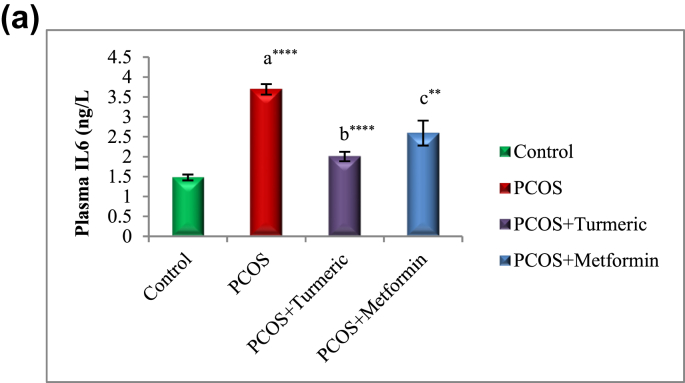
Control: Normal Saline, PCOS: Letrozole (6 mg/kg); PCOS+ Turmeric: Turmeric (175 mg/kg), PCOS+Metformin: Metformin (150 mg/kg) a = PCOS vs. control; b = PCOS+Turmeric VS PCOS; c = PCOS+Metformin vs PCOS; *P < 0.05, **P < 0.01, ****P < 0.0001, n = 6.
Fig. 4B
Fig. 4B
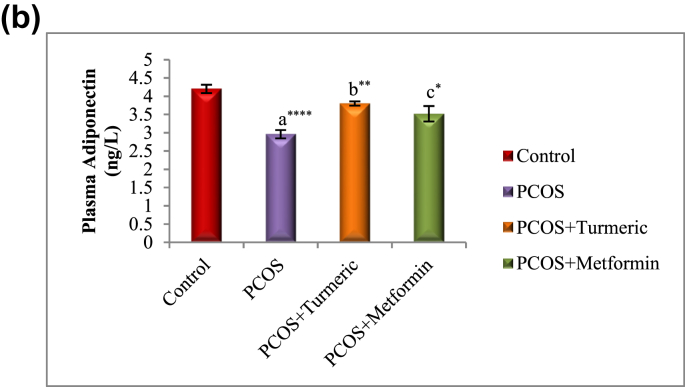
Control: Normal Saline, PCOS: Letrozole (6 mg/kg); PCOS+ Turmeric: Turmeric (175 mg/kg), PCOS+Metformin: Metformin (150 mg/kg) a = PCOS vs. control; b = PCOS+Turmeric VS PCOS; c = PCOS+Metformin vs. PCOS; **P < 0.01, ****P < 0.0001, *p < 0.05; n = 6.
Fig. 5
Fig. 5
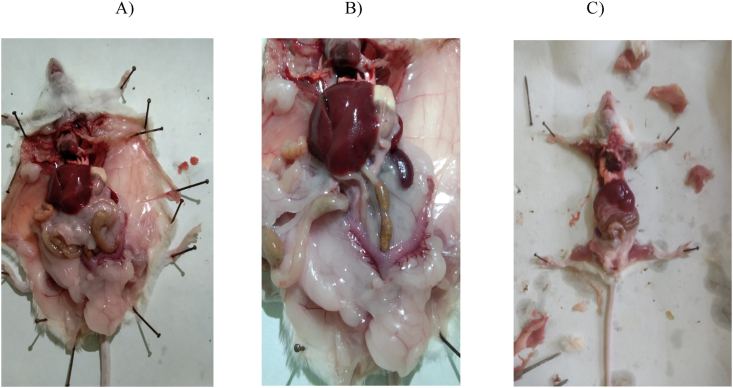
Shows ovary Morphology showing decrease in visceral fat in turmeric treated group compared with Letrozole induced PCOS group. Fat tissue in abdominal cavity particularly around the uterus and Ovary decreased in turmeric treated group: Picture A & B showing Visceral fat in PCOS groups While as Picture C represents the PCOS+Turmeric.
Fig. 6
Fig. 6
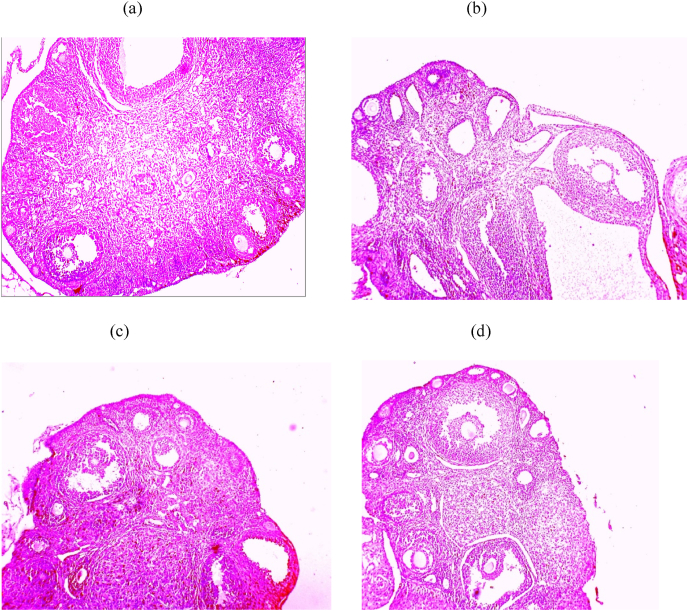
Histopathological photomicrographs of each experimental group's ovaries (H&E, magnificent ×10): (A) control, (B) PCOS, (C) PCOS+Turmeric Extract, (D) PCOS+Metformin.
Fig. 7
Fig. 7
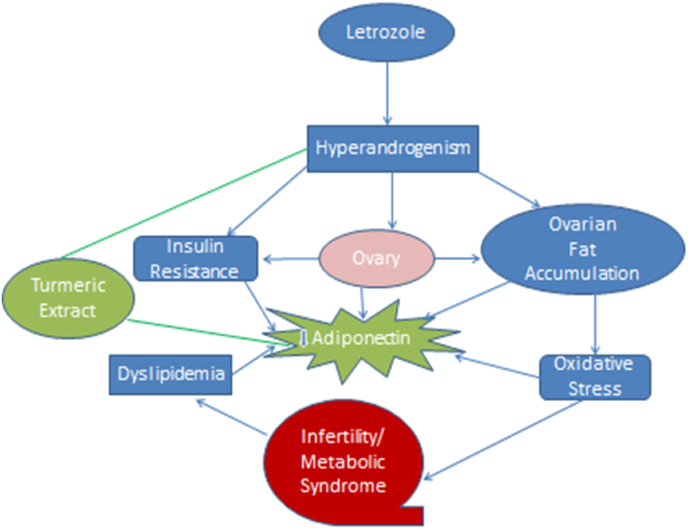
Schematic diagram showing possible effect of Turmeric Extract and involvement of Adiponectin in metabolic endocrine changes associated with PCOS.

References

    1. Brakta S., Lizneva D., Mykhalchenko K., Imam A., Walker W., Diamond M.P., et al. Perspectives on Polycystic Ovary Syndrome: is Polycystic Ovary Syndrome research underfunded? J Clin Endocrinol Metab. 2017 Dec 1;102(12):4421–4427. doi: 10.1210/jc.2017-01415. PMID: 29092064. - DOI - PubMed
    1. Melo A.S., Ferriani R.A., Navarro P.A. Treatment of infertility in women with Polycystic Ovary Syndrome: approach to clinical practice. Clinics. 2015 Nov;70(11):765–769. doi: 10.6061/clinics/2015(11)09. PMID: 26602525; PMCID: PMC4642490. - DOI - PMC - PubMed
    1. Zafar U., Memon Z., Moin K., Agha S., Hassan J.A., Zehra D. Prevalence of PCOS with associated symptoms and complications at tertiary care hospital of Karachi. J Adv Med Med Res. 2019;30(4):1–9. doi: 10.9734/jammr/2019/v30i430190. - DOI
    1. Joham A.E., Teede H.J., Ranasinha S., Zoungas S., Boyle J. Prevalence of infertility and use of fertility treatment in women with Polycystic Ovary Syndrome: data from a large community-based cohort study. J Womens Health (Larchmt) 2015 Apr;24(4):299–307. doi: 10.1089/jwh.2014.5000. Epub 2015 Feb 5. PMID: 25654626. - DOI - PubMed
    1. Fernandez R.C., Moore V.M., Van Ryswyk E.M., Varcoe T.J., Rodgers R.J., March W.A., et al. Sleep disturbances in women with Polycystic Ovary Syndrome: prevalence, pathophysiology, impact and management strategies. Nat Sci Sleep. 2018;10:45–64. doi: 10.2147/NSS.S127475. - DOI - PMC - PubMed