


An updated view of the pathogenesis of steroid-sensitive nephrotic syndrome
- PMID: 35006356
- PMCID: PMC9307535
- DOI: 10.1007/s00467-021-05401-4
An updated view of the pathogenesis of steroid-sensitive nephrotic syndrome
Abstract
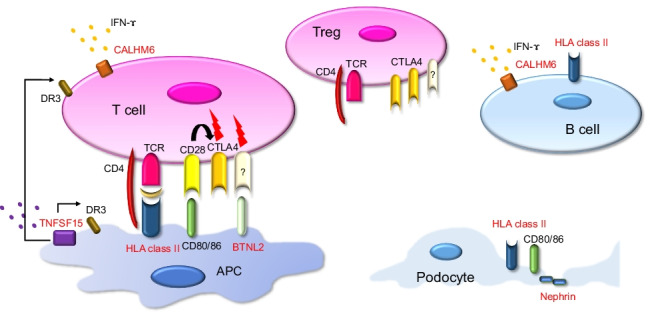
Idiopathic nephrotic syndrome is the most common childhood glomerular disease. Most forms of this syndrome respond to corticosteroids at standard doses and are, therefore, defined as steroid-sensitive nephrotic syndrome (SSNS). Immunological mechanisms and subsequent podocyte disorders play a pivotal role in SSNS and have been studied for years; however, the precise pathogenesis remains unclear. With recent advances in genetic techniques, an exhaustive hypothesis-free approach called a genome-wide association study (GWAS) has been conducted in various populations. GWASs in pediatric SSNS peaked in the human leukocyte antigen class II region in various populations. Additionally, an association of immune-related CALHM6/FAM26F, PARM1, BTNL2, and TNFSF15 genes, as well as NPHS1, which encodes nephrin expressed in podocytes, has been identified as a locus that achieves genome-wide significance in pediatric SSNS. However, the specific mechanism of SSNS development requires elucidation. This review describes an updated view of SSNS pathogenesis from immunological and genetic aspects, including interactions with infections or allergies, production of circulating factors, and an autoantibody hypothesis.
Keywords: Autoantibody; HLA class II; Immune system; NPHS1; Podocyte disorders; Steroid-sensitive nephrotic syndrome.
© 2022. The Author(s).
Conflict of interest statement
The authors declare no competing interests.
Figures
References
-
- Sadowski CE, Lovric S, Ashraf S, Pabst WL, Gee HY, Kohl S, Engelmann S, Vega-Warner V, Fang H, Halbritter J, Somers MJ, Tan W, Shril S, Fessi I, Lifton RP, Bockenhauer D, El-Desoky S, Kari JA, Zenker M, Kemper MJ, Mueller D, Fathy HM, Soliman NA, Hildebrandt F. A single-gene cause in 29.5% of cases of steroid-resistant nephrotic syndrome. J Am Soc Nephrol. 2015;26:1279–1289. doi: 10.1681/asn.2014050489. - DOI - PMC - PubMed
Publication types
MeSH terms
Substances
Supplementary concepts
LinkOut - more resources
Full Text Sources
Research Materials
