


Structural Insights into Dihydroxylation of Terephthalate, a Product of Polyethylene Terephthalate Degradation
- PMID: 35007143
- PMCID: PMC8923216
- DOI: 10.1128/JB.00543-21
Structural Insights into Dihydroxylation of Terephthalate, a Product of Polyethylene Terephthalate Degradation
Abstract
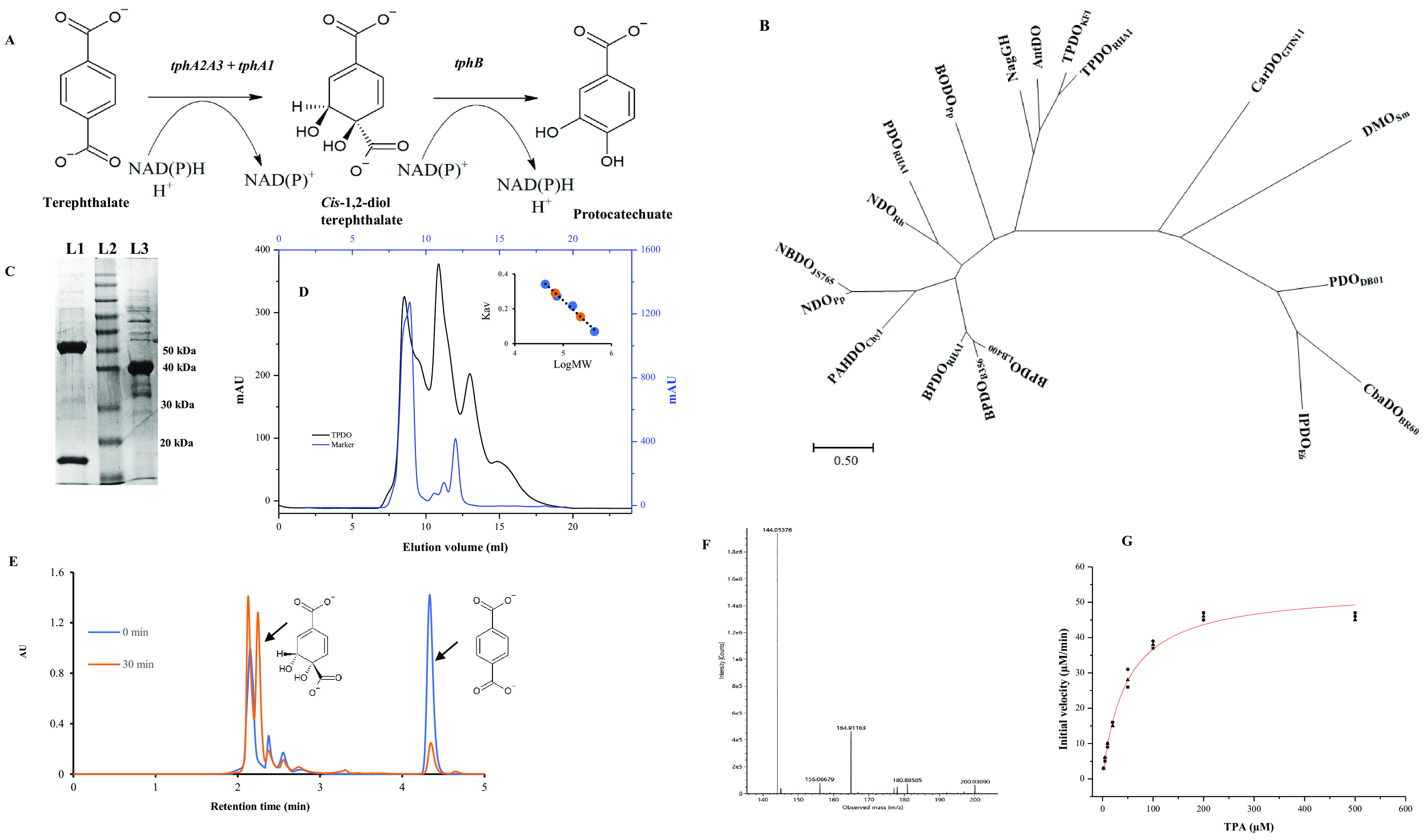
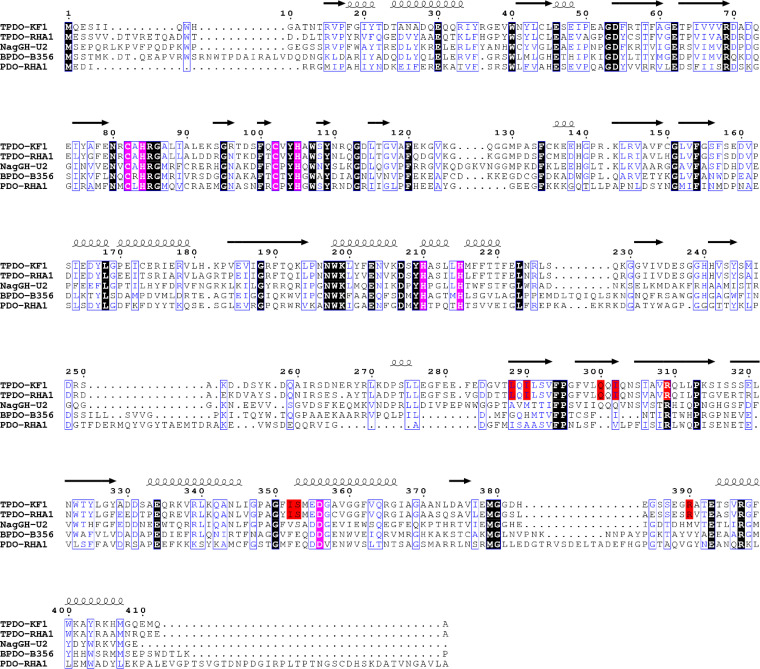
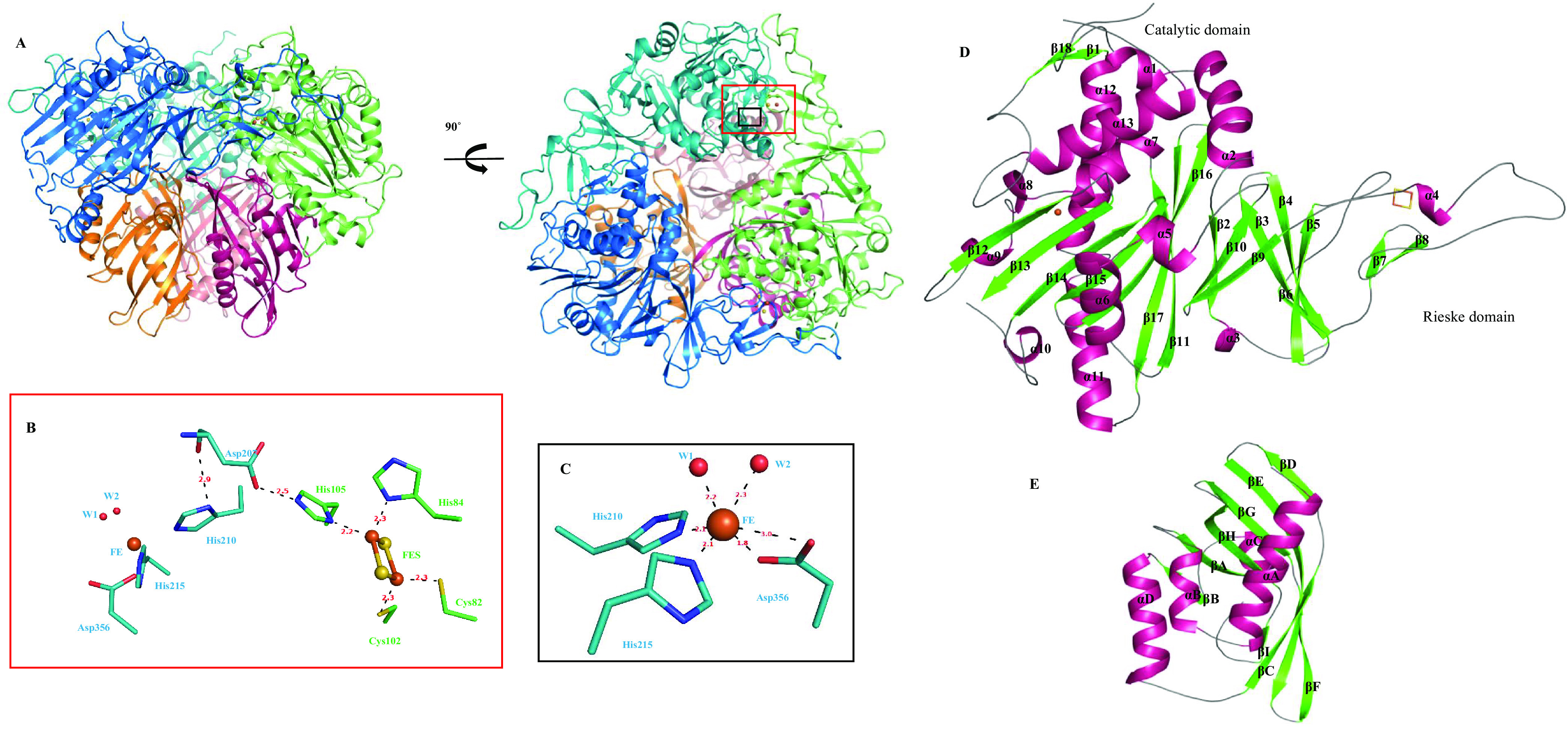
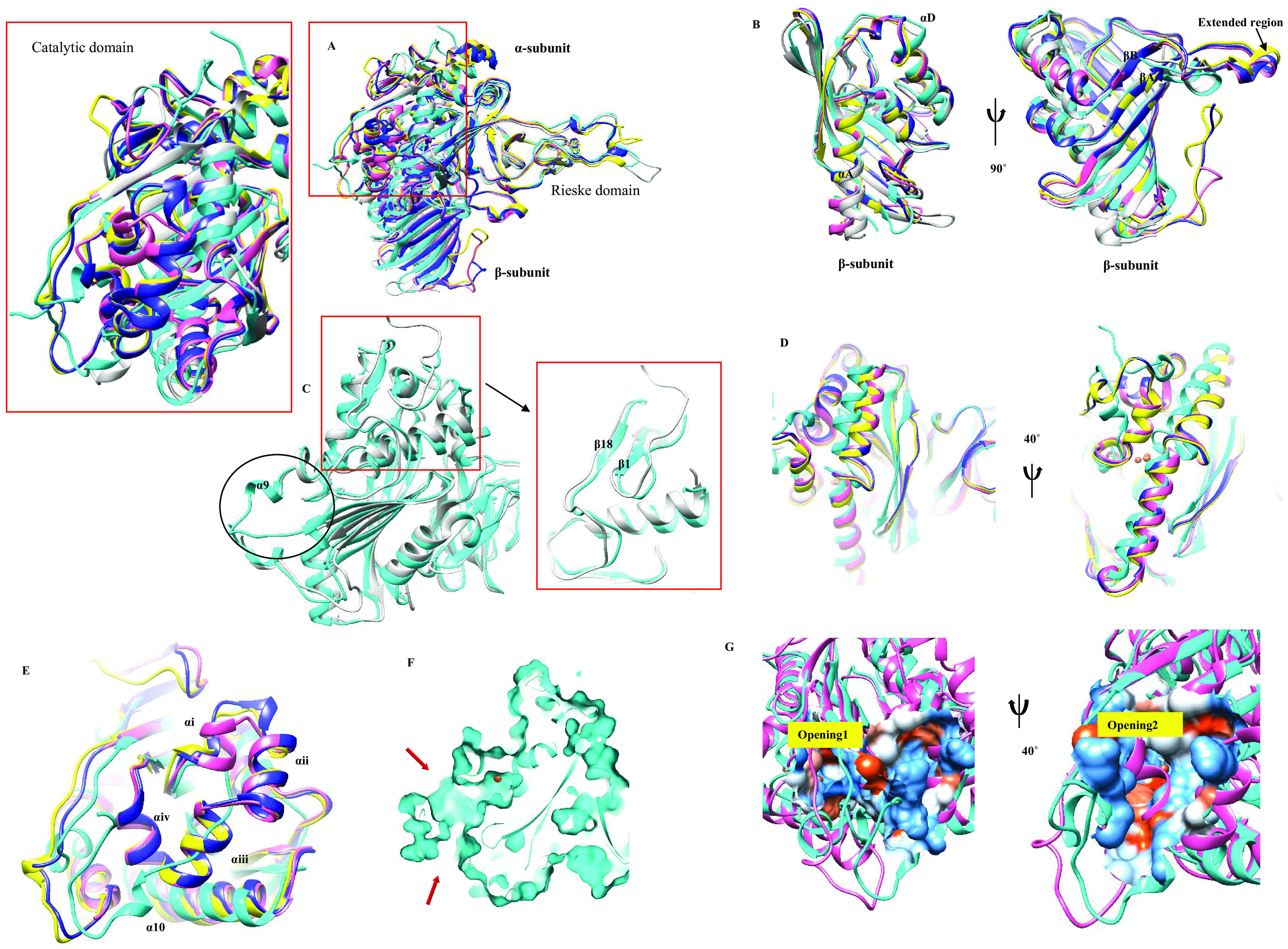
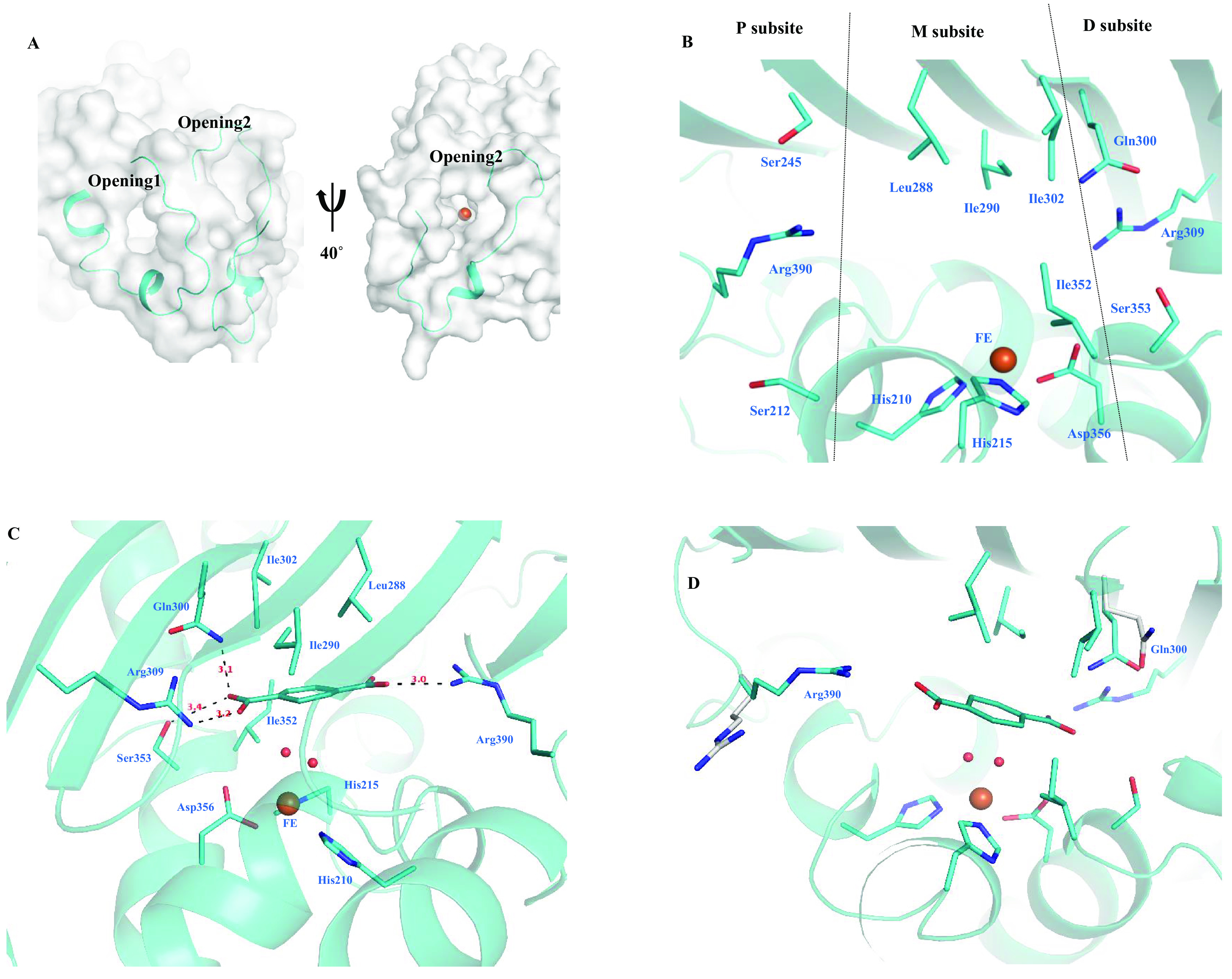
Biodegradation of terephthalate (TPA) is a highly desired catabolic process for the bacterial utilization of this polyethylene terephthalate (PET) depolymerization product, but to date, the structure of terephthalate dioxygenase (TPDO), a Rieske oxygenase (RO) that catalyzes the dihydroxylation of TPA to a cis-diol, is unavailable. In this study, we characterized the steady-state kinetics and first crystal structure of TPDO from Comamonas testosteroni KF1 (TPDOKF1). TPDOKF1 exhibited substrate specificity for TPA (kcat/Km = 57 ± 9 mM-1 s-1). The TPDOKF1 structure harbors characteristic RO features as well as a unique catalytic domain that rationalizes the enzyme's function. The docking and mutagenesis studies reveal that its substrate specificity for TPA is mediated by the Arg309 and Arg390 residues, positioned on opposite faces of the active site. Additionally, residue Gln300 is also proven to be crucial for the activity, as its mutation to alanine decreases the activity (kcat) by 80%. This study delineates the structural features that dictate the substrate recognition and specificity of TPDO. IMPORTANCE Global plastic pollution has become the most pressing environmental issue. Recent studies on enzymes depolymerizing polyethylene terephthalate plastic into terephthalate (TPA) show some potential for tackling this. Microbial utilization of this released product, TPA, is an emerging and promising strategy for waste-to-value creation. Research in the last decade has identified terephthalate dioxygenase (TPDO) as being responsible for initiating the enzymatic degradation of TPA in a few Gram-negative and Gram-positive bacteria. Here, we determined the crystal structure of TPDO from Comamonas testosteroni KF1 and revealed that it possesses a unique catalytic domain featuring two basic residues in the active site to recognize TPA. Biochemical and mutagenesis studies demonstrated the crucial residues responsible for the substrate specificity of this enzyme.
Keywords: Comamonas testosteroni KF1; Rieske center; mononuclear iron; polyethylene terephthalate; terephthalate dioxygenase.
Conflict of interest statement
The authors declare no conflict of interest.
Figures

References
-
- Knott BC, Erickson E, Allen MD, Gado JE, Graham R, Kearns FL, Pardo I, Topuzlu E, Anderson JJ, Austin HP, Dominick G, Johnson CW, Rorrer NA, Szostkiewicz CJ, Copié V, Payne CM, Woodcock HL, Donohoe BS, Beckham GT, McGeehan JE. 2020. Characterization and engineering of a two-enzyme system for plastics depolymerization. Proc Natl Acad Sci USA 117:25476–25485. 10.1073/pnas.2006753117. - DOI - PMC - PubMed
-
- Austin HP, Allen MD, Donohoe BS, Rorrer NA, Kearns FL, Silveira RL, Pollard BC, Dominick G, Duman R, El Omari K, Mykhaylyk V, Wagner A, Michener WE, Amore A, Skaf MS, Crowley MF, Thorne AW, Johnson CW, Woodcock HL, McGeehan JE, Beckham GT. 2018. Characterization and engineering of a plastic-degrading aromatic polyesterase. Proc Natl Acad Sci USA 115:E4350–E4357. 10.1073/pnas.1718804115. - DOI - PMC - PubMed
-
- Pardo I, Jha RK, Bermel RE, Bratti F, Gaddis M, McIntyre E, Michener W, Neidle EL, Dale T, Beckham GT, Johnson CW. 2020. Gene amplification, laboratory evolution, and biosensor screening reveal MucK as a terephthalic acid transporter in Acinetobacter baylyi ADP1. Metab Eng 62:260–274. 10.1016/j.ymben.2020.09.009. - DOI - PubMed
Publication types
MeSH terms
Substances
LinkOut - more resources
Full Text Sources
Research Materials
Miscellaneous
