


Household Income as a Predictor for Surgical Outcomes and Opioid Use After Spine Surgery in the United States
- PMID: 35007170
- PMCID: PMC10538313
- DOI: 10.1177/21925682211070823
Household Income as a Predictor for Surgical Outcomes and Opioid Use After Spine Surgery in the United States
Abstract
Study design: Cross-Sectional Study.
Objectives: Socioeconomic status (SES) is a fundamental root of health disparities, however, its effect on surgical outcomes is often difficult to capture in clinical research, especially in spine surgery. Here, we present a large single-center study assessing whether SES is associated with cause-specific surgical outcomes.
Methods: Patients undergoing spine surgery between 2015 and 2019 were assigned income in accordance with the national distribution and divided into quartiles based on the ZIP code-level median household income. We performed univariate, chi-square, and Analysis of Variance (ANOVA) analysis assessing the independent association of SES, quantified by household income, to operative outcomes, and multiple metrics of opioid consumption.
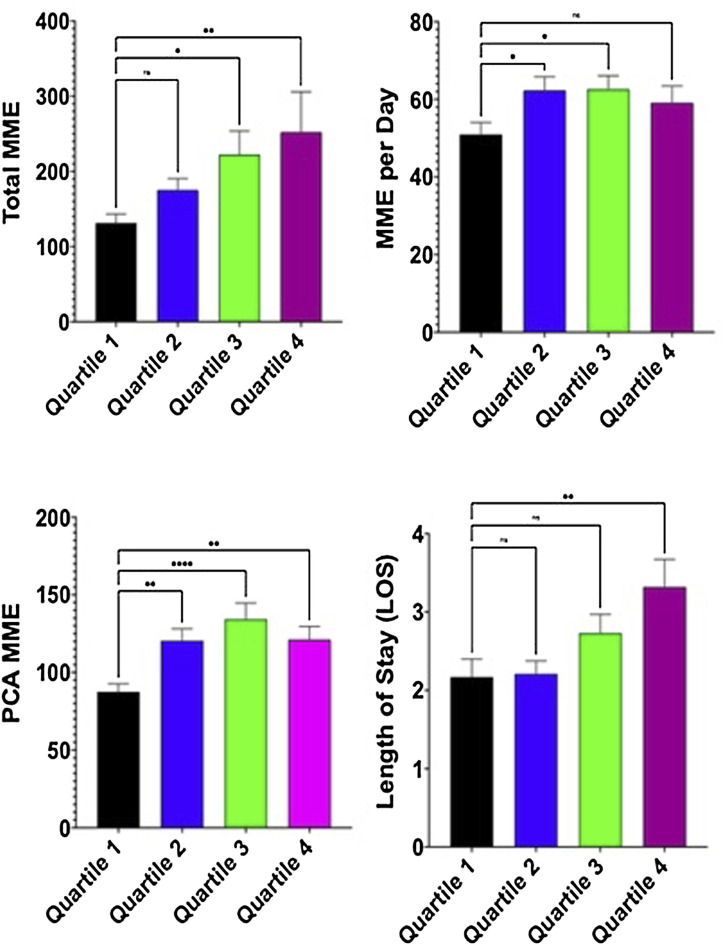
Results: 1199 patients were enrolled, and 1138 patients were included in the analysis. Low household income was associated with the greatest rates of 3-month opioid script renewal (OR:1.65, 95% CI:1.14-2.40). In addition, low-income was associated with higher rates of perioperative opioid consumption compared to higher income including increased mean total morphine milligram equivalent (MME) 252.25 (SD 901.32) vs 131.57 (SD 197.46) (P < .046), and inpatient IV patient-controlled analgesia (PCA) MME 121.11 (SD 142.14) vs 87.60 (SD 86.33) (P < .023). In addition, household income was independently associated with length of stay (LOS), and emergency room (ER) revisits with low-income patients demonstrating significantly longer postop LOS and increasing postoperative ER visits.
Conclusions: Considering the comparable surgical management provided by the single institution, the associated differences in postoperative outcomes as defined by increased morbidities and opioid consumption can potentially be attributed to health disparities caused by SES.
Keywords: SES; household income; opioid consumption; outcomes; pain management; socioeconomic status.
Conflict of interest statement
The author(s) declared no potential conflicts of interest with respect to the research, authorship, and/or publication of this article.
Figures
References
-
- Altekruse SF, Cosgrove CM, Altekruse WC, Jenkins RA, Blanco C. Socioeconomic risk factors for fatal opioid overdoses in the United States: Findings from the Mortality Disparities in American Communities Study (MDAC). PLoS One. 2020;15:e0227966. doi: 10.1371/journal.pone.0227966. - DOI - PMC - PubMed
-
- Control CD. Overdose Death Maps | Opioid Overdose | CDC Injury Center; 2018.
LinkOut - more resources
Full Text Sources
Miscellaneous
