. 2022 Jan 10;18(1):e1009749.
doi: 10.1371/journal.pcbi.1009749. eCollection 2022 Jan.

Molecular basis of Arginine and Lysine DNA sequence-dependent thermo-stability modulation

Affiliations

Molecular basis of Arginine and Lysine DNA sequence-dependent thermo-stability modulation

Benjamin Martin et al. PLoS Comput Biol. .

Abstract

We have used a variety of theoretical and experimental techniques to study the role of four basic amino acids-Arginine, Lysine, Ornithine and L-2,4-Diaminobutyric acid-on the structure, flexibility and sequence-dependent stability of DNA. We found that the presence of organic ions stabilizes the duplexes and significantly reduces the difference in stability between AT- and GC-rich duplexes with respect to the control conditions. This suggests that these amino acids, ingredients of the primordial soup during abiogenesis, could have helped to equalize the stability of AT- and GC-rich DNA oligomers, facilitating a general non-catalysed self-replication of DNA. Experiments and simulations demonstrate that organic ions have an effect that goes beyond the general electrostatic screening, involving specific interactions along the grooves of the double helix. We conclude that organic ions, largely ignored in the DNA world, should be reconsidered as crucial structural elements far from mimics of small inorganic cations.


Conflict of interest statement

The authors have declared that no competing interests exist.

Figures
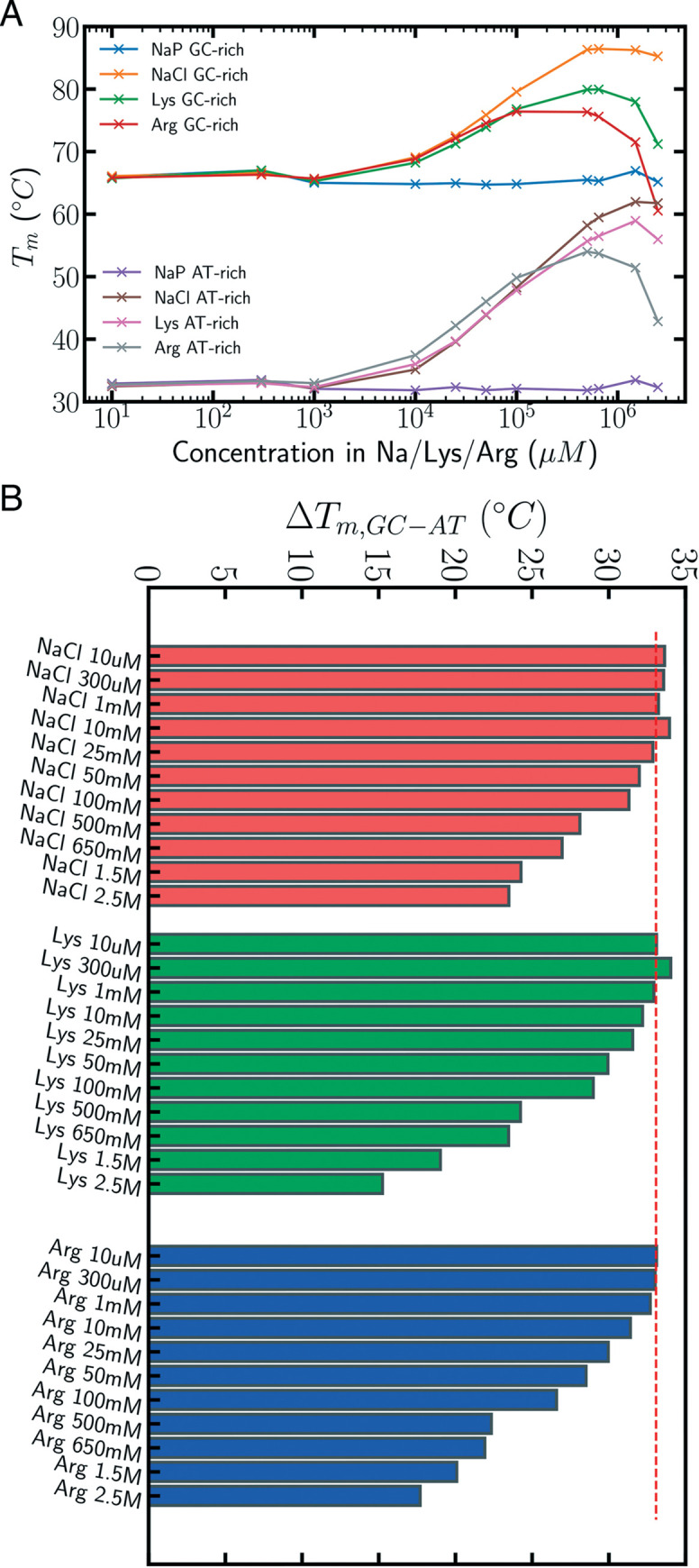
Fig 1
Fig 1. Zwitterionic amino acids Lysine and Arginine stabilize differentially AT- vs GC-rich DNA duplexes.
A) Tm for the different cationic conditions and concentrations (average between two replicas–std < 1% of the average for all samples). For the control NaP conditions, the concentration is constant at 10 mM. B) ΔTm represents the difference in melting temperature between CG-rich and AT-rich duplexes. The red dashed line represents the mean difference in melting temperature across NaP controls between GC-rich and AT-rich duplexes (std < 2% mean for all conditions).
Fig 2
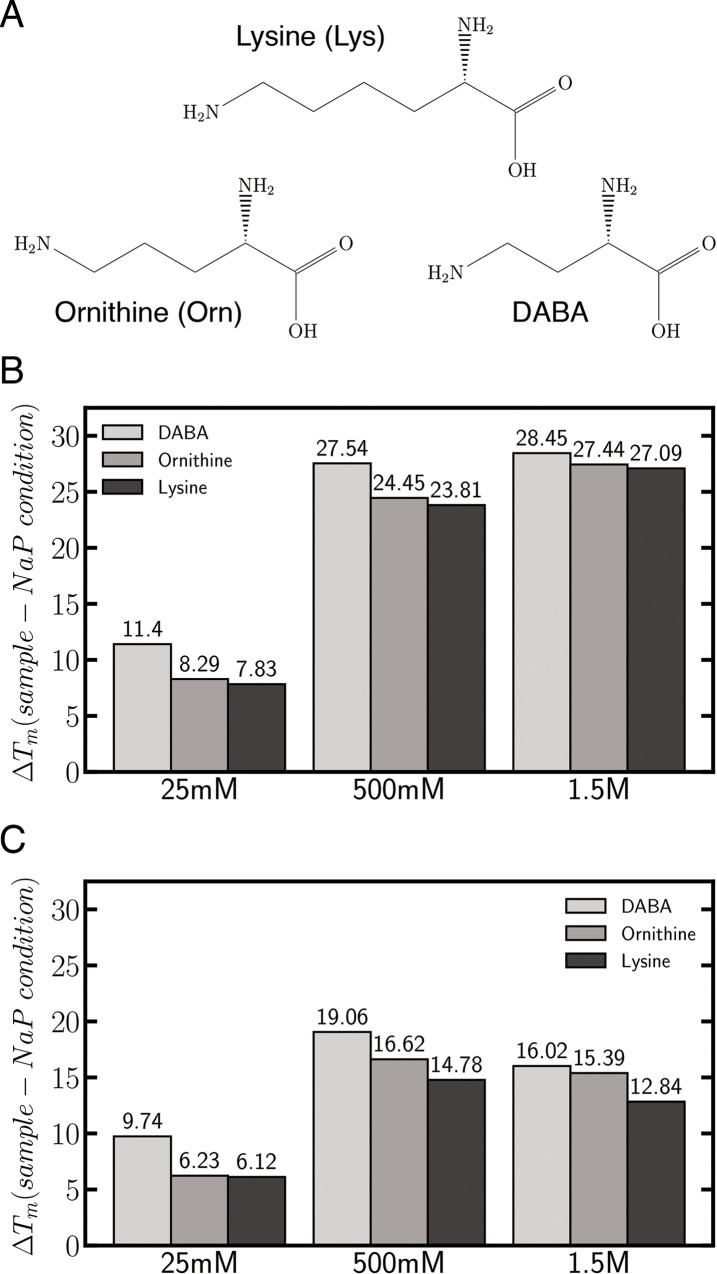
Fig 2. Lysine and derivatives stabilize AT- vs GC-rich DNA duplexes differentially depending in the length of their carbonated side chain.
A) Scheme of Lysine and Lys-derivative structures. B) Melting temperatures relative to NaP buffer (ΔTm) of AT-rich duplexes in the presence of Lysine and Lys-derivatives. C) Melting temperatures relative to NaP buffer (ΔTm) for GC-rich duplexes in the presence of Lysine and Lys-derivatives (average between two replicas—std < 3% of the average for all samples).
Fig 3
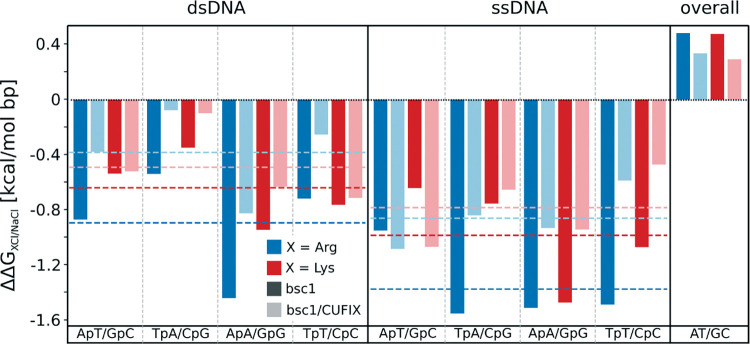
Fig 3. Changes in the relative stability of AT/GC DNAs induced by the presence of 500mM of ArgCl of LysCl (all values referred to the 500 mM NaCl).
The values for ssDNA were obtained by mutating pairs of nucleotides: d(ApA)→d(GpG), d(ApT)→d(GpC), d(TpA)→d(CpG) and TpT→CpC in a d(CXXT) tetramer. The values for the duplex (dsDNA) were obtained by mutating A·T→G·C in a decamer (dCATCXXTGCA), with double base-pair mutations at the XX positions performed in the same fashion (values are reported per single A·T/G·C substitution). A positive value of ΔΔGXCl/NaCl (ssDNA) means that the change from NaCl to organic salt favours the stability of A/T containing single strands (with respect to those containing G/C). A positive value of ΔΔGXCl/NaCl (dsDNA) means that the change from NaCl to organic salt favours the stability of A/T containing duplexes (with respect to G/C containing ones). The “overall” values (last column) correspond to the effect of organic salt (taken as reference value 500 mM NaCl) on the difference in the folding free energy (ss→sd) of AT and GC DNAs; values being referred to a single A·T/G·C substitution. A positive value of ΔΔGXCl/NaCl (overall) means that the change from NaCl to organic salt favours the folding of AT-rich duplexes (with reference to GC-rich ones). A one-sample t-test was performed to test significance. All calculations were performed with and without CUFIX corrections, dark and light colours respectively. See Material and Methods and S3 Fig for details on the thermodynamic cycles used.
Fig 4
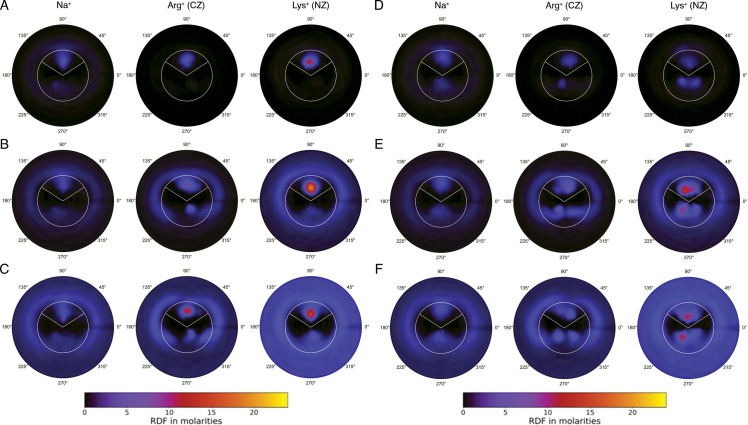
Fig 4. Distributions of the cations around AT-rich and GC-rich DNA duplexes.
A) Averaged radial-angular dependence of Na+, Arg+ (CZ atom) and Lys+ (NZ atom) from AT-rich duplexes at 25 mM concentration. The centre of each circle represent the average axis of the DNA-duplex. The minor-groove extends from 33° to 147°, while the major-groove extends from 147° to 33° (in the trigonometric direction). The white circle delimits the inner space of both minor and major grooves (localized 10.25 Å from the DNA average axis). B) Same as (A) for simulations done at 500 mM. C) Same than (B) at 1.5 M concentration. D), E), F), same as (A), (B), and (C) for GC-rich DNA duplexes respectively. Note that in all cases the total radial cut-off is 20.5 Å.
Fig 5
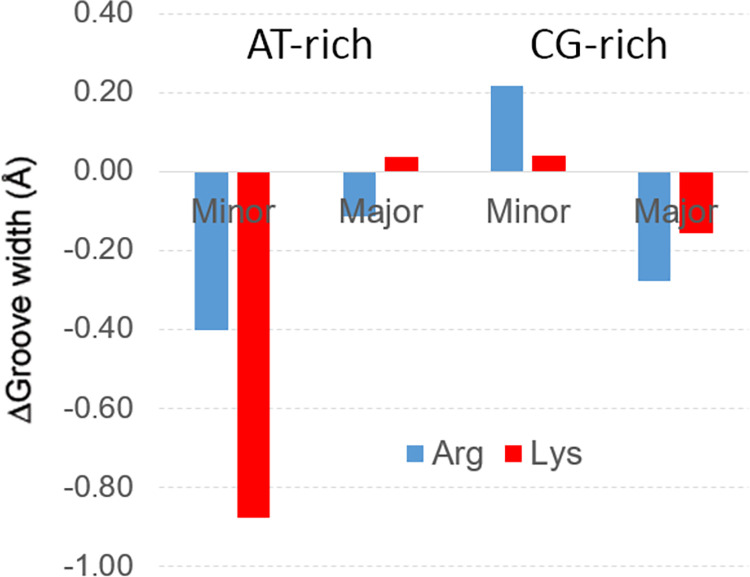
Fig 5. Variation in major and minor groove width.
Average grooves width of AT-rich and GC-rich duplexes when the 500 mM (NaCl) buffer is replaced by 500 mM LysCl (Lys, red) or ArgCl (Arg, blue) buffers (negative number means groove width narrowing when moving from NaCl to LysCl or ArgCl).
Fig 6
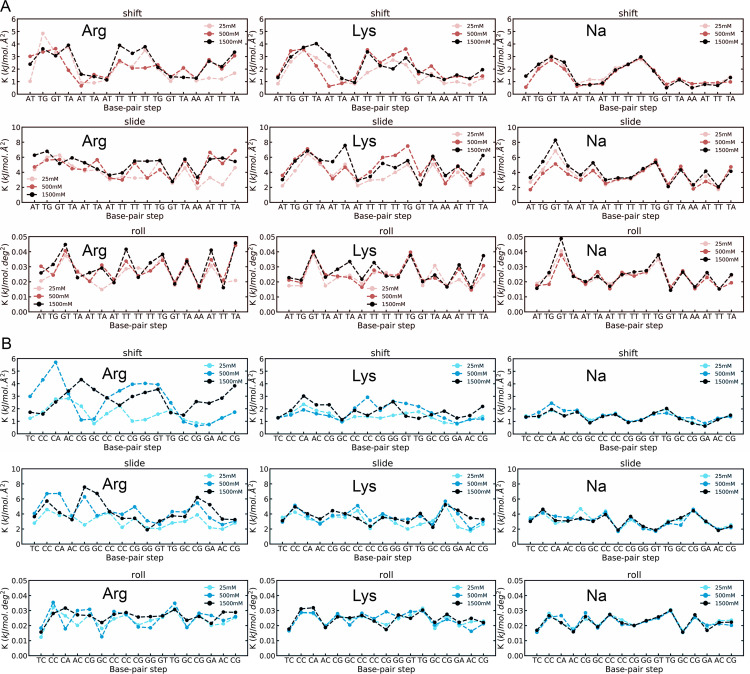
Fig 6. Selected translational and rotational force constants associated to each basepair steps.
A) Pure (diagonal values) of Shift-Shift, Slide-Slide and Roll-Roll sequence-dependent force constants for AT-rich sequences (red-ish series). B) Same as (A) for GC-rich sequences (blue-ish series).
Fig 7
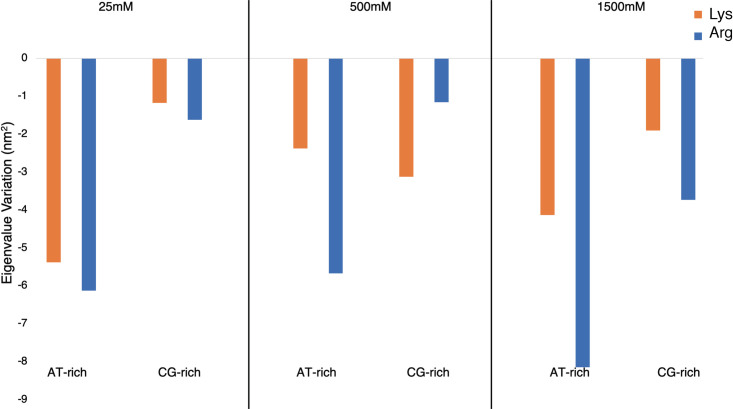
Fig 7. Variation in Eigenvalues.
Difference between the sum of the first eigenvalues for AT-rich and CG-rich duplexes with Arg and Lys respectively, and the sum of the same duplex, at the same Na concentration.
Fig 8
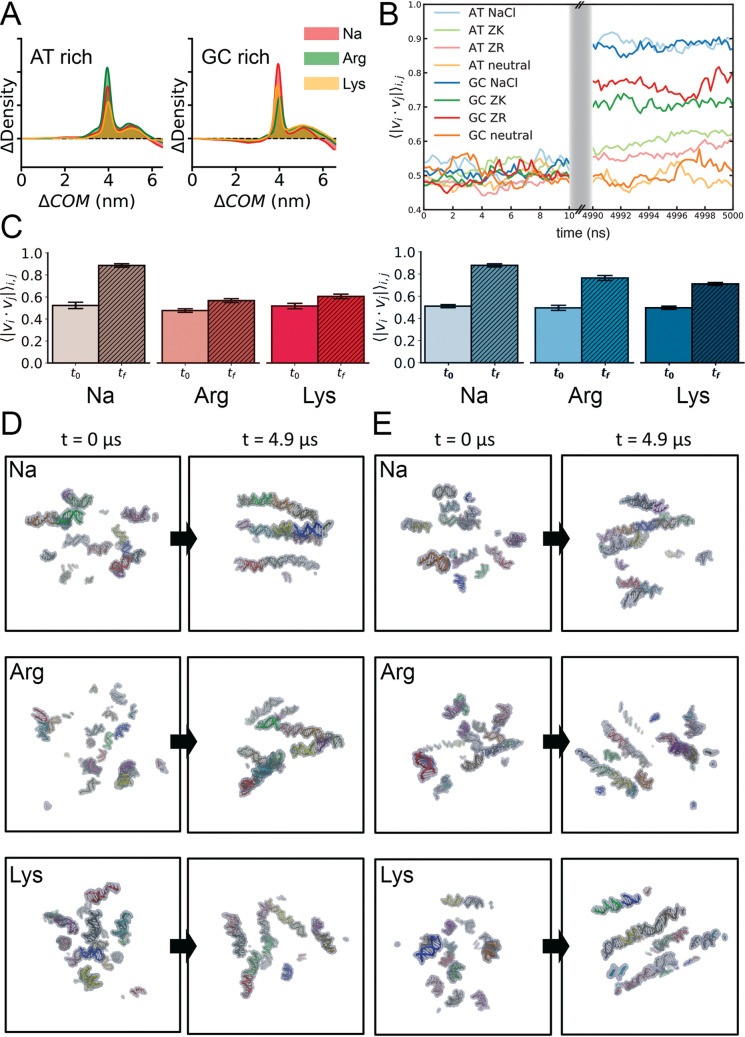
Fig 8. Structure and dynamics of large molecular systems simulated.
A) Difference between the relative Center-of-Mass (ΔCOM) displacement of the 15 DNA duplexes in each of the NaCl, ArgCl and LysCl system respect to the electroneutrality case. B) Pair-wise cross-correlation coefficient between vectors that represents the helical axe of each DNA duplex along the total simulated time. First and last 10 ns are shown. C) Pair-wise cross-correlation coefficient between helical axes of each DNA duplex for AT-rich (red-ish series) vs GC-rich (blue-ish series). D) Initial and one representative “final” structure obtained from the corresponding MD trajectories of AT-rich systems. Each duplex is depicted in cartoon representation using different colours. E) Same as (D) for GC-rich system simulated.

References

    1. Watson JD, Crick FHC. Molecular structure of nucleic acids: A structure for deoxyribose nucleic acid. Nature. 1953;171: 737–738. doi: 10.1038/171737a0 - DOI - PubMed
    1. Marmur J, Doty P. Determination of the base composition of deoxyribonucleic acid from its thermal denaturation temperature. J Mol Biol. 1962;5: 109–118. doi: 10.1016/s0022-2836(62)80066-7 - DOI - PubMed
    1. Pérez A, Noy A, Lankas F, Luque FJ, Orozco M. The relative flexibility of B-DNA and A-RNA duplexes: Database analysis. Nucleic Acids Res. 2004;32: 6144–6151. doi: 10.1093/nar/gkh954 - DOI - PMC - PubMed
    1. Parker TM, Hohenstein EG, Parrish RM, Hud N V., Sherrill CD. Quantum-mechanical analysis of the energetic contributions to π stacking in nucleic acids versus rise, twist, and slide. J Am Chem Soc. 2013;135: 1306–1316. doi: 10.1021/ja3063309 - DOI - PubMed
    1. Jorgensen WL, Pranata J. Importance of Secondary Interactions in Triply Hydrogen Bonded Complexes: Guanine-Cytosine vs Uracil-2,6-Diaminopyndine. J Am Chem Soc. 1990;112: 2008–2010. doi: 10.1021/ja00161a061 - DOI

Publication types