


The Impact of Biomarkers in Pancreatic Ductal Adenocarcinoma on Diagnosis, Surveillance and Therapy
- PMID: 35008381
- PMCID: PMC8750069
- DOI: 10.3390/cancers14010217
The Impact of Biomarkers in Pancreatic Ductal Adenocarcinoma on Diagnosis, Surveillance and Therapy
Abstract
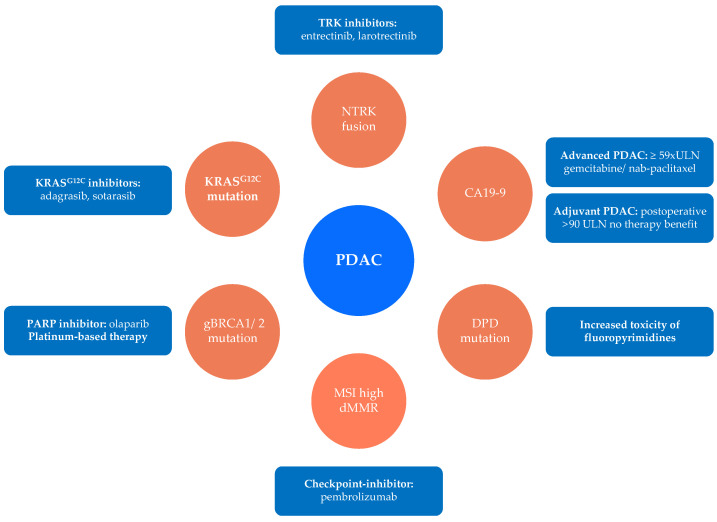
Pancreatic ductal adenocarcinoma (PDAC) is still difficult to treat due to insufficient methods for early diagnosis and prediction of therapy response. Furthermore, surveillance after curatively intended surgery lacks adequate methods for timely detection of recurrence. Therefore, several molecules have been analyzed as predictors of recurrence or early detection of PDAC. Enhanced understanding of molecular tumorigenesis and treatment response triggered the identification of novel biomarkers as predictors for response to conventional chemotherapy or targeted therapy. In conclusion, progress has been made especially in the prediction of therapy response with biomarkers. The use of molecules for early detection and recurrence of PDAC is still at an early stage, but there are promising approaches in noninvasive biomarkers, composite panels and scores that can already ameliorate the current clinical practice. The present review summarizes the current state of research on biomarkers for diagnosis and therapy of pancreatic cancer.
Keywords: biomarker; molecular diagnostics; pancreatic ductal adenocarcinoma; targeted therapy.
Conflict of interest statement
L.P. travel expenses: Ipsen, consulting/advisory role: Servier, AstraZeneca. N.S. and T.J.E. declare no conflict of interest.
Figures
References
Publication types
Grants and funding
LinkOut - more resources
Full Text Sources
Other Literature Sources
