


The Role of Exosomes in Cancer Progression
- PMID: 35008434
- PMCID: PMC8744561
- DOI: 10.3390/ijms23010008
The Role of Exosomes in Cancer Progression
Abstract
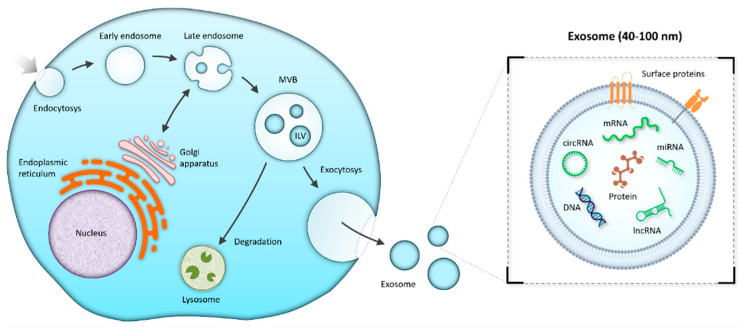
Early detection, characterization and monitoring of cancer are possible by using extracellular vesicles (EVs) isolated from non-invasively obtained liquid biopsy samples. They play a role in intercellular communication contributing to cell growth, differentiation and survival, thereby affecting the formation of tumor microenvironments and causing metastases. EVs were discovered more than seventy years ago. They have been tested recently as tools of drug delivery to treat cancer. Here we give a brief review on extracellular vesicles, exosomes, microvesicles and apoptotic bodies. Exosomes play an important role by carrying extracellular nucleic acids (DNA, RNA) in cell-to-cell communication causing tumor and metastasis development. We discuss the role of extracellular vesicles in the pathogenesis of cancer and their practical application in the early diagnosis, follow up, and next-generation treatment of cancer patients.
Keywords: biomarkers; cancer; cell-free nucleic acids; exosomes; liquid biopsy.
Conflict of interest statement
The authors declare no conflict of interest.
Figures
References
Publication types
MeSH terms
Substances
LinkOut - more resources
Full Text Sources
Medical
