


Post-Ischemic Neurodegeneration of the Hippocampus Resembling Alzheimer's Disease Proteinopathy
- PMID: 35008731
- PMCID: PMC8745293
- DOI: 10.3390/ijms23010306
Post-Ischemic Neurodegeneration of the Hippocampus Resembling Alzheimer's Disease Proteinopathy
Abstract
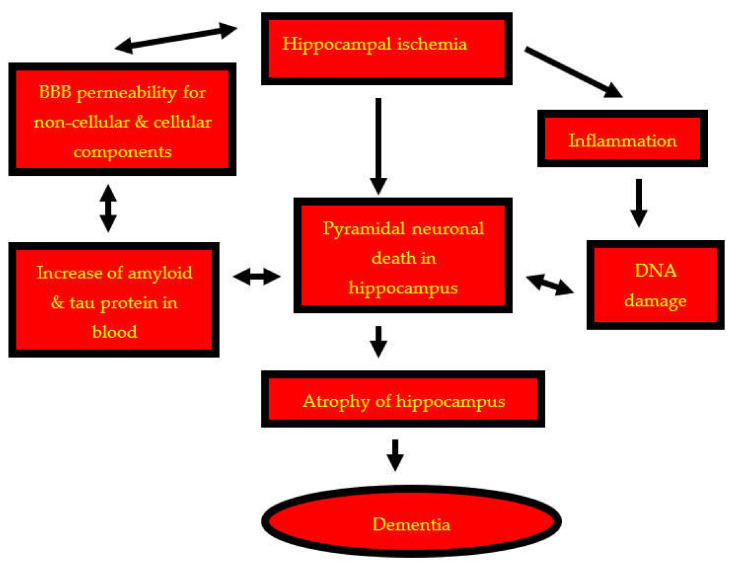
In this review, we summarize, inter alia, the protein and gene changes associated with Alzheimer's disease and their role in post-ischemic hippocampal neurodegeneration. In the hippocampus, studies have revealed dysregulation of the genes for the amyloid protein precursor metabolism and tau protein that is identical in nature to Alzheimer's disease. Data indicate that amyloid and tau protein, derived from brain tissue and blood due to increased permeability of the blood-brain barrier after ischemia, play a key role in post-ischemic neurodegeneration of the hippocampus, with concomitant development of full-blown dementia. Thus, the knowledge of new neurodegenerative mechanisms that cause neurodegeneration of the hippocampus after ischemia, resembling Alzheimer's disease proteinopathy, will provide the most important therapeutic development goals to date.
Keywords: amyloid; amyloid plaques; brain ischemia; dementia; genes; hippocampus; neurodegeneration; neurofibrillary tangles; neuronal death; presenilin; tau protein.
Conflict of interest statement
The authors declare no conflict of interest.
Figures
References
-
- Pluta R. Brain Ischemia: Alzheimer’s Disease Mechanisms. Nova Science Publishers Inc.; New York, NY, USA: 2019. p. 311.
-
- Pluta R., Januszewski S., Jabłoński M., Ułamek M. Factors in creepy delayed neuronal death in hippocampus following brain ischemia-reperfusion injury with long-term survival. Acta Neurochir. 2010;106:37–41. - PubMed
Publication types
MeSH terms
Substances
LinkOut - more resources
Full Text Sources
Medical
