


The Association between Carotenoids and Head and Neck Cancer Risk
- PMID: 35010963
- PMCID: PMC8746385
- DOI: 10.3390/nu14010088
The Association between Carotenoids and Head and Neck Cancer Risk
Abstract
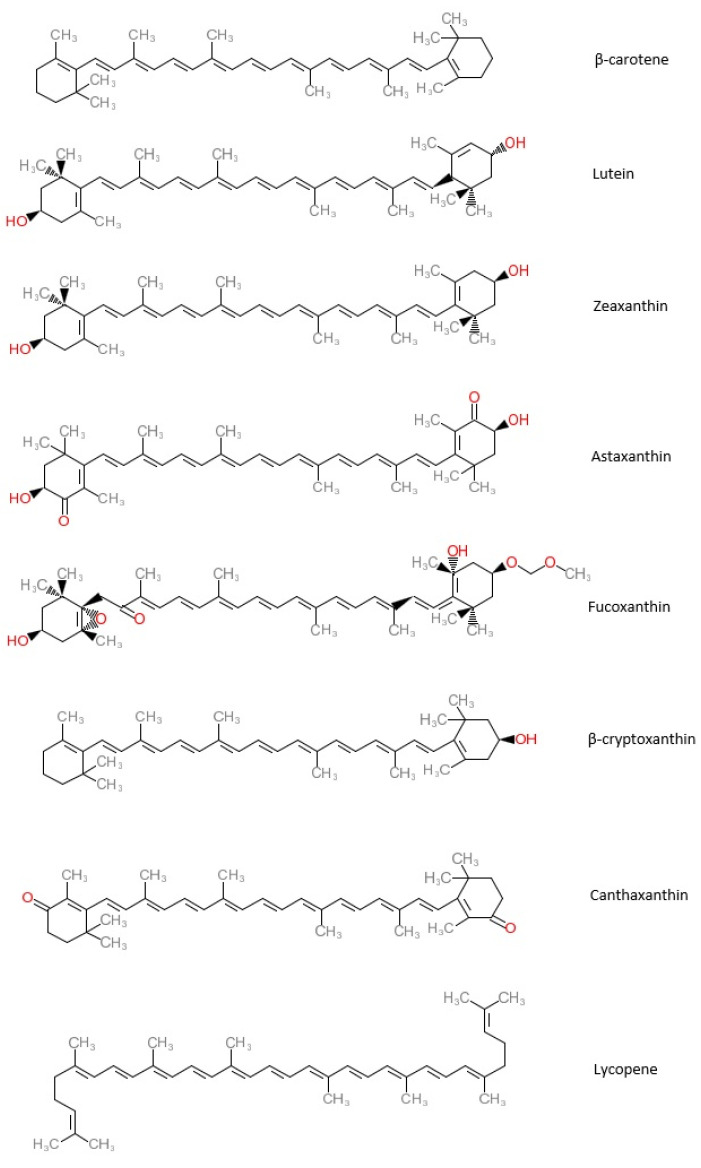
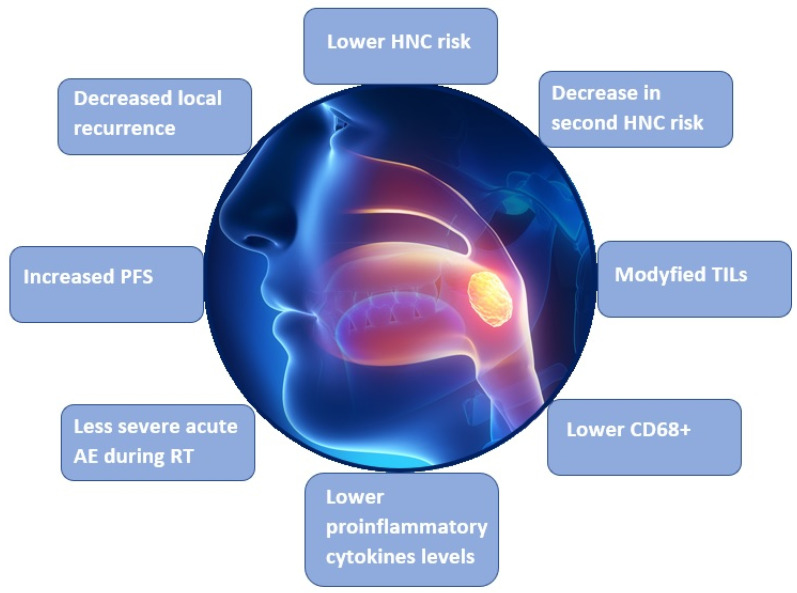
Head and neck cancer (HNC) includes oral cavity cancer (OCC), pharyngeal cancer (PC), and laryngeal cancer (LC). It is one of the most frequent cancers in the world. Smoking and alcohol consumption are the typical well-known predictors of HNC. Human papillomavirus (HPV) is an increasing etiological factor for oropharyngeal cancer (OPC). Moreover, food and nutrition play an important role in HNC etiology. According to the World Cancer Research Fund and the American Institute for Cancer Research, an intake of non-starchy vegetables and fruits could decrease HNC risk. The carotenoids included in vegetables and fruits are well-known antioxidants which have anti-mutagenic and immune regulatory functions. Numerous studies have shown the relationship between carotenoid intake and a lower HNC risk, but the role of carotenoids in HNC risk is not well defined. The goal of this review is to present the current literature regarding the relationship between various carotenoids and HNC risk.
Keywords: laryngeal cancer; lutein; lycopene; nasopharyngeal cancer; oral cavity cancer; oropharyngeal cancer; pharyngeal cancer; zeaxanthin; α-carotene; β-carotene; β-cryptoxanthin.
Conflict of interest statement
The authors declare no conflict of interest.
Figures

References
-
- Leoncini E., Nedovic D., Panic N., Pastorino R., Edefonti V., Boccia S. Carotenoid Intake from Natural Sources and Head and Neck Cancer: A Systematic Review and Meta-analysis of Epidemiological Studies. Cancer Epidemiol. Biomark. Prev. 2015;24:1003–1011. doi: 10.1158/1055-9965.EPI-15-0053. - DOI - PubMed
-
- Leoncini E., Edefonti V., Hashibe M., Parpinel M., Cadoni G., Ferraroni M., Serraino D., Matsuo K., Olshan A.F., Zevallos J.P., et al. Carotenoid intake and head and neck cancer: A pooled analysis in the International Head and Neck Cancer Epidemiology Consortium. Eur. J. Epidemiol. 2016;31:369–383. doi: 10.1007/s10654-015-0036-3. - DOI - PMC - PubMed
-
- IARC List of Classifications by Cancer Sites with Sufficient or Limited Evidence in Humans. Volumes 1–109. [(accessed on 8 December 2021)]. Available online: http://monographs.iarc.fr/ENG/Classification/index.php.
-
- Brewczyński A., Jabłońska B., Mazurek A., Mrochem-Kwarciak J., Mrowiec S., Śnietura M., Kentnowski M., Kołosza Z., Składowski K., Rutkowski T. Comparison of Selected Immune and Hematological Parameters and Their Impact on Survival in Patients with HPV-Related and HPV-Unrelated Oropharyngeal Cancer. Cancers. 2021;13:3256. doi: 10.3390/cancers13133256. - DOI - PMC - PubMed
-
- World Cancer Research Fund / American Institute for Cancer Research . Food, Nutrition, Physical Activity, and the Prevention of Cancer: A Global Perspective. World Cancer Research Fund International; Washington, DC, USA: 2007.
Publication types
MeSH terms
Substances
LinkOut - more resources
Full Text Sources
Medical
