


Roles of the CXCL8-CXCR1/2 Axis in the Tumor Microenvironment and Immunotherapy
- PMID: 35011369
- PMCID: PMC8746913
- DOI: 10.3390/molecules27010137
Roles of the CXCL8-CXCR1/2 Axis in the Tumor Microenvironment and Immunotherapy
Abstract
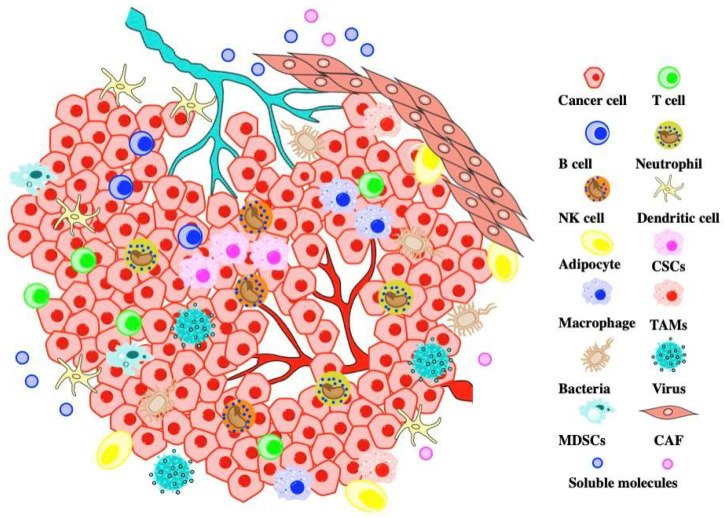
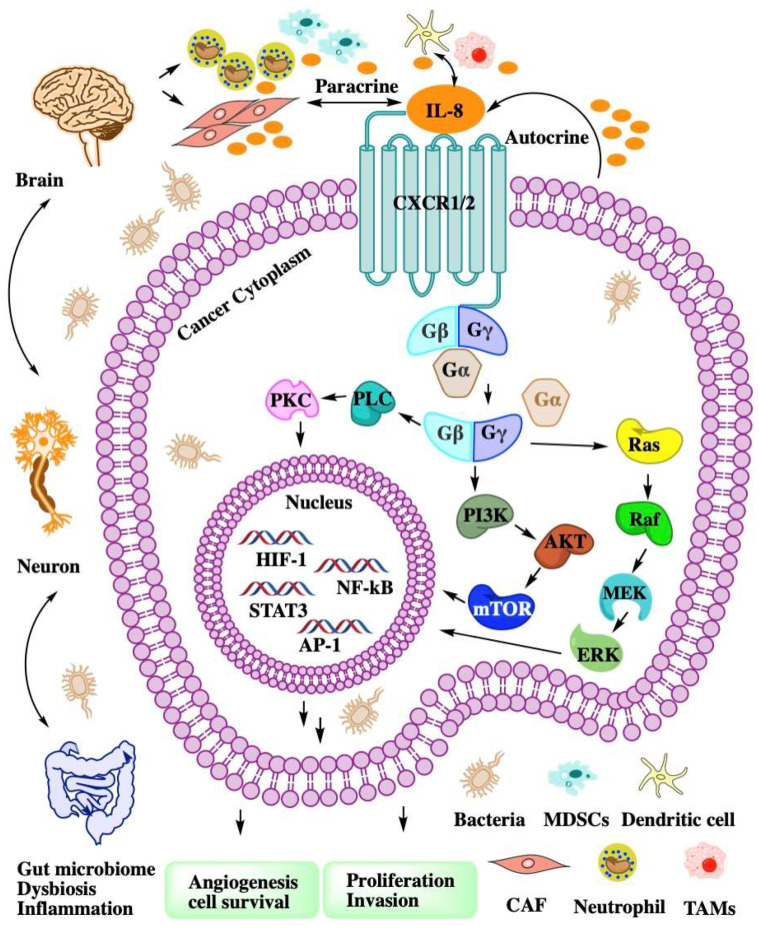
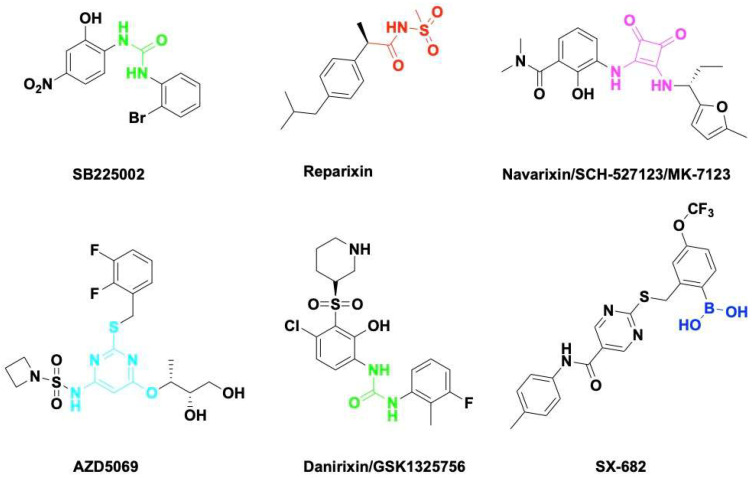
In humans, Interleukin-8 (IL-8 or CXCL8) is a granulocytic chemokine with multiple roles within the tumor microenvironment (TME), such as recruiting immunosuppressive cells to the tumor, increasing tumor angiogenesis, and promoting epithelial-to-mesenchymal transition (EMT). All of these effects of CXCL8 on individual cell types can result in cascading alterations to the TME. The changes in the TME components such as the cancer-associated fibroblasts (CAFs), the immune cells, the extracellular matrix, the blood vessels, or the lymphatic vessels further influence tumor progression and therapeutic resistance. Emerging roles of the microbiome in tumorigenesis or tumor progression revealed the intricate interactions between inflammatory response, dysbiosis, metabolites, CXCL8, immune cells, and the TME. Studies have shown that CXCL8 directly contributes to TME remodeling, cancer plasticity, and the development of resistance to both chemotherapy and immunotherapy. Further, clinical data demonstrate that CXCL8 could be an easily measurable prognostic biomarker in patients receiving immune checkpoint inhibitors. The blockade of the CXCL8-CXCR1/2 axis alone or in combination with other immunotherapy will be a promising strategy to improve antitumor efficacy. Herein, we review recent advances focusing on identifying the mechanisms between TME components and the CXCL8-CXCR1/2 axis for novel immunotherapy strategies.
Keywords: CXC receptors 1 and 2; cancer-associated fibroblast; chemokine; immunotherapy; interleukin-8; microbiome; myeloid-derived suppressor cells; neutrophile; tumor microenvironment.
Conflict of interest statement
The authors declare no conflict of interest.
Figures
References
Publication types
MeSH terms
Substances
Grants and funding
LinkOut - more resources
Full Text Sources
Other Literature Sources
Medical
