


Retrotransposons Down- and Up-Regulation in Aging Somatic Tissues
- PMID: 35011640
- PMCID: PMC8750722
- DOI: 10.3390/cells11010079
Retrotransposons Down- and Up-Regulation in Aging Somatic Tissues
Abstract
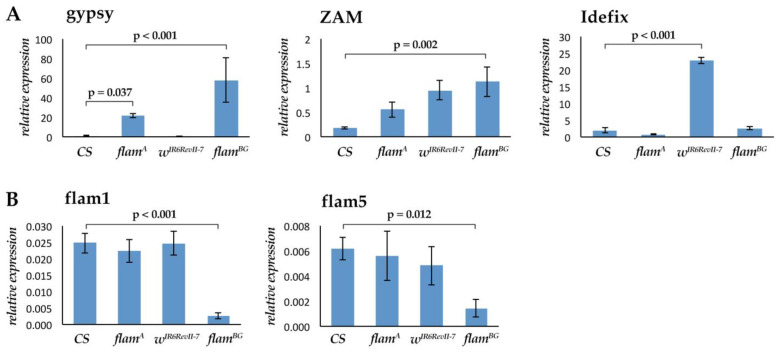
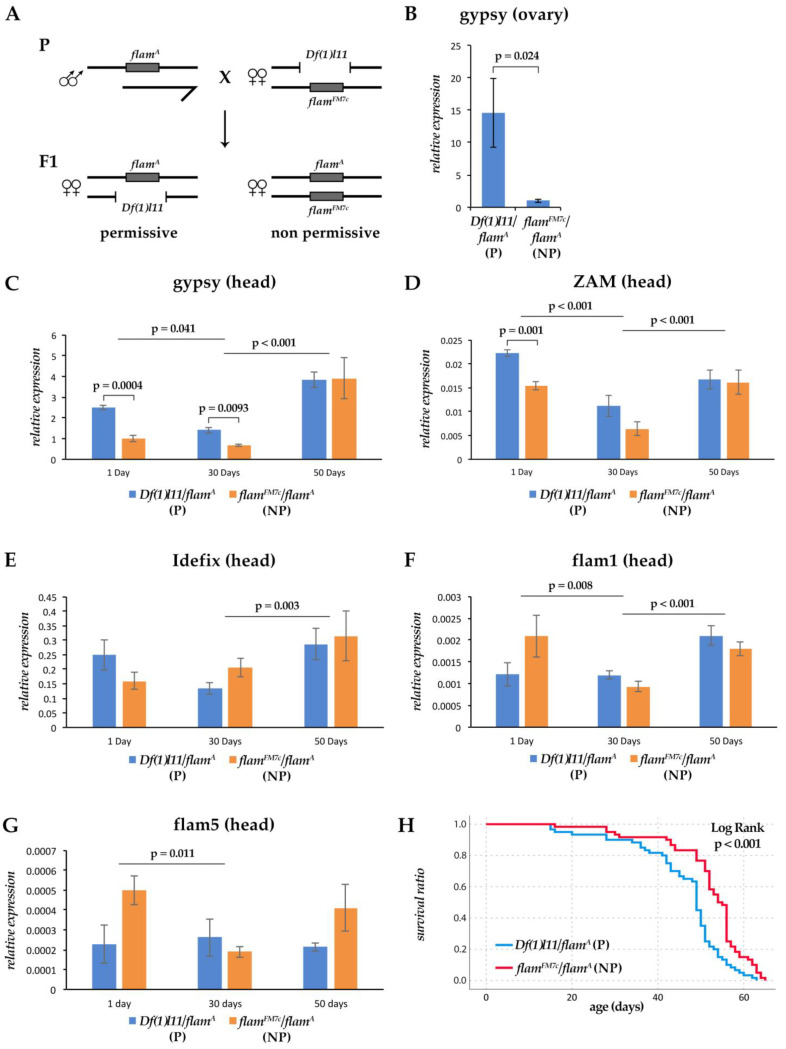
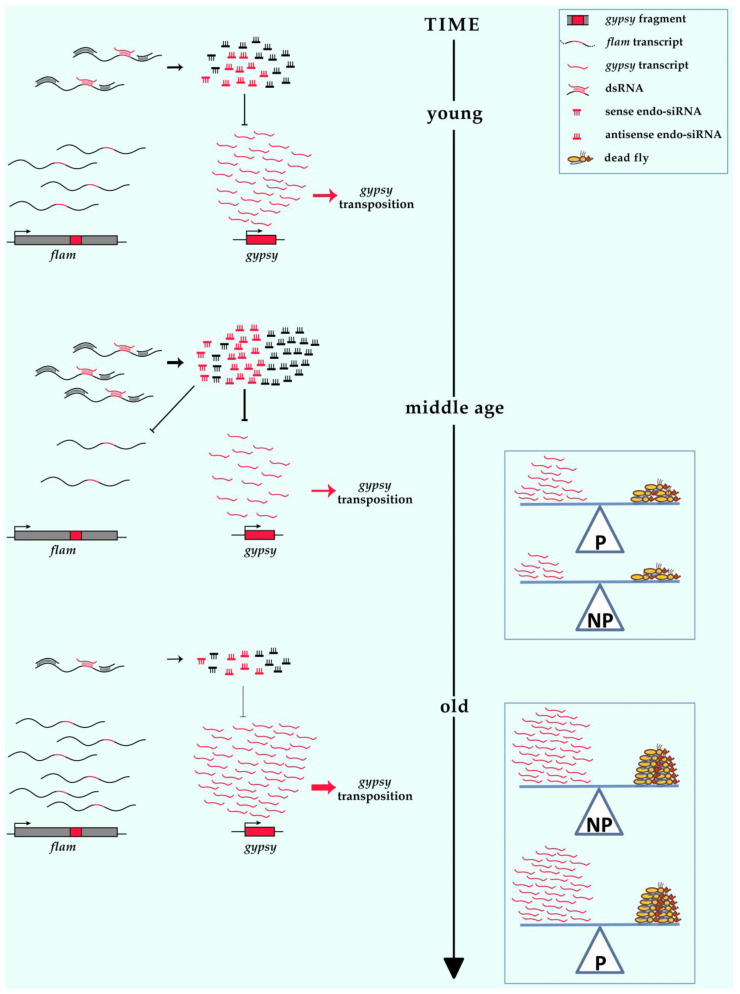
The transposon theory of aging hypothesizes the activation of transposable elements (TEs) in somatic tissues with age, leading to a shortening of the lifespan. It is thought that TE activation in aging produces an increase in DNA double-strand breaks, contributing to genome instability and promoting the activation of inflammatory responses. To investigate how TE regulation changes in somatic tissues during aging, we analyzed the expression of some TEs, as well as a source of small RNAs that specifically silence the analyzed TEs; the Drosophila cluster named flamenco. We found significant variations in the expression levels of all the analyzed TEs during aging, with a trend toward reduction in middle-aged adults and reactivation in older individuals that suggests dynamic regulation during the lifespan.
Keywords: Idefix; ZAM; gypsy; longevity; transposons.
Conflict of interest statement
The authors declare no conflict of interest.
Figures
References
-
- Pélisson A., Song S.U., Prud’homme N., Smith P.A., Bucheton A., Corces V.G. Gypsy transposition correlates with the production of a retroviral envelope-like protein under the tissue-specific control of the Drosophila flamenco gene. Embo J. 1994;13:4401–4411. doi: 10.1002/j.1460-2075.1994.tb06760.x. - DOI - PMC - PubMed
Publication types
MeSH terms
Substances
Grants and funding
LinkOut - more resources
Full Text Sources
Medical
Molecular Biology Databases
