


Is staff consistency important to parents' satisfaction in a longitudinal study of children at risk for type 1 diabetes: the TEDDY study
- PMID: 35012530
- PMCID: PMC8744326
- DOI: 10.1186/s12902-021-00929-w
Is staff consistency important to parents' satisfaction in a longitudinal study of children at risk for type 1 diabetes: the TEDDY study
Abstract
Background: Participants' study satisfaction is important for both compliance with study protocols and retention, but research on parent study satisfaction is rare. This study sought to identify factors associated with parent study satisfaction in The Environmental Determinants of Diabetes in the Young (TEDDY) study, a longitudinal, multinational (US, Finland, Germany, Sweden) study of children at risk for type 1 diabetes. The role of staff consistency to parent study satisfaction was a particular focus.
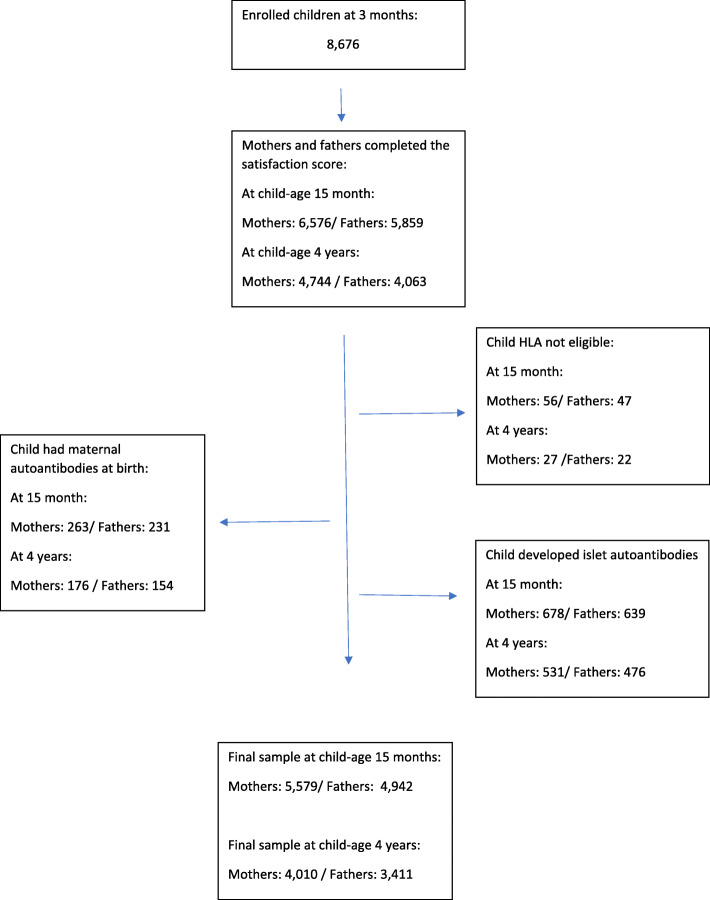
Methods: Parent study satisfaction was measured by questionnaire at child-age 15 months (5579 mothers, 4942 fathers) and child-age four years (4010 mothers, 3411 fathers). Multiple linear regression analyses were used to identify sociodemographic factors, parental characteristics, and study variables associated with parent study satisfaction at both time points.
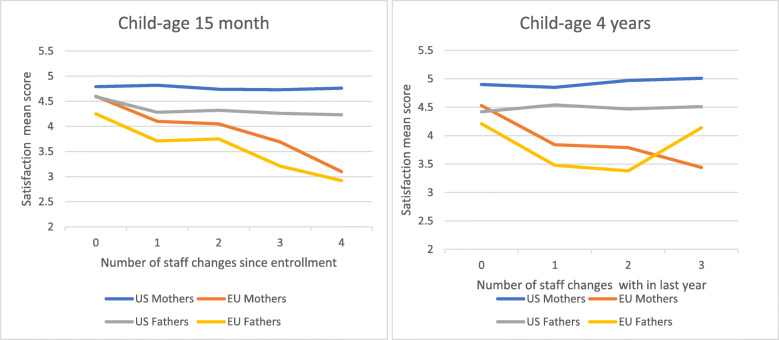
Results: Parent study satisfaction was highest in Sweden and the US, compared to Finland. Parents who had an accurate perception of their child's type 1 diabetes risk and those who believed they can do something to prevent type 1 diabetes were more satisfied. More educated parents and those with higher depression scores had lower study satisfaction scores. After adjusting for these factors, greater study staff change frequency was associated with lower study satisfaction in European parents (mothers at child-age 15 months: - 0.30,95% Cl - 0.36, - 0.24, p < 0.001; mothers at child-age four years: -0.41, 95% Cl - 0.53, - 0.29, p < 0.001; fathers at child-age 15 months: -0.28, 95% Cl - 0.34, - 0.21, p < 0.001; fathers at child-age four years: -0.35, 95% Cl - 0.48, - 0.21, p < 0.001). Staff consistency was not associated with parent study satisfaction in the US. However, the number of staff changes was markedly higher in the US compared to Europe.
Conclusions: Sociodemographic factors, parental characteristics, and study-related variables were all related to parent study satisfaction. Those that are potentially modifiable are of particular interest as possible targets of future efforts to improve parent study satisfaction. Three such factors were identified: parent accuracy about the child's type 1 diabetes risk, parent beliefs that something can be done to reduce the child's risk, and study staff consistency. However, staff consistency was important only for European parents.
Trial registration: NCT00279318 .
Keywords: Child; Genetic risk; Longitudinal study; Parent satisfaction; Staff consistency; Study satisfaction; Type 1 diabetes.
© 2022. The Author(s).
Conflict of interest statement
The authors declare that they have no competing interests.
Figures
References
-
- Planner C, Bower P, Donnelly A, Gillies K, Turner K, Young B. Trials need participants but not their feedback? A scoping review of published papers on the measurement of participant experience of taking part in clinical trials. Trials. 2019;20(1):381. doi: 10.1186/s13063-019-3444-y. - DOI - PMC - PubMed
-
- Rundberg-Rivera EV, Townsend LD, Schneider J, Farmer CA, Molina BB, Findling RL, et al. Participant satisfaction in a study of stimulant, parent training, and risperidone in children with severe physical aggression. J Child Adolesc Psychopharmacol. 2015;25(3):225–233. doi: 10.1089/cap.2014.0097. - DOI - PMC - PubMed
-
- Tierney E, Aman M, Stout D, Pappas K, Arnold LE, Vitiello B, Scahill L, McDougle C, McCracken J, Wheeler C, Martin A, Posey D, Shah B. Parent satisfaction in a multi-site acute trial of risperidone in children with autism: a social validity study. Psychopharmacology. 2007;191(1):149–157. doi: 10.1007/s00213-006-0604-z. - DOI - PubMed
Publication types
MeSH terms
Associated data
Grants and funding
LinkOut - more resources
Full Text Sources
Medical
